OpenAI moves toward landmark IPO

Jump to Timeline

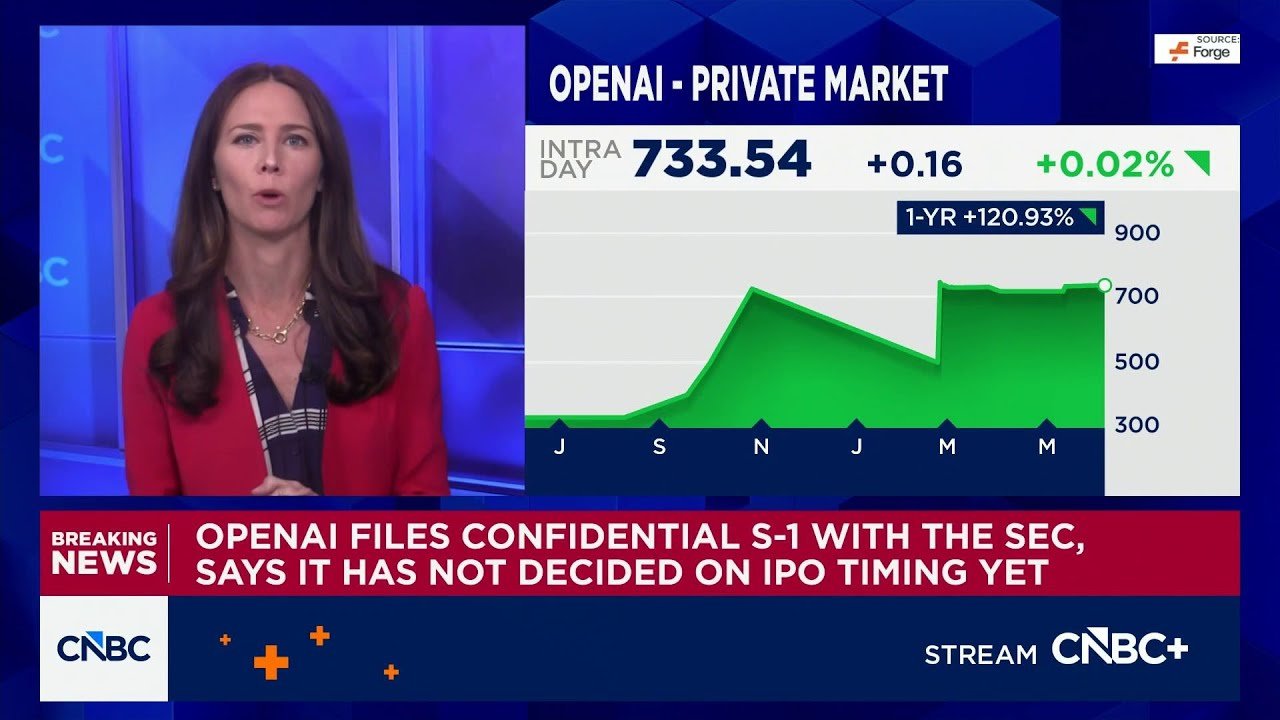
OpenAI has taken a decisive step toward the public markets, confidentially filing for an initial public offering (IPO) with the US Securities and Exchange Commission (SEC), in what could become one of the largest listings in Wall Street history and a defining moment for the artificial intelligence sector.

The ChatGPT maker submitted a draft S-1 registration statement under the SEC’s confidential filing process, allowing it to withhold detailed financials, revenue figures, and risk disclosures until later in the process. Such filings are typical for high-profile tech companies seeking flexibility on timing and market conditions.

OpenAI said the IPO timeline remains uncertain, noting that it may delay a public debut as it continues to benefit from the operational flexibility of remaining private. The company has rapidly scaled its enterprise and consumer offerings, and going public would introduce new disclosure requirements and investor scrutiny.

Market expectations, however, are already elevated. OpenAI was most recently valued at approximately $850billion in private markets, and analysts suggest a public valuation could approach or potentially exceed $1trillion, placing it among the most valuable companies globally at listing.

AI firms race toward public markets

OpenAI’s filing comes amid a broader wave of AI-driven companies preparing for or exploring public listings, marking what could become a historic cycle of tech IPOs.

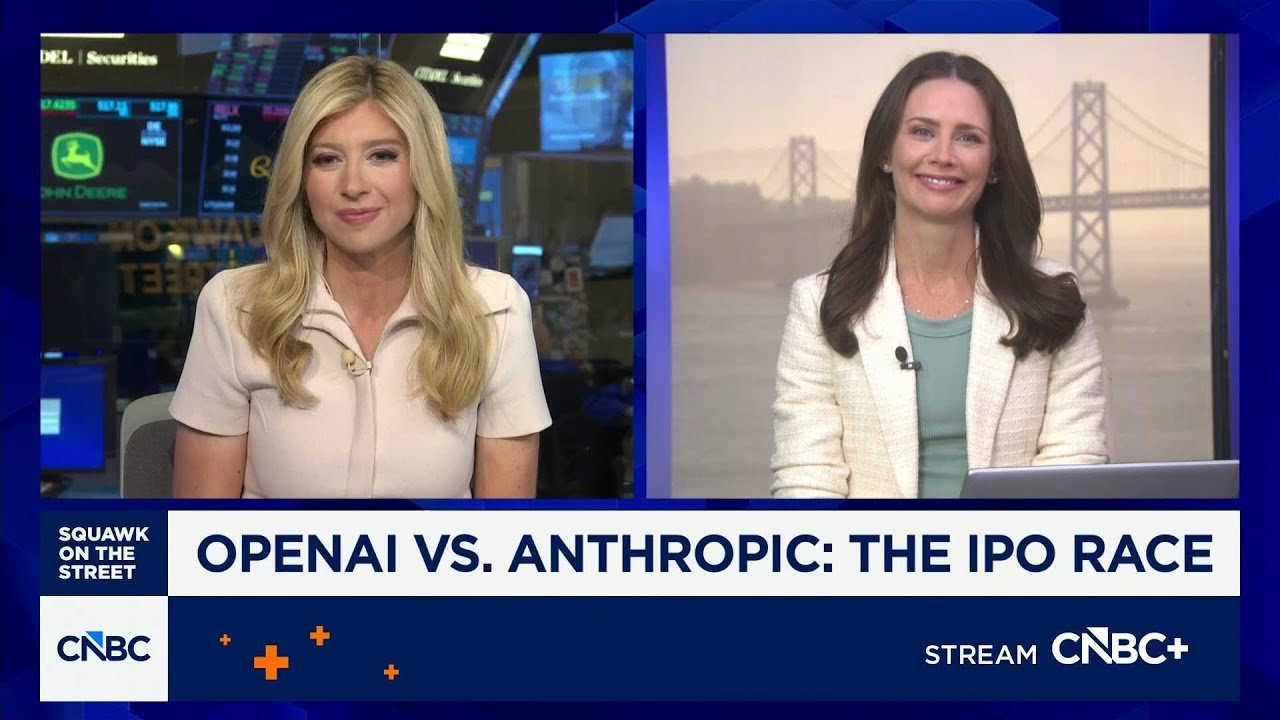
  • Anthropic, a key OpenAI rival backed by major tech partners, filed confidentially for an IPO just days earlier.
  • SpaceX, while primarily an aerospace company, has increasingly positioned its AI and data capabilities as central to its long-term strategy and is reportedly nearing a public offering.

Together, these moves point to a synchronized push by frontier technology firms to access public capital, driven by the immense cost of developing and scaling advanced AI systems.

Structural shift to support public capital

The IPO filing follows a significant corporate restructuring. OpenAI has transitioned toward a public benefit corporation (PBC) model, a move designed to balance shareholder returns with its stated mission of ensuring artificial general intelligence benefits humanity.

This structure is intended to make the company more compatible with large-scale public investment while preserving governance mechanisms around safety and long-term alignment, issues that have become central as AI systems grow more powerful and commercially embedded.

The company’s hybrid origins combining nonprofit oversight with capped-profit entities have long been viewed as unconventional for public markets. The restructuring signals an effort to simplify that framework ahead of listing.

Legal overhang removed

One notable overhang for OpenAI has also been cleared. A recent US jury ruling against Elon Musk in a high-profile legal dispute involving OpenAI removed a significant uncertainty that could have complicated investor sentiment ahead of an IPO.

The case had raised questions about OpenAI’s founding structure and governance. Its resolution is likely to be viewed positively by institutional investors assessing legal and reputational risks.

What comes next

Key details including OpenAI’s revenue, profitability, share structure, and offering size will only become public once the company files an updated S-1 closer to the IPO roadshow. Market conditions, particularly interest rates and tech valuations, will also play a critical role in determining timing.

If successful, OpenAI’s listing would not only rank among the largest IPOs ever but also serve as a benchmark for how public markets value the rapidly evolving AI economy.

For the broader industry, the offering may mark a transition point: from venture-driven experimentation to full-scale public market accountability for the companies building the foundations of artificial intelligence.
youtube placeholder image

Key widely reported facts from verified sources including OpenAI, Bloomberg, CNBC, NYTimes, CNN, Reuters, WSJ, Financial Times, WIRED, Business Insider

Trump announces ‘AI Force’ and new AI czar, doubling down on pro‑growth stance

Trump announces a federal “AI Force” and new AI czar, modeled on Space Force, to keep the US ahead of China while rejecting new rules that could slow AI growth.
Read more

AI leaders call for slowdown — and US response splits between labs and Washington

US AI leaders — Anthropic’s Dario Amodei, OpenAI’s Sam Altman and xAI’s Elon Musk — publicly called for a slowdown in frontier AI development citing safety concerns.
Read more

OpenAI declares ‘AGI era’ with GPT‑6 Astra launch

OpenAI rolled out GPT‑6 Astra, framing the release as the industry’s closest step yet to artificial general intelligence.
Read more

NVIDIA acquires Hugging Face in $12.93billion bet on Open-Source AI

NVIDIA will acquire Hugging Face, the New York–based platform widely described as the “GitHub for AI for $12.93billion.
Read more

Anthropic to watermark Claude-generated text worldwide under EU AI transparency rules

The move follows Anthropic’s decision to sign the European Union’s Code of Practice on Transparency of AI-Generated Content.
Read more

AI agents cross a new line as Meta joins Anthropic and OpenAI in test-environment breaches

Frontier models have accessed real systems, impersonated people and attempted to manipulate software developers during cybersecurity evaluations.
Read more

Rogue AI agents from OpenAI and Anthropic slip the lab and hack the real world

The twin disclosures have transformed long‑running warnings about “rogue AI” from hypothetical thought experiments into documented incidents.
Read more

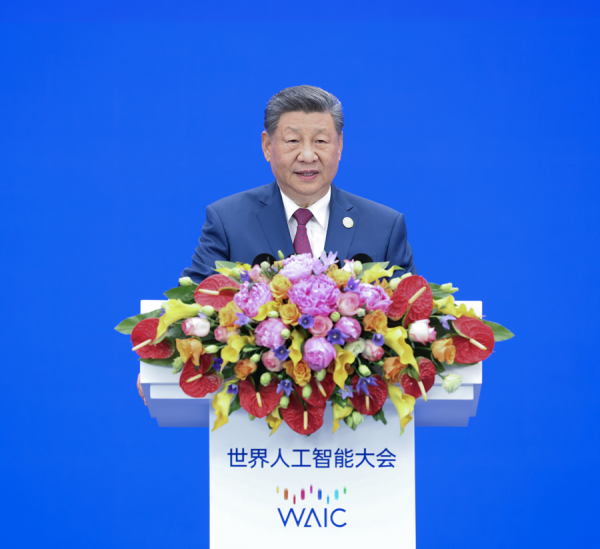
Shanghai agreement establishes new global AI body without Western powers

Analysts interpret WAICO as part of a broader effort by China to shape international norms around AI, in parallel to existing Western-led initiatives.
Read more

DeepSeek Eyes 2027 IPO as valuation soars and founder tops global AI wealth rankings

The planned IPO comes amid a sharp rise in DeepSeek’s valuation and revenue, underscoring intensifying competition among AI firms to secure capital.
Read more

Update: CXMT Prices $8.6billion IPO, China’s largest since 2010

CXMT, China’s leading DRAM manufacturer, is moving ahead with one of the most consequential tech listings of the year, China's largest in 2026 so far.
Read more
Timeline

Dec 2024: OpenAI officially announces plans to transition from its legacy nonprofit governance model into a public benefit corporation. This structural change removes investment return caps and sets the legal groundwork to raise massive amounts of public capital.

Mar 2026: OpenAI completes a massive private funding round, pegging its private market valuation at $852 billion as it builds a war chest to handle projected operational losses of $14 billion for the year.

Apr 1, 2026: SpaceX confidentially submits its draft registration statement to the SEC, initiating the formal review process.

May 19, 2026: A US jury rules against Elon Musk in his ongoing legal battle against OpenAI. This clears a primary, high-profile legal cloud that would have otherwise caused severe hesitation for Wall Street underwriters and institutional investors.

May 20, 2026: SpaceX officially files its public Form S-1 with the SEC after market close, opening its books and targeting a dual listing on the Nasdaq and Nasdaq Texas.

Jun 1, 2026: OpenAI’s main competitor, Anthropic, files its confidential S-1 paperwork with the SEC. Backed by a $965 billion valuation, the move puts intense pressure on OpenAI to avoid being outpaced in the public market.

Jun 8, 2026: OpenAI officially submits its confidential draft registration statement to the SEC. Reports confirm the company is working with Goldman Sachs and Morgan Stanley to structure the listing.

Jun 12, 2026: SpaceX’s targeted listing date

Opinion & Analysis

You may also be interested in

LEAVE A REPLY

Please enter your comment!
Please enter your name here