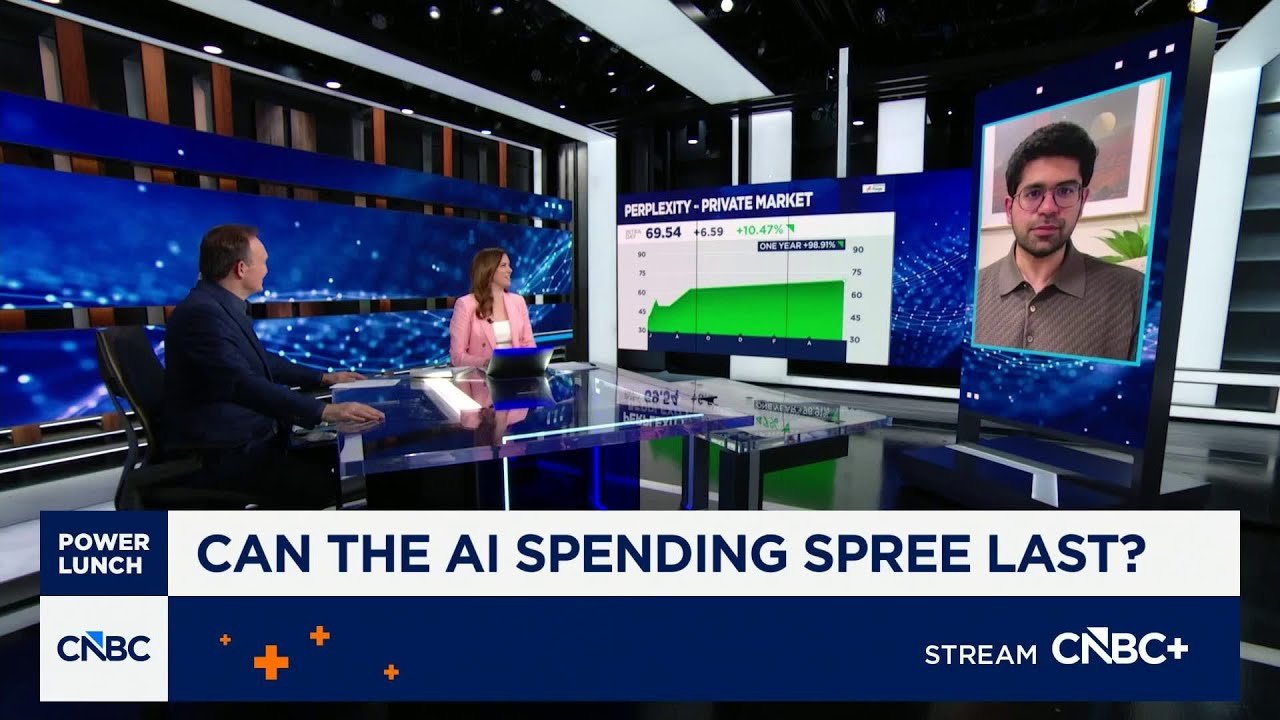
Perplexity AI is holding firm on plans to go public in 2028, positioning itself for a delayed but potentially more stable market debut even as rivals accelerate toward Wall Street.
Chief executive Aravind Srinivas has reaffirmed the company’s timeline in an interview with CNBC, signaling a deliberate strategy to avoid the volatility surrounding a new wave of artificial intelligence IPOs expected over the next 12 to 24 months. The move places Perplexity among a small group of high-growth AI firms opting for longer private-market incubation rather than immediate listing.
A long-term IPO strategy
Perplexity’s leadership has framed the 2028 target as a structural advantage rather than a delay.
The company is explicitly decoupling its listing plans from competitors such as OpenAI and Anthropic, both of which have reportedly taken steps toward public offerings. Srinivas has acknowledged that upcoming IPO performances across the AI sector could create “ripple effects”, but emphasized that Perplexity will not adjust its timeline in response to short-term market sentiment.
Chief Business Officer Dmitry Shevelenko added that maintaining a fixed horizon has enabled the company to prioritize product development and revenue growth without pressure from public market expectations.
This approach contrasts with earlier tech cycles, where companies often rushed to list amid peak investor enthusiasm.
Positioning within the AI stack
Perplexity’s strategy is also shaped by its product positioning.
Rather than competing directly with frontier model developers, the company focuses on an AI-powered answer engine that aggregates, cites, and synthesizes information. This allows it to:
- Avoid the extreme capital expenditure associated with training large-scale foundation models
- Iterate quickly on user-facing search and discovery experiences
- Build monetization through subscriptions and enterprise offerings
This “application-layer” positioning may prove more capital-efficient compared to model-centric peers, especially as compute costs and infrastructure demands continue to escalate across the AI sector.
Financial growth and valuation
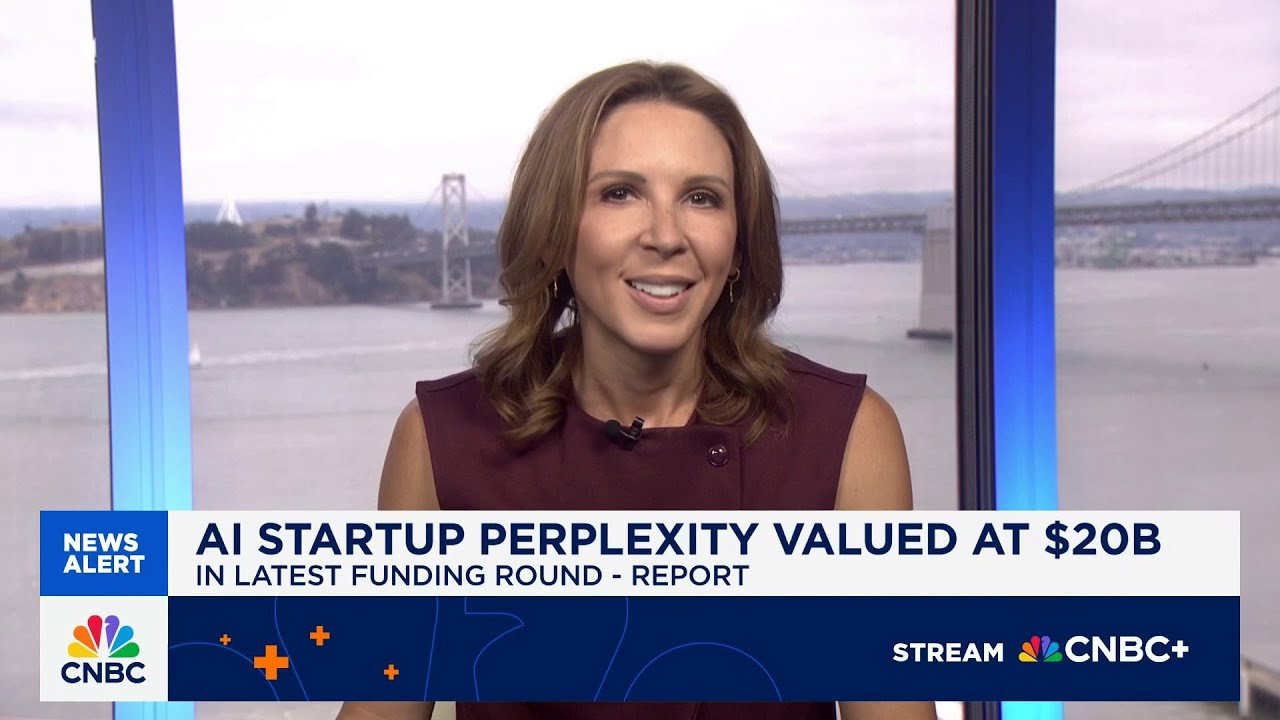
Recent figures indicate strong commercial traction ahead of any public listing. The company’s annual recurring revenue (ARR) has surpassed $450million, driven by premium subscriptions and API-related products. Its private valuation is estimated between $18billion and $20billion based on recent secondary market activity
- Perplexity has raised capital from prominent investors including IVP, NEA, and Nvidia, reflecting confidence in its role within the AI ecosystem.
The company has also expanded its product suite in 2025 to 2026, including enterprise search tools and enhanced real-time web indexing capabilities, contributing to revenue growth.
A Crowded IPO Pipeline
Perplexity’s timeline comes as the broader AI sector prepares for a potentially historic wave of listings. Anthropic and OpenAI have reportedly filed confidentially for a US IPO. Other major tech players, including SpaceX, are expected to test public markets with large-scale offerings. Together, these listings could serve as a stress test for investor appetite toward high-valuation, AI-driven companies.
Perplexity appears to be betting that entering the market after this wave settles will provide clearer valuation benchmarks and reduced volatility.
Pre-IPO market access
While retail investors must wait for a public listing, accredited investors can access Perplexity shares through secondary markets such as Nasdaq Private Market and Forge Global.
These platforms have seen increased activity as demand grows for exposure to late-stage AI companies ahead of IPO.
Outlook
By committing to a 2028 IPO, Perplexity is effectively trading early liquidity for operational flexibility.
The success of this strategy will depend on two factors: whether AI market valuations remain resilient after the upcoming IPO wave, and whether Perplexity can sustain its rapid revenue growth without the capital influx of public markets.
If both conditions hold, the company could enter public markets with stronger fundamentals and less pressure than many of its peers.