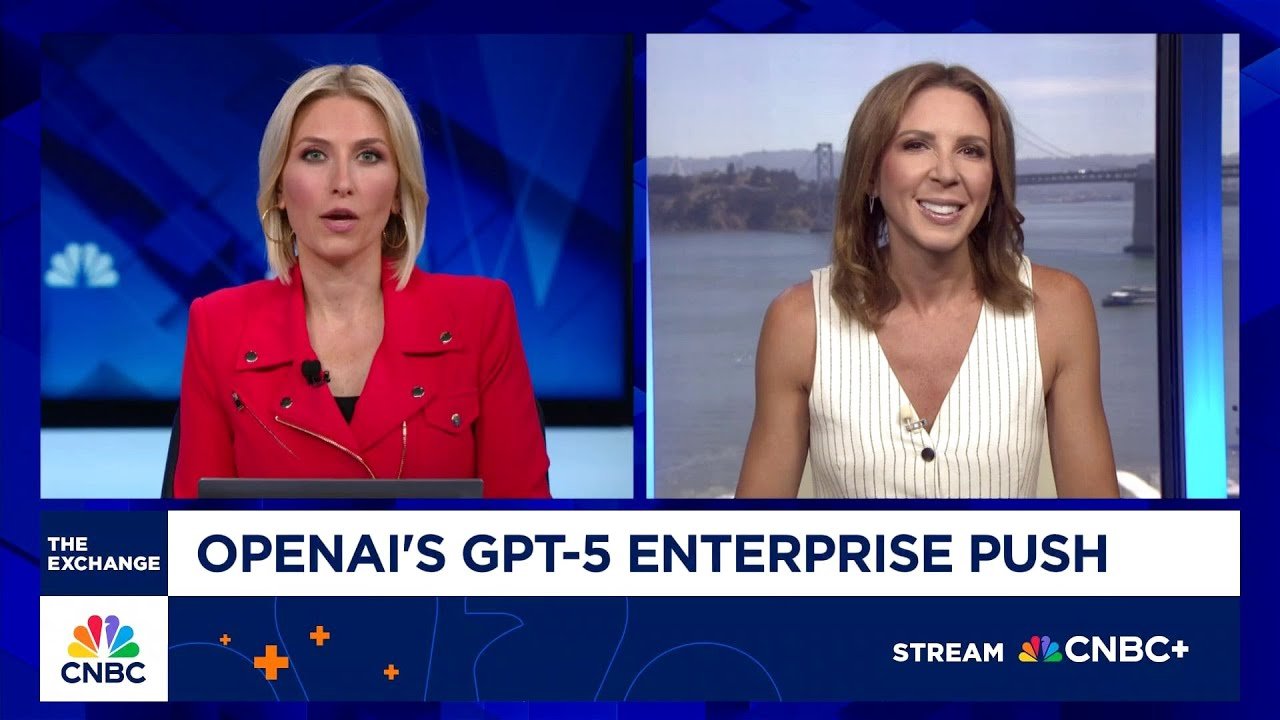
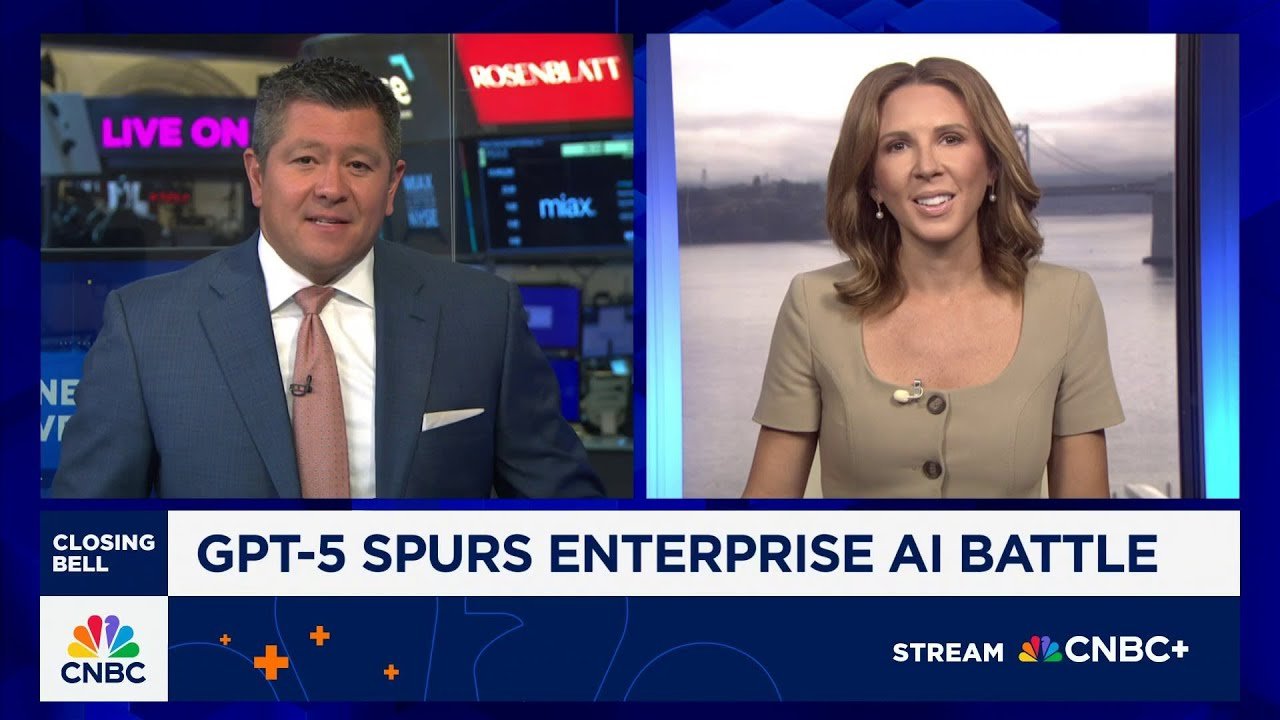
OpenAI launched GPT-5 on 7 August 2025, introducing its most advanced artificial intelligence model to date as competition intensifies across the global AI industry.
GPT-5 was released as the latest iteration of OpenAI’s flagship model, with access extended across ChatGPT’s user base, including free-tier users.
The model delivers improvements in reasoning, coding, and multi-step problem-solving, reflecting a broader push to embed AI more deeply into enterprise workflows such as software development, writing, and healthcare.
Demonstrations highlighted its ability to generate complex software systems from natural language prompts, a capability increasingly referred to as “vibe coding,” signalling a shift toward more autonomous programming tools.
Performance and capabilities
GPT-5 builds on earlier models with stronger logical reasoning and more consistent outputs across a wider range of tasks.
A key focus has been improving reliability. OpenAI said the model shows a reduced tendency to generate incorrect or fabricated information, a persistent issue in earlier systems.
Rather than refusing sensitive prompts outright, GPT-5 is designed to provide “safe completions”, offering controlled, generalised responses that stay within defined safety boundaries.
The company said the model underwent extensive safety testing prior to release, reflecting growing scrutiny over how advanced AI systems are deployed at scale.
Market and industry context
The launch comes amid a surge in enterprise adoption of AI, particularly in software development. Major technology companies have increasingly integrated AI into coding workflows, with a rising share of code now generated or assisted by machine learning systems.
At the same time, competition among leading AI firms has intensified, with significant capital flowing into infrastructure, talent, and model development.
OpenAI itself has been exploring a substantially higher valuation, while demand for top AI researchers has driven compensation to unprecedented levels.
Reaction and limitations
Early feedback pointed to meaningful improvements in coding and reasoning, though some observers noted that the jump from previous versions appeared more incremental compared to earlier breakthroughs.
The rollout was not without issues, with technical disruptions reported during launch. OpenAI CEO Sam Altman acknowledged the release was “more bumpy than expected”, attributing some problems to operational challenges.
Despite advances, GPT-5 remains limited in key areas, including the inability to learn independently or fully replicate human judgment.
Altman has also cautioned that the growing influence of AI systems increases both their potential benefits and risks, particularly as they are used by hundreds of millions of people for increasingly important tasks.
In some big sense, ChatGPT is already more powerful than any human who has ever lived. Hundreds of millions of people rely on it every day and for increasingly important tasks; a small new capability can create a hugely positive impact; a small misalignment multiplied by hundreds of millions of people can cause a great deal of negative impact.
Sam Altman on his blog
Strategic shift
Later in 2025, OpenAI signalled a sharper internal focus on improving core products, with Altman declaring a “code red” to prioritise ChatGPT development and delay other initiatives.
The move reflects intensifying competitive pressure in the AI sector, as companies race to refine performance, reliability, and real-world utility.
2025 has seen the arrival of agents that can do real cognitive work; writing computer code will never be the same. 2026 will likely see the arrival of systems that can figure out novel insights. 2027 may see the arrival of robots that can do tasks in the real world.
OpenAI CEO Sam Altman
Read more:
Nvidia first to reach $5T market cap
Google launches Gemini 3 and Ironwood
DeepSeek launches V3.2 rivaling OpenAI