Syrian President Ahmed al-Sharaa’s historic White House visit

In this story
Jump to Timeline

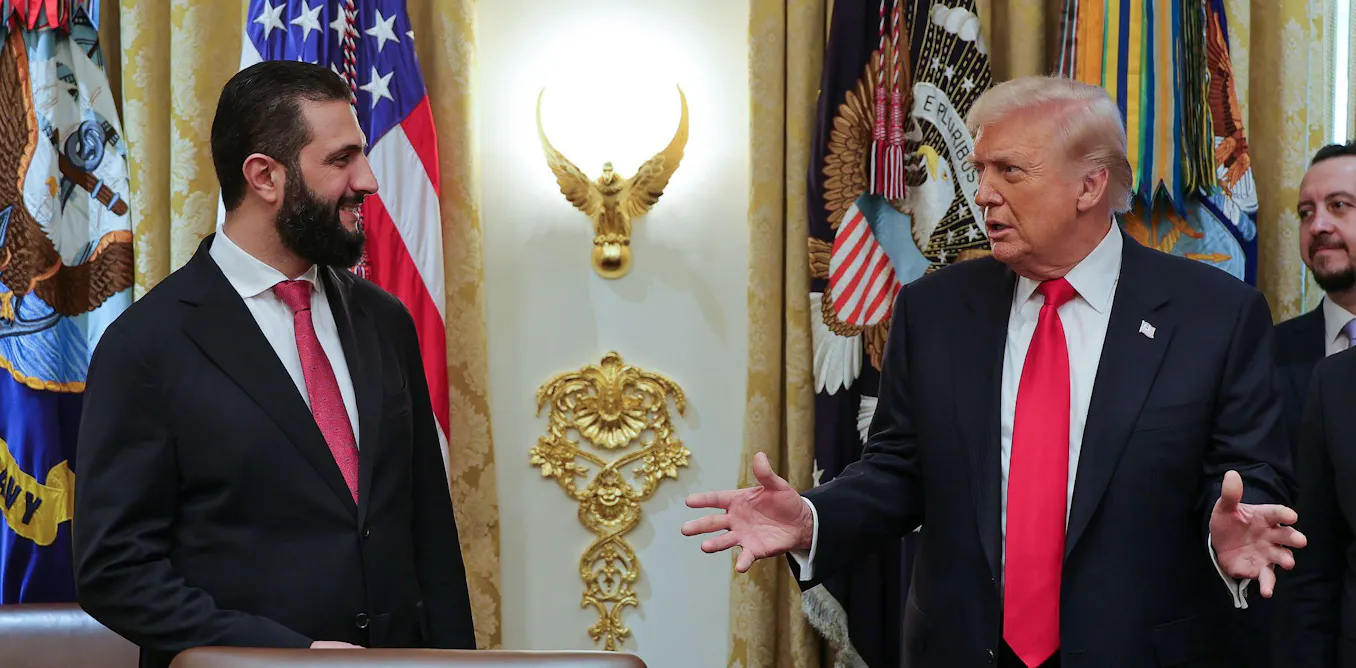
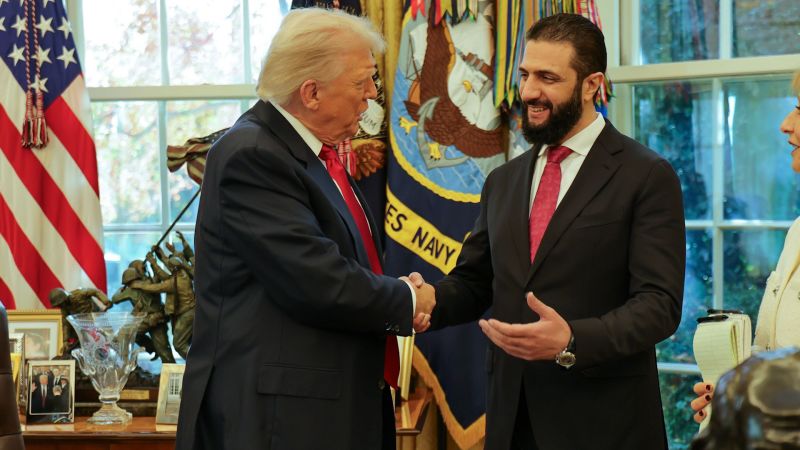
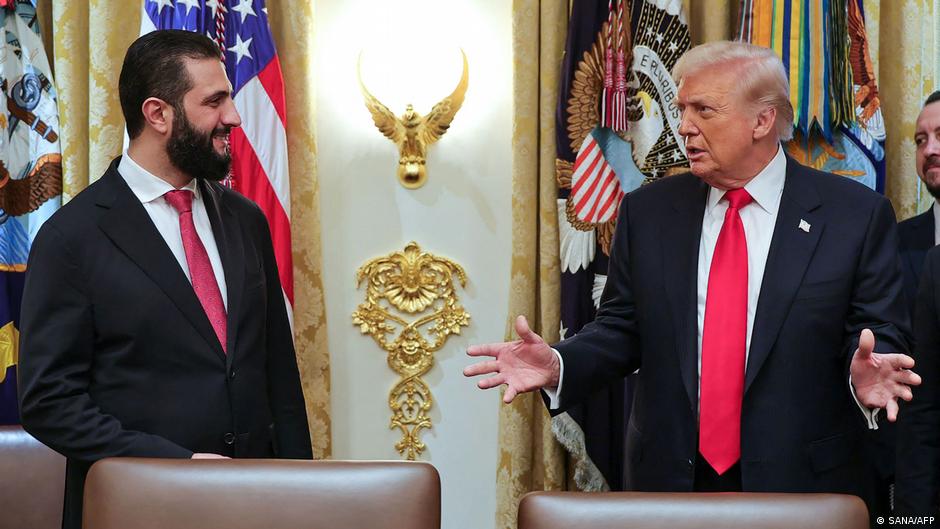
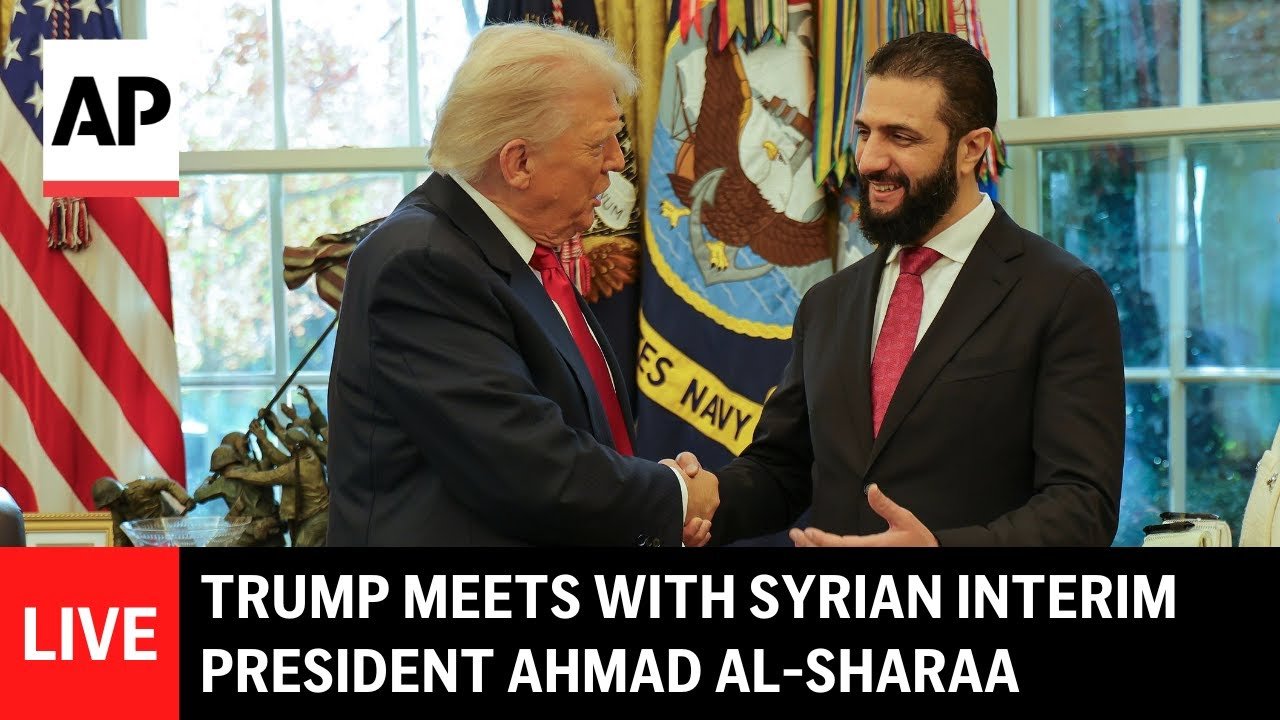
Syrian President Ahmed al-Sharaa’s visit to the White House on November 10, 2025, marked a historic turning point in US-Syria relations. It was the first visit by a Syrian head of state to the White House since Syria’s independence in 1946, signaling a major reset in ties between Washington and Damascus.

The meeting was unprecedented given al-Sharaa’s past as an insurgent with ties to al-Qaeda and the former US bounty on his head. The US had removed his terror designation just days before the visit, underscoring how quickly the diplomatic landscape had shifted.

After the talks, Syria agreed to join the Global Coalition Against Daesh, strengthening cooperation on counterterrorism. The U.S. also extended a 180-day suspension of most sanctions, while a full repeal of the Caesar Act still depended on Congress.

“Rough pasts”

Trump praised al-Sharaa as a “tough guy” and “strong leader,” saying the US would do everything it could to help Syria succeed. He also framed the moment as part of a broader hope for peace in the Middle East, while noting that both leaders had “rough pasts.”

The meeting was still carefully managed. Al-Sharaa entered through a side door, and there was no joint press conference or formal photo opportunity, which suggested caution even amid the warmer tone.

We’ll do everything we can to make Syria successful, because that’s part of the Middle East. We have peace now in the Middle East – the first time that anyone can remember that ever happening.

And people said he’s had a rough past. We’ve all had rough pasts.

US President Donald Trump on Syrian President Ahmed al-Sharaa

Wider impact

The talks opened the door for Syria to resume operations at its embassy in Washington after an 11-year closure. They also put security coordination, reconstruction, and potential regional normalization at the center of the new relationship.

Discussions extended to a possible Syria-Israel security agreement as well. Al-Sharaa said his past links to al-Qaeda were not discussed, and both sides focused instead on Syria’s future as a political and economic partner.

Reactions

Internationally, the visit boosted al-Sharaa’s legitimacy and was widely seen as US recognition of a new regional order. Saudi Arabia and Qatar had already moved toward engagement, while the visit was read as a setback for Iran’s influence in Syria.

Israel reportedly remained wary, with Netanyahu said to have urged Trump not to ease sanctions. In Europe, governments and institutions began re-engaging more openly, viewing the White House visit as a door-opener for reconstruction and normalization.

Inside Syria, supporters saw the trip as a major win for the new government’s standing abroad. At the same time, Kurdish-led forces and some Alawite communities remained uneasy about whether the new leadership would truly protect minorities and avoid sectarian reprisals.
youtube placeholder image

Read also: Ex-jihadist leader Ahmed al-Sharaa becomes Syria’s president

Key widely reported facts from verified sources including Al Jazeera, The New York Times, Sky News, Financial Times, Reuters, CNN

US removes Syria from terrorism list, completing major sanctions rollback

US removes Syria from its terrorism list, completing a phased sanctions rollback that could unlock international trade, investment and reconstruction after Assad’s fall.
Read more

Historic verdict: Bashar al-Assad sentenced to death in absentia for war crimes

The verdict represents a historic moment of accountability for atrocities committed during one of the 21st century's deadliest conflicts.
Read more

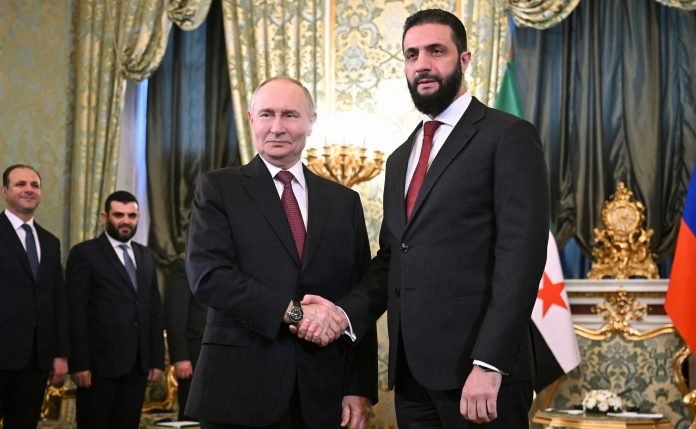
Syria’s Sharaa meets Putin for the first time

Syrian President Ahmed al-Sharaa and Russian President Vladimir Putin met in October 2025 at the Kremlin in Moscow. for their first face-to-face meeting.
Read more

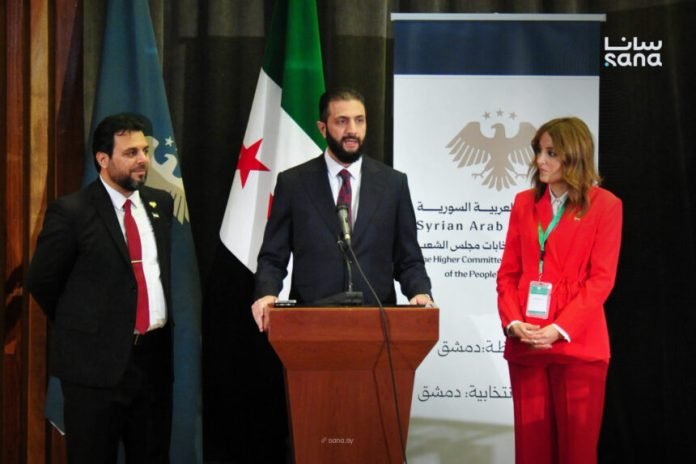
Syria holds first parliamentary elections post-Assad regime

Conducted under a transitional framework, the vote marked a significant shift from decades of dynastic rule, though it was characterized by an indirect voting system rather than a direct popular vote. 
Read more

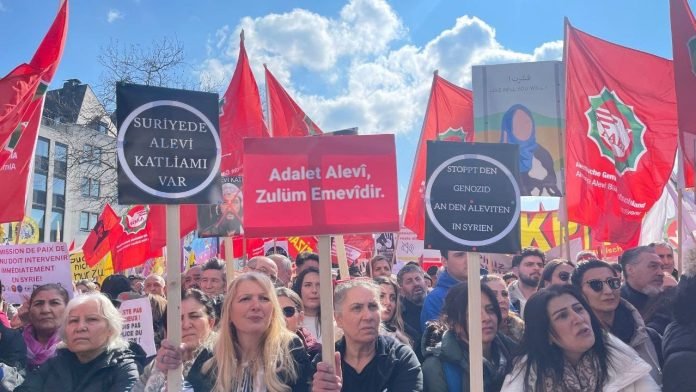
2025 Syria Alawite massacre

In March 2025, Syria experienced a series of sectarian massacres targeting the Alawite minority. An estimated 1,400 to 1,700 people were left dead.
Read more

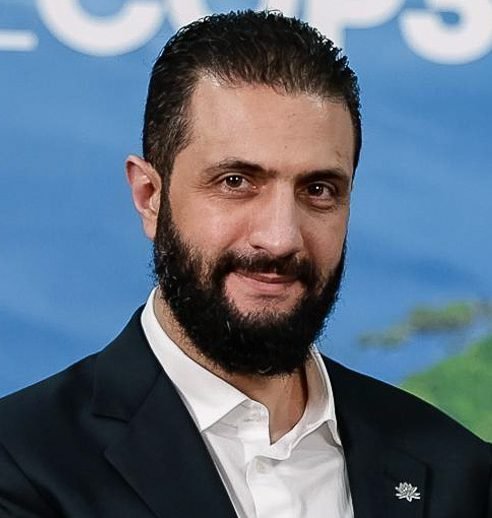
Ex-jihadist leader Ahmed al-Sharaa becomes Syria’s president
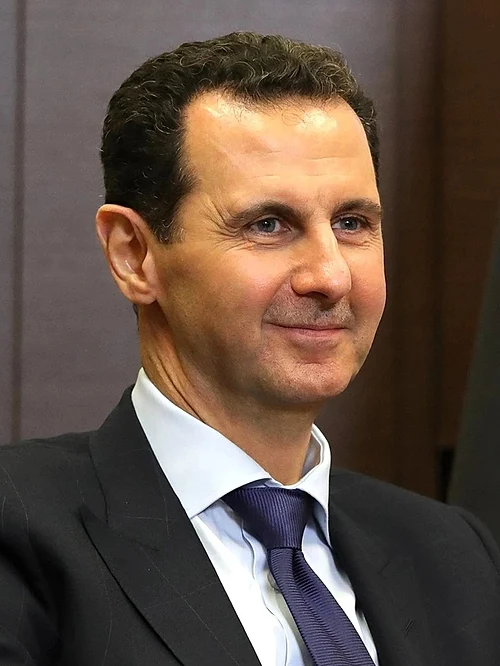
Ex-jihadist leader Ahmed al-Sharaa becomes Syria's president after overthrowing the Assad regime in rapid HTS-led rebel insurgency in Nov-Dec 2024.
Read more
Timeline

Dec 8, 2024: Al-Sharaa becomes de facto leader after his forces capture Damascus and Bashar al-Assad flees to Russia.

Jan 29, 2025: Al-Sharaa is officially named President for a five-year transitional period during the “Syrian Revolution Victory Conference” in Damascus.

Feb 2: Al-Sharaa makes his first high-profile foreign trip to Saudi Arabia, meeting with officials in Riyadh to discuss regional data and AI cooperation.

Mar 13: Al-Sharaa signs the Constitutional Declaration, an interim constitution that establishes a presidential system, designates Islam as the state religion, and abolishes the role of Prime Minister.

May 14: He meets with U.S. President Donald Trump for the first time in Riyadh, signaling a major shift in U.S. policy toward the new administration.

Jul 2025: The U.S. officially revokes al-Sharaa’s “terrorist organization” designation for HTS, facilitating further diplomatic normalization.

Sep 2025: He travels to New York to address the UN General Assembly, marking his first visit to the United States.

Oct 5: Syria holds its first post-Assad parliamentary elections to choose 210 representatives for a new People’s Assembly.

Oct 2025: Al-Sharaa decrees December 8 as “Liberation Day,” an annual national holiday commemorating the fall of the previous regime. 

Nov 10: Al-Sharaa makes a historic visit to the White House to meet with Donald Trump. During the visit, Syria formally joins the Global Coalition to Defeat ISIS.

Dec 6, 2025: Speaking at the Doha Forum, al-Sharaa confirms that national presidential elections are scheduled to take place in 2029 or 2030, at the end of the transition.

Jan 9-11, 2026: He holds meetings with European leaders, including European Commission chief Ursula von der Leyen, to discuss reconstruction aid and economic integration with Egypt. 

Opinion & Analysis

You may also be interested in

LEAVE A REPLY

Please enter your comment!
Please enter your name here