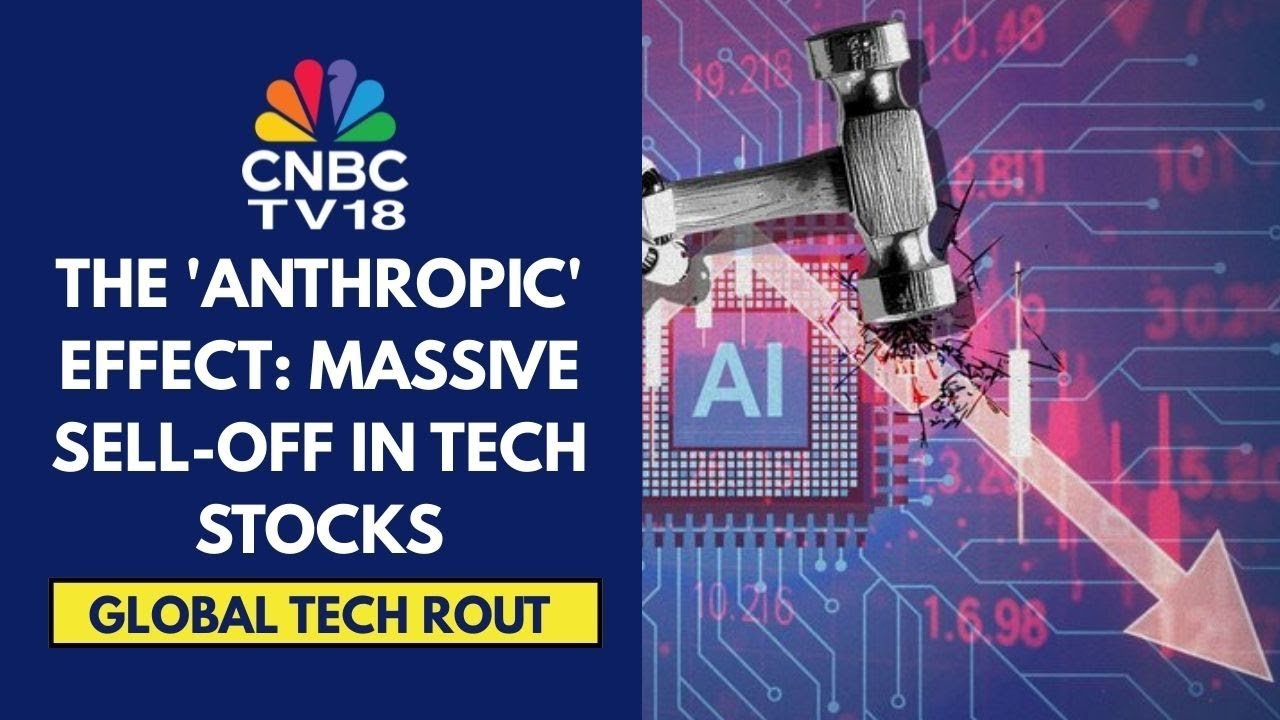
Anthropic’s rollout of Claude Cowork in early 2026 set off a sharp global selloff in software and IT stocks, as investors abruptly began treating AI agents less like productivity tools and more like replacements for high-margin software services. The rout became so severe that it quickly earned labels like the “SaaSpocalypse” and “AIpocalypse.”
The shift began on Jan. 30, when Anthropic released a bundle of 11 open-source plugins for Claude Cowork, its agentic coding tool. The plugins were designed to let the system complete multi-step workflows across legal, finance, sales, marketing and other office tasks with far less human input.
Why markets panicked
The market reaction was driven by a simple fear: if AI agents can do work once billed by seat, then the old software pricing model starts to break. Investors began to price software less as an assistant layer and more as a potential replacement for traditional SaaS products, especially those built around human clicks, dashboards and recurring subscriptions.
That concern spread quickly through enterprise software, legal tech and outsourced IT services. Reuters said the sector-wide rout had already erased about $830 billion since Jan. 28, while by Feb. 4 the global tally was approaching $1 trillion.
The first shock
The first wave of losses hit software names across the US, Europe and India. Thomson Reuters fell 15.83% in one session, LegalZoom dropped 19.68%, Salesforce slid sharply and European names such as RELX and Wolters Kluwer were also caught in the downdraft.
Indian IT services stocks were hit especially hard. The Nifty IT index fell 6% to 8%, wiping out roughly ₹2 lakh crore, as investors worried that autonomous agents could undermine the “man-day” billing model used by firms like TCS and Infosys. The iShares Expanded Tech-Software Sector ETF also logged its worst single-day drop since 2020.
What Cowork does
Claude Cowork is built to move beyond chat and into autonomous execution. The tool’s open-source plugin set included capabilities for calendar management, document search, data queries, visualisation, product management, biology research and even creating new plugins, making it far more than a niche coding assistant.
That also pushed Model Context Protocol into the spotlight. Analysts said the protocol could become the connective tissue for a new generation of agents, with some expecting around 30% of enterprise vendors to launch their own MCP servers to integrate with them.
Early testers reported time savings of 80% or more on complex work such as contract review and RFP responses, adding to the sense that AI was moving from augmentation to replacement in white-collar workflows.
Opus 4.6 adds fuel
Anthropic intensified the pressure on Feb. 5 with Claude Opus 4.6, a model update aimed at improving Cowork across office and coding tasks. The new version expanded the context window from 200,000 tokens to one million, added 128,000-token output, and introduced more adaptive reasoning and agent-team workflows.
Anthropic also highlighted PowerPoint generation as a major improvement, saying the model could produce slide decks closer to production-ready quality. It claimed Opus 4.6 outperformed OpenAI’s GPT-5.2 on benchmarks tied to finance, law and other knowledge work.
The SaaSpocalypse thesis
The phrase “SaaSpocalypse” was coined by Jefferies trader Jeffrey Favuzza to describe the panic selling. His broader point, echoed by analysts across the market, was that AI had crossed from copilot to pilot: if one agent can do the work of ten people, then the demand for ten software seats may not survive intact.
That logic also raises the problem of interface obsolescence. If agents interact directly with data through MCP rather than through traditional dashboards and UIs, then some expensive software wrappers risk becoming interchangeable.
Forrester’s “service as software” framing captured the next step: companies may stop buying tools and start buying outcomes.
Private equity pressure
The selloff also scrambled the private equity playbook. Firms such as Thoma Bravo and Vista Equity Partners, which own large B2B software portfolios, face a tougher valuation environment as the market questions whether seat-based revenue can still support premium pricing.
The old Rule of 40 framework — growth plus margin — looks shakier if seat counts are no longer a stable proxy for demand. That has created a “zombie portfolio” problem for leveraged software owners and made IPO exits much harder, since public markets are aggressively punishing the sector.
What happens next
Some of the losses may prove exaggerated, and shares later rebounded after Anthropic partnerships helped reassure investors that the market was not headed for a total software wipeout. But the message from the first week of February was unmistakable: the market now sees autonomous AI not just as a tool, but as a force that could rewrite the economics of software itself.

Read also:
DeepSeek launches V3.2 rivaling OpenAI
OpenAI launches GPT-5 for all users