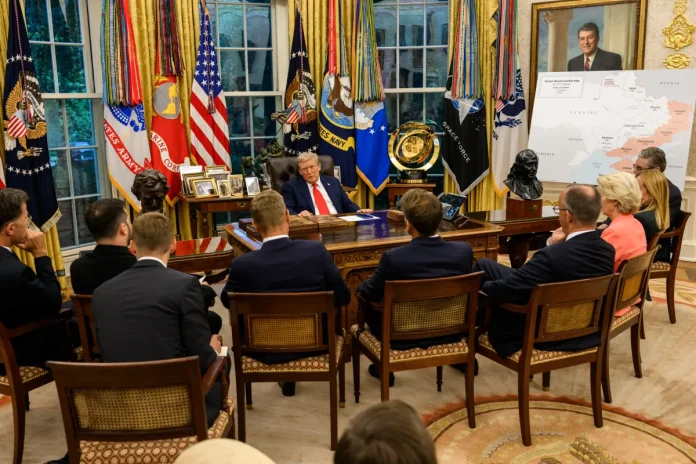
On 29 September 2025, US President Donald Trump unveiled his 20-point Gaza Peace Plan at the White House alongside Israeli Prime Minister Benjamin Netanyahu, pitching it as a path to end two years of war and turn Gaza into a “deradicalised, terror‑free zone.”
The deal includes phased hostage/prisoner exchanges, aid influx, and Israeli withdrawal to a “yellow line,” but faces violations, with Israel controlling 58% of Gaza and ongoing strikes amid talks for permanence.
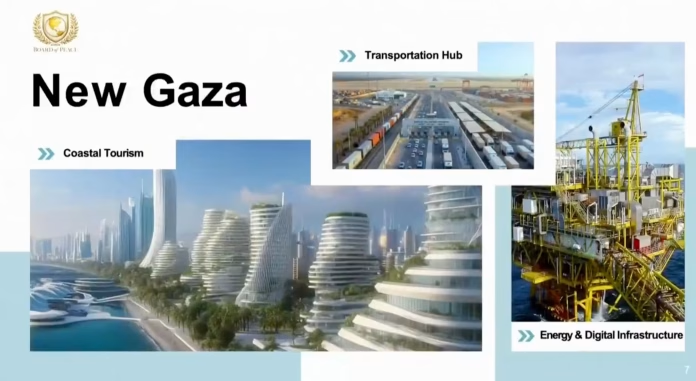
The plan envisions Gaza being run under a temporary transitional administration: a technocratic, apolitical Palestinian committee responsible for day‑to‑day services and municipal governance, excluding Hamas from formal power. “Full” humanitarian access will be made available, with large‑scale deliveries of water, electricity, medical supplies and other aid flowing into Gaza as the ceasefire takes hold.
President Trump said on October 9 that Israel and Hamas “signed off on the first phase” of the deal. Hamas announced it would return all 48 remaining hostages in exchange for Palestinian prisoners and agreed in principle to hand governance to Palestinian technocrats, though it stopped short of pledging full disarmament.
International Stabilization Force
This committee would include qualified Palestinians and international experts, overseen by a new international “Board of Peace” chaired by President Trump, with other leaders such as former UK Prime Minister Tony Blair expected to join.
Security on the ground would shift to a temporary International Stabilization Force (ISF), made up of troops from multiple countries, working with Israel and Egypt on border security and training new Palestinian police, while the Israel Defense Forces (IDF) gradually pulls back.
As the ISF establishes control, the IDF is to withdraw to a designated “yellow line,” leaving Israel in control of roughly 58% of Gaza.
Hamas is expected to disarm or see its leaders go into exile; any further Israeli pullback and the reopening of Rafah would depend on security benchmarks.
Sharm El-Sheikh Peace Summit/ Gaza Peace Summit
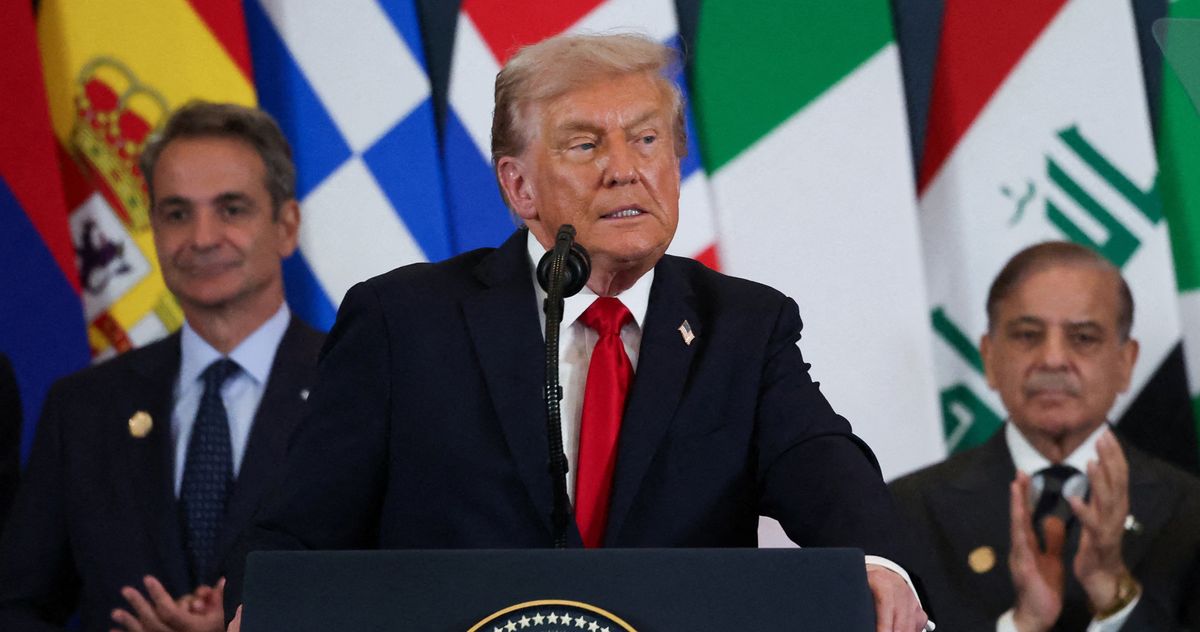
On October 13, President Trump co-signed the “Gaza Declaration” in Sharm El-Sheikh, dubbed “The Trump Declaration for Enduring Peace and Prosperity,” with the head of states for Egypt, Qatar and Turkey.
Over 30 world leaders attended as witnesses, including Palestinian President Mahmoud Abbas, UK Prime Minister Keir Starmer, French President Emmanuel Macron, and German Chancellor Friedrich Merz.
The memorandum laid out broad commitments the four leaders agreed to uphold in backing Trump’s peace plan but appeared largely symbolic.
Endorsement by UN Security Council
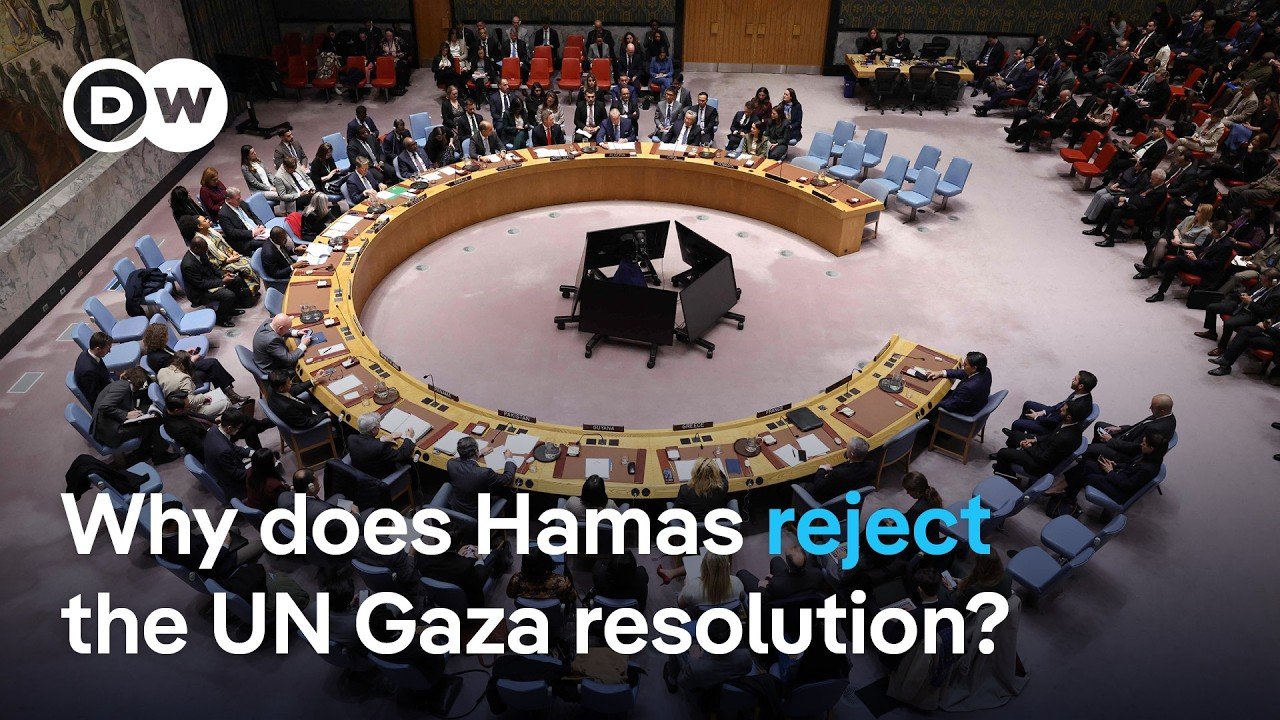
The UN Security Council adopted a US‑drafted resolution on November 17, endorsing President Trump’s 20‑point plan and authorising the International Stabilization Force (ISF), with 13 members (including the UK, France and Somalia) voting in favour and Russia and China abstaining.
The ISF is a multinational security and peacekeeping mission established under the Trump administration’s 20-point Gaza peace plan, commanded by US Major General Jasper Jeffers, a former US Special Operations commander. It reports to the Board of Peace, the international oversight body chaired by Donald Trump.
Unlike traditional “passive” peacekeeping forces, the ISF is often described as a “peace enforcement” mission with a proactive mandate focusing on demilitarization, border security, policing and facilitating aid.
It’s the start of a grand concord and lasting harmony for Israel and all the nations of what will soon be a truly magnificent region. I believe that so strongly. This is the historic dawn of a new Middle East.
US President Donald Trump
What happened next?
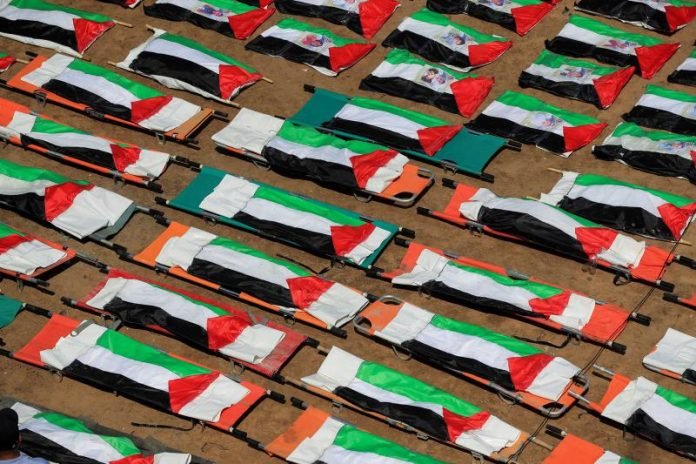
Under the ceasefire terms, Israel agreed to return 15 Palestinian bodies for each hostage recovered. Gaza’s Health Ministry says 345 bodies have been sent back so far, while Palestinian militants have returned 25 hostage remains, leaving two Israelis and one Thai man still unaccounted for.
Rights groups, including Amnesty International, said Israeli forces continued to carry out unlawful attacks and restrict life‑saving aid despite the ceasefire, arguing that patterns of destruction and deprivation amount to an ongoing genocide.
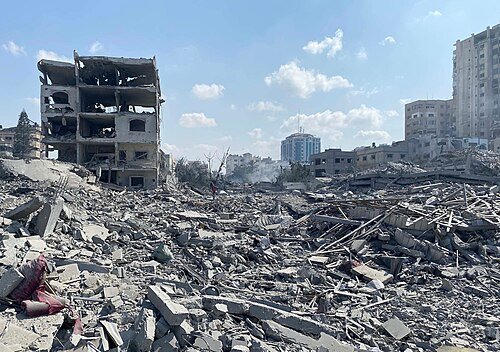
Israel is accused of violating the ceasefire more than 500 times in about seven weeks – demolishing over 1,500 buildings and killing at least 347 Palestinians – while Hamas and other groups have fired rockets on multiple occasions. However, it accuses Hamas of stalling by failing to return all hostage remains and has threatened to resume large‑scale military operations or limit aid if this does not change. Hamas claims some bodies cannot yet be recovered because they lie beneath ruins created by Israel’s two‑year offensive.
Phase two of the plan, which is supposed to expand governance changes and further withdrawals, has been repeatedly delayed as both sides trade accusations of bad faith. Israel points to incomplete hostage accounting and continued Hamas influence. Hamas and its backers say Israel’s ongoing strikes and restrictions show it is not honoring its own commitments.
“Victor’s peace”
Critics argue the deal risks entrenching a de facto partition of Gaza, with heavily fortified Israeli “safe zones” covering roughly 58% of the enclave and no clear path to a full military withdrawal, while reconstruction money and projects are seen as skewed toward areas under Israeli control rather than genuinely restoring Palestinian self‑rule.
Foreign Policy describes the arrangement as a “victor’s peace” that rewards military force in a way reminiscent of post‑war deals between Azerbaijan and Armenia.
Analysts note that Trump is openly eyeing a Nobel Peace Prize and hopes to replicate the Gaza model in Ukraine, while Netanyahu signals he will not accept a true end to the war until Hamas is crushed, leaving the UN‑backed framework looking promising on paper but extremely fragile in practice.
Support for Trump
In her 2025 Nobel Peace Prize speech, Venezuelan opposition leader María Corina Machado, who received the award instead of Trump, praised his Gaza diplomacy and said she was grateful for what he was doing “around the world for peace,” a line widely interpreted as a symbolic dedication of part of her win to his peacemaking efforts.
After the deal was announced, President Trump received international praise from many world leaders including Chinese President Xi Jinping and Russian President Vladimir Putin.
In a rare display of bipartisan praise, Joe Biden, Bill Clinton, Kamala Harris, Hillary Clinton, Chuck Schumer and Condoleezza Rice publicly commended the Trump administration for its role in securing the Middle East peace deal.
My statement on the ceasefire between Israel and Hamas: pic.twitter.com/lN0xQxGHfT
— Bill Clinton (@BillClinton) October 13, 2025
Barack Obama issued a statement on X welcoming the truce and saying “we should all be encouraged and relieved” that an end to the conflict was in sight, but did not mention Trump by name. This omission drew criticism from Trump allies, right‑wing media, and some commentators for praising the deal’s outcome while refusing to credit the president who brokered it.
After two years of unimaginable loss and suffering for Israeli families and the people of Gaza, we should all be encouraged and relieved that an end to the conflict is within sight; that those hostages still being held will be reunited with their families; and that vital aid can…
— Barack Obama (@BarackObama) October 9, 2025
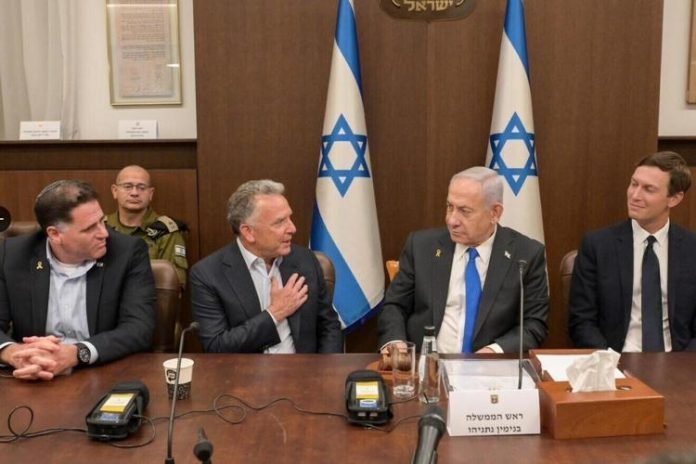
President Trump’s son-in-law Jared Kushner was one of the central architects and hands‑on negotiators of the Gaza peace deal, working both on the design of the 20‑point plan and on the talks that produced its first‑phase ceasefire and hostage agreement.
Read more: Trump proposes Ukraine Peace Plan