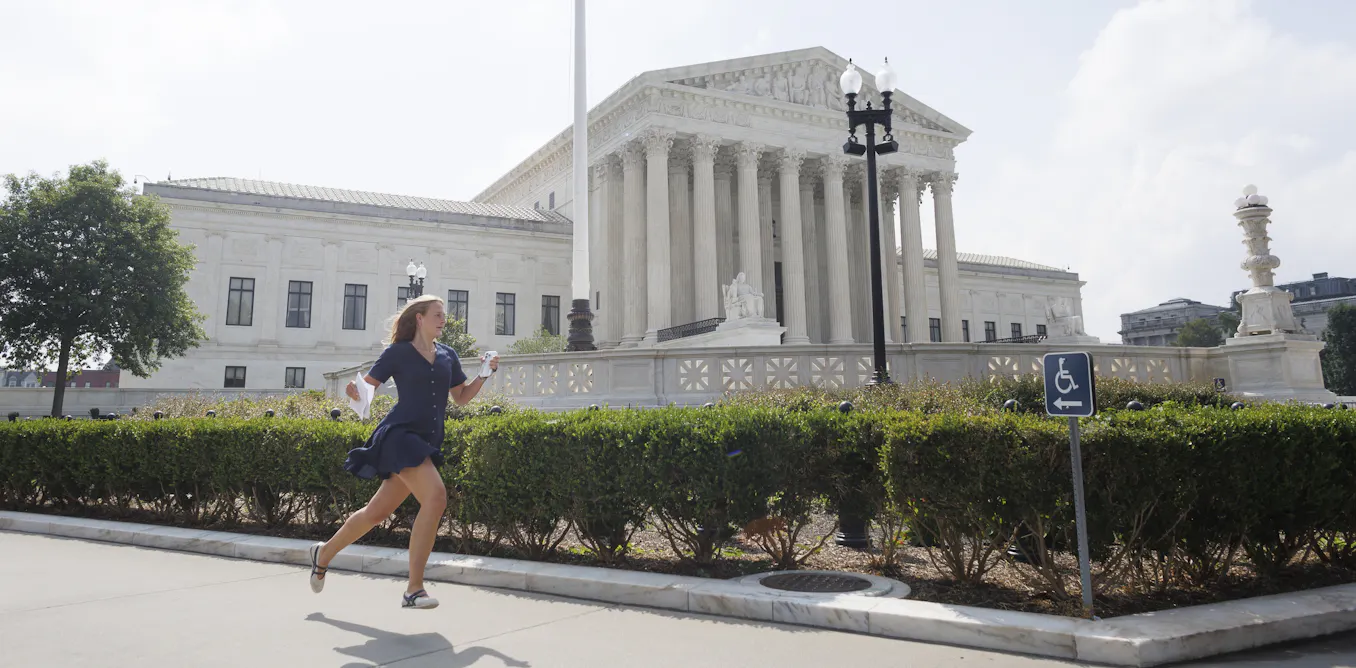






The US Supreme Court has sharply expanded presidential control over independent federal agencies, ruling 6–3 in Trump v. Slaughter that President Donald Trump could fire Federal Trade Commission Commissioner Rebecca Slaughter without cause. The decision overturns Humphrey’s Executor, the 1935 precedent that had protected FTC commissioners and similar agency leaders from at-will dismissal, and it marks one of the most consequential separation-of-powers rulings in years.
Just as important, the Court paired that ruling with a narrower order protecting Federal Reserve Governor Lisa Cook, signaling that the justices are not treating every independent institution the same way. That carve-out suggests the Court is willing to redraw the boundaries of executive power while still preserving exceptional treatment for the Fed.
What the Court decided
The immediate dispute began when Trump removed Slaughter from the FTC. Under the FTC Act, commissioners serve staggered seven-year terms and may only be removed for cause, historically understood as inefficiency, neglect of duty, or malfeasance in office. The Court ruled that those statutory limits cannot stand against the president’s constitutional authority to supervise the executive branch.
Chief Justice John Roberts wrote for the conservative majority that the Constitution places executive power in the president and that officials carrying out federal law must remain answerable to him. In practical terms, the ruling says the White House has more direct control over the officers who run major regulatory agencies.
The Court’s decision does not merely resolve one personnel dispute. It rejects the legal foundation that has long supported the insulation of certain independent agencies from direct presidential removal power. That is why the case is being read as a structural shift, not just a victory for one president in one agency fight.
Why Humphrey’s Executor mattered
Humphrey’s Executor has been central to the modern administrative state for nearly a century. It allowed Congress to create independent commissions whose members serve fixed terms and cannot be fired at will, a design meant to reduce political pressure and encourage regulatory continuity. The FTC, the NLRB, the Consumer Product Safety Commission and the Merit Systems Protection Board all rely, in one form or another, on that model.
By overruling that precedent, the Court has destabilized the legal architecture that has protected many independent regulators. The practical question is no longer just whether a president can remove one commissioner, but whether Congress can continue to build agencies that are meaningfully insulated from White House control.
That is what makes the ruling so significant for Washington, business, labor, and the broader regulatory state. Agencies that once operated with a degree of independence may now be more vulnerable to direct political direction, especially in periods of aggressive presidential action.
The Fed exception
The most notable limitation in the ruling is the Court’s treatment of the Federal Reserve. In a separate action, the justices allowed Lisa Cook to remain in office while her legal challenge proceeds, rather than letting the administration remove her immediately. That move preserved the Fed’s short-term independence and prevented the ruling from becoming an all-purpose green light for firing central bank officials.
This matters because the Fed occupies a special place in American governance. The Court has indicated that, for now, it sees the central bank as distinguishable from other independent agencies, likely because of the Fed’s distinct history, structure and market-sensitive role. In effect, the Court gave the White House a major victory while leaving one important institutional firewall standing.
The result is a two-track system: broad presidential removal power over many regulatory agencies, but an unresolved and possibly narrower path when it comes to the central bank.
The legal reasoning
Roberts’ majority opinion leaned heavily on separation-of-powers principles and the idea that executive authority must remain unified. The decision reflects a strong version of the “unitary executive” theory, which argues that the president should have direct control over all executive officers. Supporters of this view say it ensures accountability because voters know whom to blame or reward for agency performance.
The Court’s critics see the ruling very differently. They argue that independent agencies were designed precisely to avoid abrupt political interference in areas like labor, consumer protection and market regulation. In that view, the decision gives presidents more power to reshape enforcement policy, weaken institutional checks, and turn regulatory bodies into extensions of the White House.
That disagreement is now likely to drive future litigation. The boundaries of the ruling, especially as applied to agencies beyond the FTC, will almost certainly be tested in lower courts.
The dissent
Justice Sonia Sotomayor wrote a forceful dissent, joined by Justices Elena Kagan and Ketanji Brown Jackson. The dissent warned that the majority was not merely refining a doctrine, but reorganizing the government in a way that could undermine institutional stability. It argued that the Constitution does not require the president to have direct removal power over every official in the executive branch.
The dissent also raised alarm about the broader consequences of concentrating authority in the presidency. Its warning language was unusually stark, cautioning that the ruling could lead to “submission, instability and even oppression.” That phrasing underscores how deeply divided the Court is over the future of independent governance.
For readers, the dissent is important because it frames the ruling as a constitutional turning point, not a narrow statutory interpretation. The three liberal justices are effectively saying that the majority has changed the operating assumptions of the federal government.
Political fallout
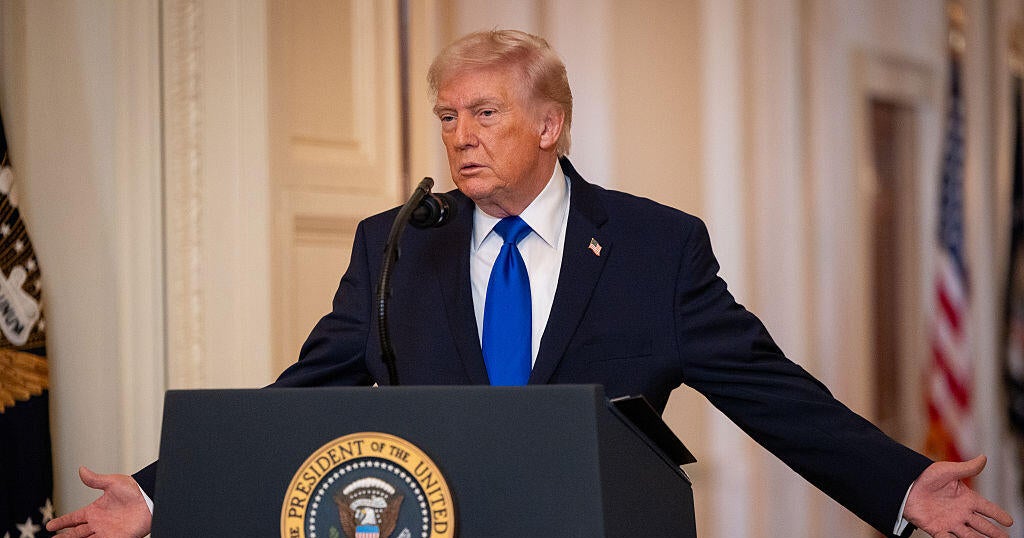
Trump praised the decision publicly and treated it as a validation of his argument that the president should have freer rein over the executive branch. That reaction is predictable, but it is also revealing: the ruling strengthens not just the presidency in the abstract, but the ability of a future administration to install loyalists and remove resistance across the regulatory system.
Critics, including former Secretary of State Hillary Clinton, cast the ruling as a dangerous transfer of power away from Congress and toward the Oval Office. That criticism will likely intensify as observers consider what the decision means for agencies that police antitrust, labor, consumer safety and financial markets.
The political significance goes beyond Trump himself. Even if a future president uses this power differently, the precedent now gives every administration more leverage over federal agencies that once had a degree of structural independence.
What happens next
The most immediate consequence is uncertainty. Independent agencies that assumed they were insulated from partisan turnover may now have to reassess leadership protections, litigation risk and enforcement continuity. In practice, that could affect how aggressively agencies pursue investigations, rulemaking and settlements when the president has the ability to remove top officials more easily.
The longer-term consequence is institutional. This ruling could accelerate a broader realignment of the administrative state, shifting power away from multi-member boards and toward the executive office. Even with the Fed exception, the Court has signaled that independence is no longer a default rule for federal agencies.