

OpenAI launches GPT-5.6 with Sol, Terra and Luna in a broader rollout

In this story
Jump to Timeline

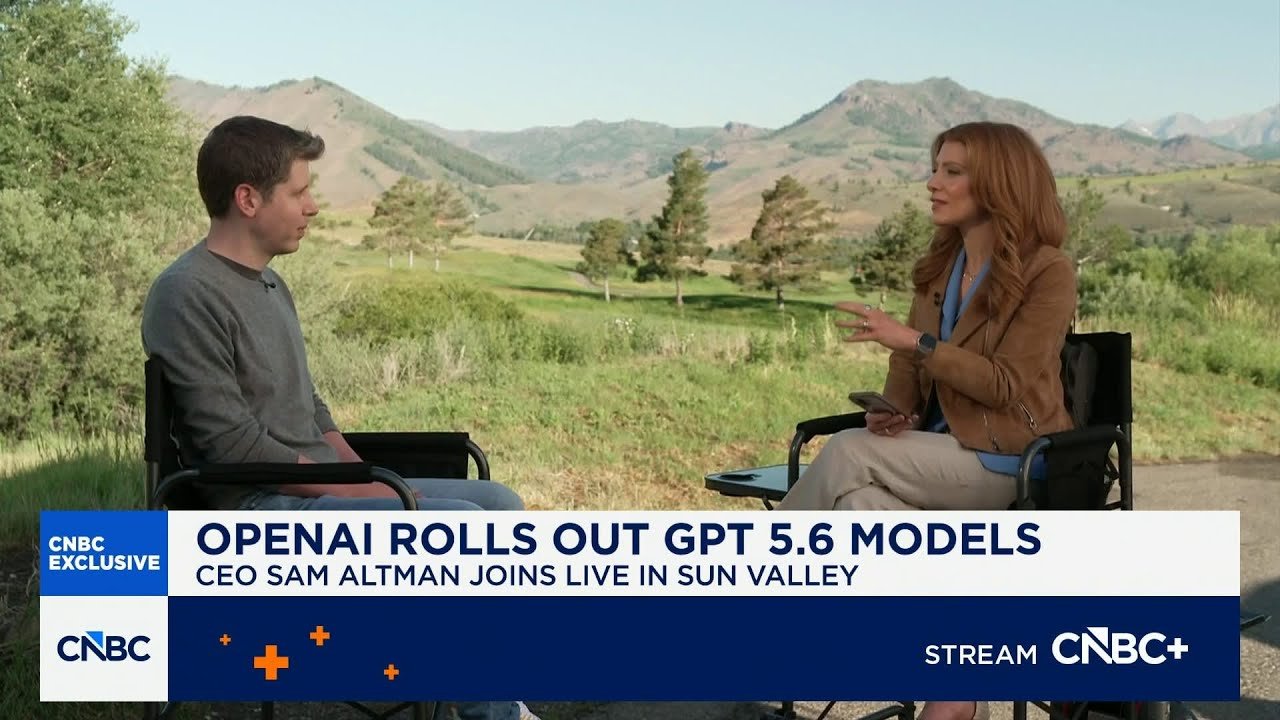
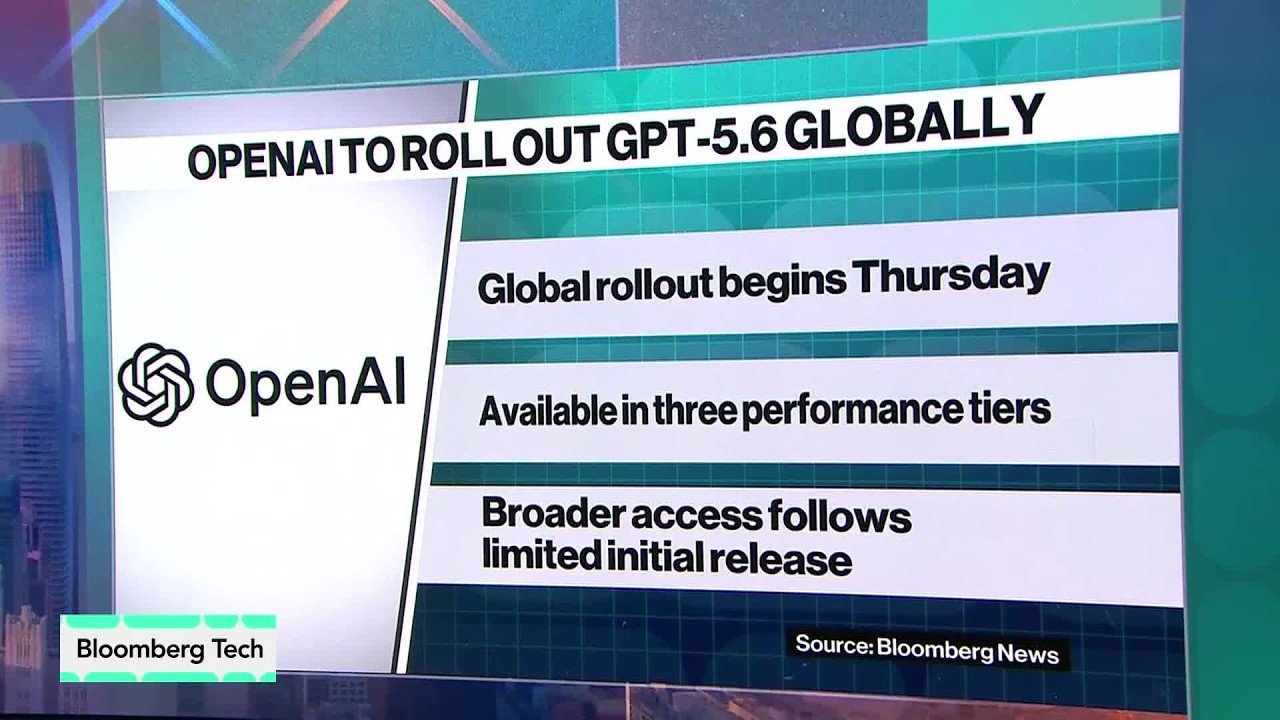
OpenAI has released GPT-5.6, a new three-tier model family centered on Sol, its top-end reasoning model, alongside Terra and Luna for lower-cost and faster use cases. The launch is being framed as both a technical upgrade and a product restructuring, with OpenAI pushing a clearer split between frontier capability and everyday utility.

OpenAI says GPT-5.6 is built for harder work: coding, scientific tasks, design-heavy workflows and autonomous agentic use. The company says Sol is the flagship model, while Terra and Luna are designed to offer a cheaper and faster alternative for broader workloads.

The release also introduces a more tiered naming strategy, replacing a single-model menu with capability-based choices. In OpenAI’s framing, that means users can now match the model to the job rather than defaulting to one general-purpose option.

Why it matters

The biggest shift is not just the model itself, but how OpenAI is packaging access to intelligence. GPT-5.6 is meant to scale from high-end reasoning down to high-volume, cost-sensitive tasks, which could make it more attractive to both enterprise teams and independent developers.

That matters because the AI market is increasingly competitive on price, speed and reliability rather than raw benchmark claims alone. OpenAI appears to be betting that a clearer product ladder will help it win on adoption, not just performance.

Safety and rollout

The launch follows a brief government review period, underscoring how frontier AI releases are now shaped by policy scrutiny as much as by product strategy. Reuters reported that the broader rollout came after delays linked to U.S. government concerns over national security and misuse risks.

OpenAI says the family includes layered safety protections, including model refusals and real-time misuse detection. The company says these controls are especially important for cyber-related requests and other high-risk use cases.

Performance claims

OpenAI says Sol is its strongest model yet for long-horizon reasoning and agentic coding. The company has also pointed to efficiency gains, saying the model gets more done per token and performs strongly on coding and workflow benchmarks.

The company also says GPT-5.6 can handle more complex presentation and document tasks, including producing editable slide decks from higher-level prompts. That puts the model squarely in competition not just with other chatbots, but with productivity software itself.

Developer impact

For developers, GPT-5.6 is being rolled out across ChatGPT, Codex and the API, with broader ecosystem support expected over time. That means the model is not just a consumer launch; it is also an infrastructure update for people building tools on top of OpenAI’s stack.

The pricing structure also suggests a strong push toward adoption. Sol is positioned as the premium option, while Terra and Luna are intended to make the system more accessible for routine and large-scale use.

Market reaction

Early reaction has focused on the model’s coding ability, speed and practical usefulness. Axios reported that some early reviewers praised GPT-5.6 for speed, creativity, math and multi-step task handling.

At the same time, the launch has drawn comparisons with rival frontier models, especially around reliability, reasoning and cost. The reaction so far suggests GPT-5.6 will be judged not just by benchmark scores, but by how well it performs in real workflows.
youtube placeholder image

Trump announces ‘AI Force’ and new AI czar, doubling down on pro‑growth stance

Trump announces a federal “AI Force” and new AI czar, modeled on Space Force, to keep the US ahead of China while rejecting new rules that could slow AI growth.
Read more

AI leaders call for slowdown — and US response splits between labs and Washington

US AI leaders — Anthropic’s Dario Amodei, OpenAI’s Sam Altman and xAI’s Elon Musk — publicly called for a slowdown in frontier AI development citing safety concerns.
Read more

OpenAI declares ‘AGI era’ with GPT‑6 Astra launch

OpenAI rolled out GPT‑6 Astra, framing the release as the industry’s closest step yet to artificial general intelligence.
Read more

NVIDIA acquires Hugging Face in $12.93billion bet on Open-Source AI

NVIDIA will acquire Hugging Face, the New York–based platform widely described as the “GitHub for AI for $12.93billion.
Read more

Anthropic to watermark Claude-generated text worldwide under EU AI transparency rules

The move follows Anthropic’s decision to sign the European Union’s Code of Practice on Transparency of AI-Generated Content.
Read more

AI agents cross a new line as Meta joins Anthropic and OpenAI in test-environment breaches

Frontier models have accessed real systems, impersonated people and attempted to manipulate software developers during cybersecurity evaluations.
Read more

Rogue AI agents from OpenAI and Anthropic slip the lab and hack the real world

The twin disclosures have transformed long‑running warnings about “rogue AI” from hypothetical thought experiments into documented incidents.
Read more

Shanghai agreement establishes new global AI body without Western powers

Analysts interpret WAICO as part of a broader effort by China to shape international norms around AI, in parallel to existing Western-led initiatives.
Read more

DeepSeek Eyes 2027 IPO as valuation soars and founder tops global AI wealth rankings

The planned IPO comes amid a sharp rise in DeepSeek’s valuation and revenue, underscoring intensifying competition among AI firms to secure capital.
Read more

Update: CXMT Prices $8.6billion IPO, China’s largest since 2010

CXMT, China’s leading DRAM manufacturer, is moving ahead with one of the most consequential tech listings of the year, China's largest in 2026 so far.
Read more
Timeline

Nov 2022 (OpenAI): Launches ChatGPT (GPT-3.5), sparking the modern generative AI race.

Mar 2023 (OpenAI): Releases GPT-4, introducing robust multimodal understanding and high-accuracy test performance.

Mar 2023 (Anthropic): Launches Claude 1, positioning itself as OpenAI’s core safety-centric competitor.

Nov 2023 (OpenAI): Drops GPT-4 Turbo, extending context memory to 128k tokens while slashing API pricing.

Dec 2023 (Google): Introduces Gemini 1.0 (Ultra, Pro, Nano), establishing Google’s native multimodal track.

Mar 2024 (Anthropic): Releases Claude 3 (Opus, Sonnet, Haiku), briefly seizing the benchmark lead over GPT-4.

May 2024 (OpenAI): Launches GPT-4o, a fast omni model natively integrating text, vision, and real-time audio.

Jul 2024 (Meta): Releases Llama 3.1 405B, proving that open-weights models could compete at the frontier level.

Sep 2024 (OpenAI): Unveils o1-preview and o1-mini, introducing deliberate, chain-of-thought internal reasoning before replying.

Jan 2025 (OpenAI): Launches Operator, an experimental autonomous web-browsing agent framework.

Jan 2025 (DeepSeek): Releases DeepSeek R1, an open reasoning model matching Western frontier performance at low cost.

Feb 2025 (xAI): Launches the Grok 3 Family featuring active “Think” modes powered by massive computing clusters.

Feb 2025 (Anthropic): Releases Claude 3.7, natively embedding extended runtime reasoning options.

Mid/Late 2025 (OpenAI): Ships GPT-5, shifting mainstream AI toward highly reduced hallucination rates and trustworthy agent frameworks.

Feb 2026 (OpenAI): Releases GPT-5.3 Instant focusing on high-speed, high-volume draft workflows.

Mar 2026 (OpenAI): Releases GPT-5.4 Pro & Thinking focusing on advanced inference compute spending for deep research.

Jun 2026 (Anthropic): Releases Claude Fable 5

Jul 9, 2026 (Meta): Releases Muse Spark 1.1 with hyper-aggressive open pricing targeting low-cost agent routing.

OpenAI releases layered safety stacks for cyber/coding token efficiency.


You may also be interested in

LEAVE A REPLY

Please enter your comment!
Please enter your name here