NVIDIA to build out $500billion of AI infrastructure in the US

Jump to Timeline

In April 2025, Nvidia announced plans to build up to $500billion worth of AI infrastructure and supercomputers in the United States over four years, marking the first time its most advanced AI systems would be manufactured entirely on American soil.

On April 14, Nvidia said it would work with partners including TSMC, Foxconn, Wistron, Amkor and SPIL to expand US production of its AI hardware. The company has already started making Blackwell chips at TSMC’s plant in Phoenix and has secured more than 1 million square feet of manufacturing space in Arizona.

Nvidia is also building two supercomputer factories in Texas, one with Foxconn in Houston and another with Wistron in Dallas, with mass production expected to ramp up within 12 to 15 months.

Why it matters

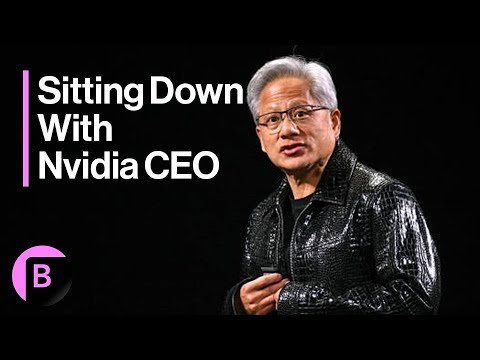
The move is intended to strengthen Nvidia’s supply chain and reduce exposure to tariffs and geopolitical risk. CEO Jensen Huang described the facilities as “AI factories” built to process workloads at gigawatt scale, and said the company would use its Omniverse and Isaac GR00T platforms to help design and automate them.

The project is expected to create hundreds of thousands of jobs and deepen U.S. control over advanced chip and supercomputer production. It was also embraced by the Trump administration as a win for its “America First” agenda, with the White House saying it would expedite permitting.

Market reaction

Investors largely treated the announcement as confirmation of long-term AI demand rather than hype. Analysts said the $500billion figure gave the market unusually strong visibility into future sales, while firms such as Bank of America, Mizuho and Goldman Sachs pointed to a multi-year AI hardware cycle rather than a peak.

Still, the stock has remained volatile amid broader tech selloffs and tariff-related concerns. The scale of the spending also fueled debate over whether the AI boom is being built on durable demand or increasingly aggressive capital expenditure.

Global response

China has pushed back against Nvidia through export restrictions and antitrust scrutiny, while urging domestic firms to rely more on local suppliers such as Huawei. At the same time, the rise of cheaper Chinese AI models like DeepSeek briefly unsettled investors by raising questions about how much infrastructure spending the market will ultimately require.
youtube placeholder image

Read also:
Nvidia first to reach $5T market cap
8 pivotal moments in the AI race in 2025
2025 TIME Person of the Year: Architects of AI
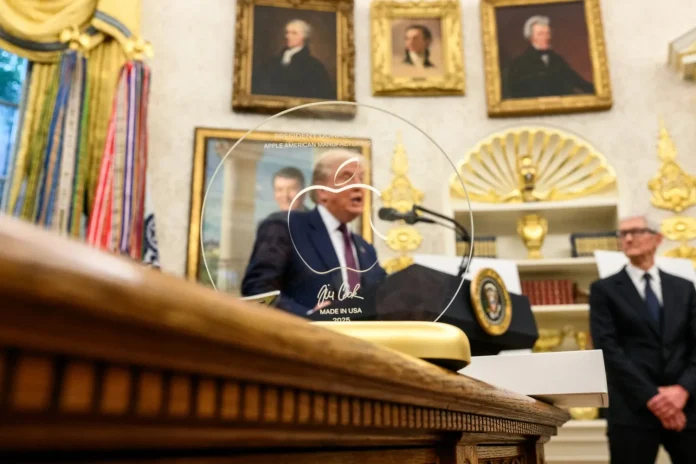
Apple announces additional $100B US investment following tariff threats
Key widely reported facts from verified sources including Reuters, Bloomberg, CNBC, The Guardian, Fox Business, Fortune, Newsweek

US-South Korea trade spat revives tariff talk

In early 2026, South Korea and the US States had a dispute over delayed ratification of their trade deal and the Coupang investigation, triggering renewed tariff talk.
Read more

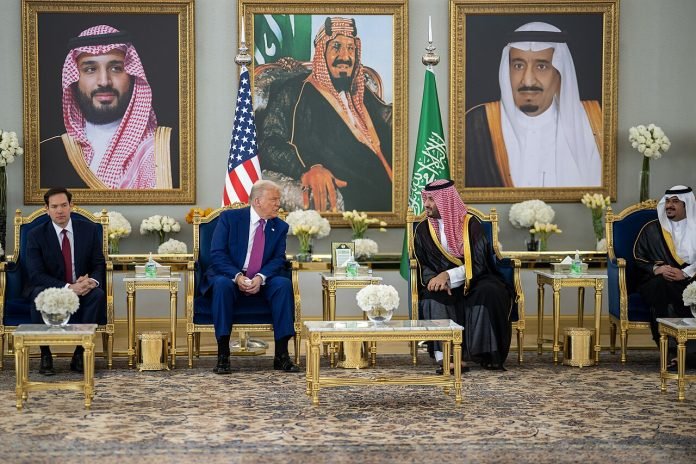
Saudi Arabia pledges $1trillion investment in the US

Saudi Crown Prince Mohammed bin Salman (MBS) pledged to up investment commitments in the US to nearly $1 trillion.
Read more

South Korea pledges $350billion US investment for reduced tariffs

South Korea and the US have formalized a trade agreement involving a $350 billion investment pledge from Seoul in exchange for reduced US tariffs.
Read more

Apple announces additional $100billion US investment following tariff threats
Apple is expanding its US investment to $600B over the next four years, anchored by a new $100B commitment to domestic manufacturing.
Read more

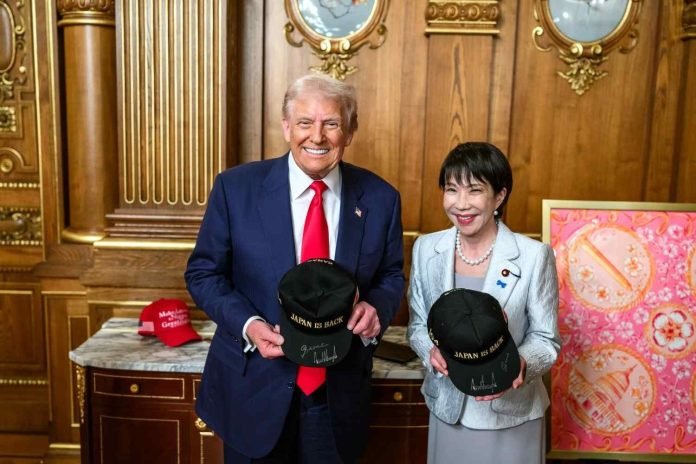
Japan commits $550billion to US industries in major trade deal

In 2025, the US and Japan reached a major bilateral trade agreement following a period of economic tension from broad US tariff actions.
Read more

Trump’s Gulf investment tour delivers $2trillion in deals

President Trump’s four-day Gulf Tour resulted in record-breaking investment pledges totaling roughly $2T across Saudi Arabia, Qatar, and the UAE. 
Read more

Tech giants pledge $500billion investment in US AI infrastructure

The $500b Stargate investment is designed to fundamentally reshape the American economy, energy landscape, and national security posture.
Read more
Timeline

Oct 2024: NVIDIA makes its first major investment in OpenAI as part of a $6.6 billion funding round, solidifying a long-term “gigantic customer” relationship.

Late 2024: Launch of the Blackwell (B200) architecture; CEO Jensen Huang describes demand as “off the charts”.

March 19, 2025: At NVIDIA’s annual GTC event, Huang hints at a massive move to onshore manufacturing to avoid potential tariffs.

Apr 14, 2025: NVIDIA officially announces plans to manufacture up to $500 billion in AI infrastructure in the U.S. over the next four years.

Oct 2025: NVIDIA delivers its first Arizona-made Blackwell chips. Huang announces a $500 billion booked order backlog stretching into late 2026.

Dec 18, 2025: NVIDIA signs an MOU with the U.S. Department of Energy to build seven new supercomputers for nuclear research and alternative energy.

Jan 2026: At CES 2026, NVIDIA details the Rubin (R100) architecture, slated for high-volume shipment in late 2026.

Jan 26, 2026: Expansion of the CoreWeave partnership to build 5 gigawatts of “AI Factories” by 2030.

Feb 2026: Huang characterizes the current phase as the “largest infrastructure buildout in human history,” with data center construction driving six-figure salaries for skilled trades.

Opinion & Analysis


You may also be interested in

LEAVE A REPLY

Please enter your comment!
Please enter your name here