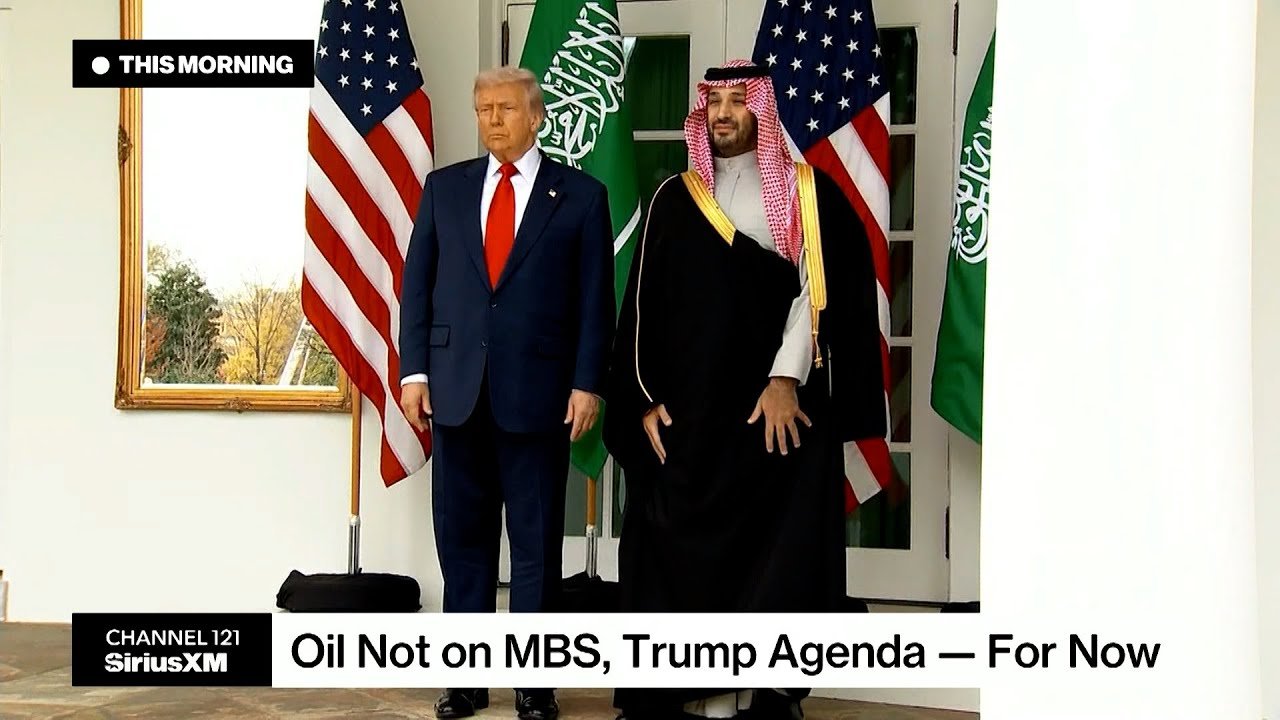
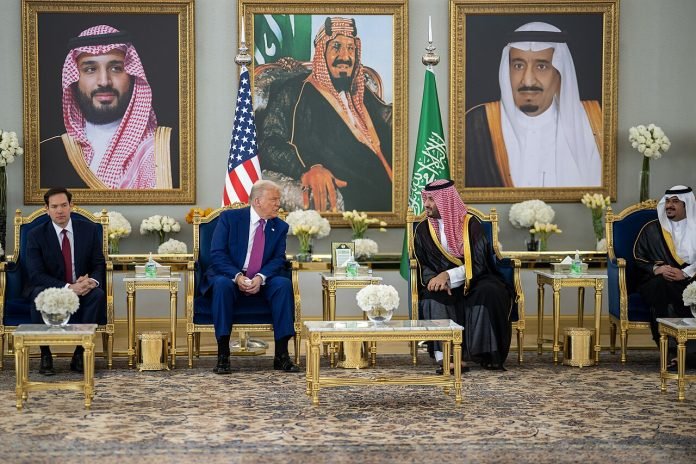
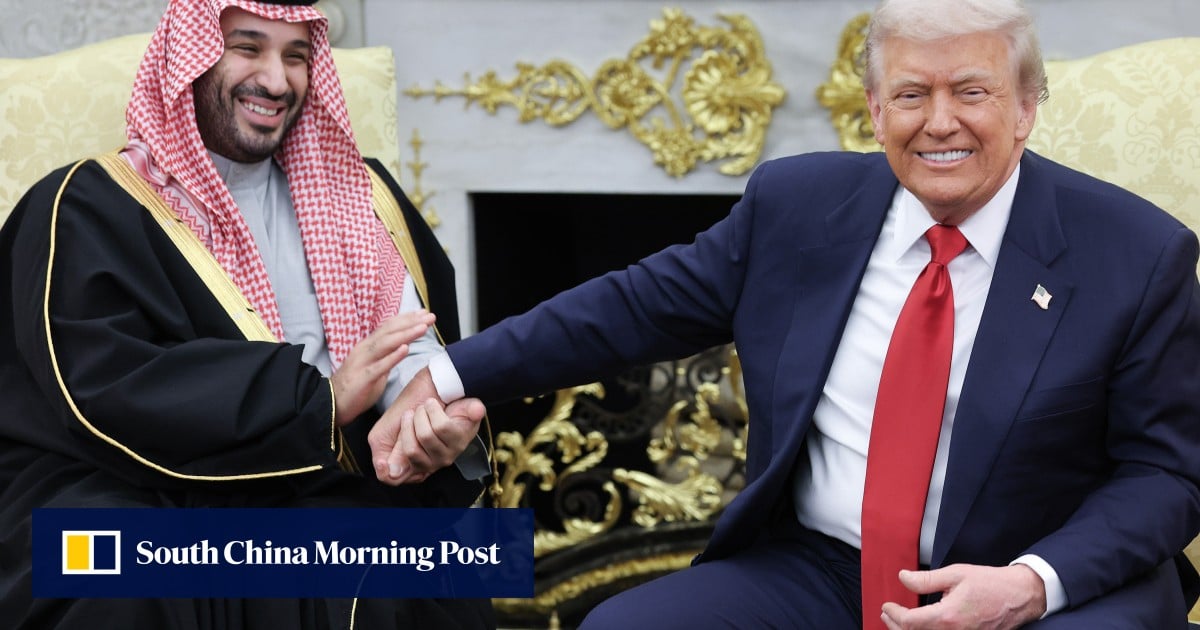
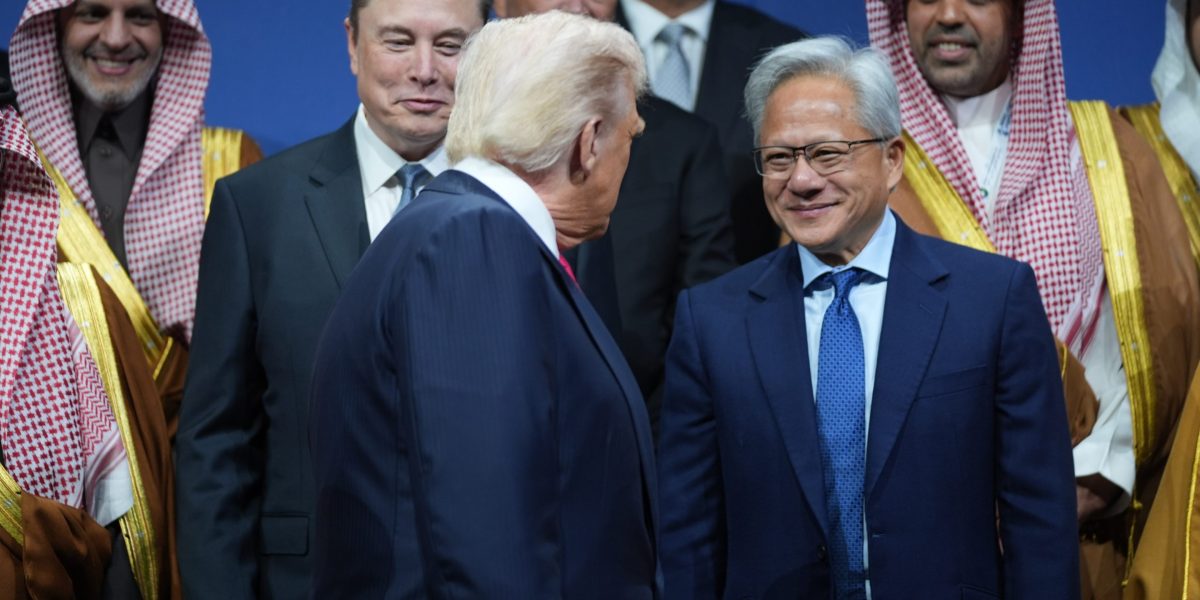
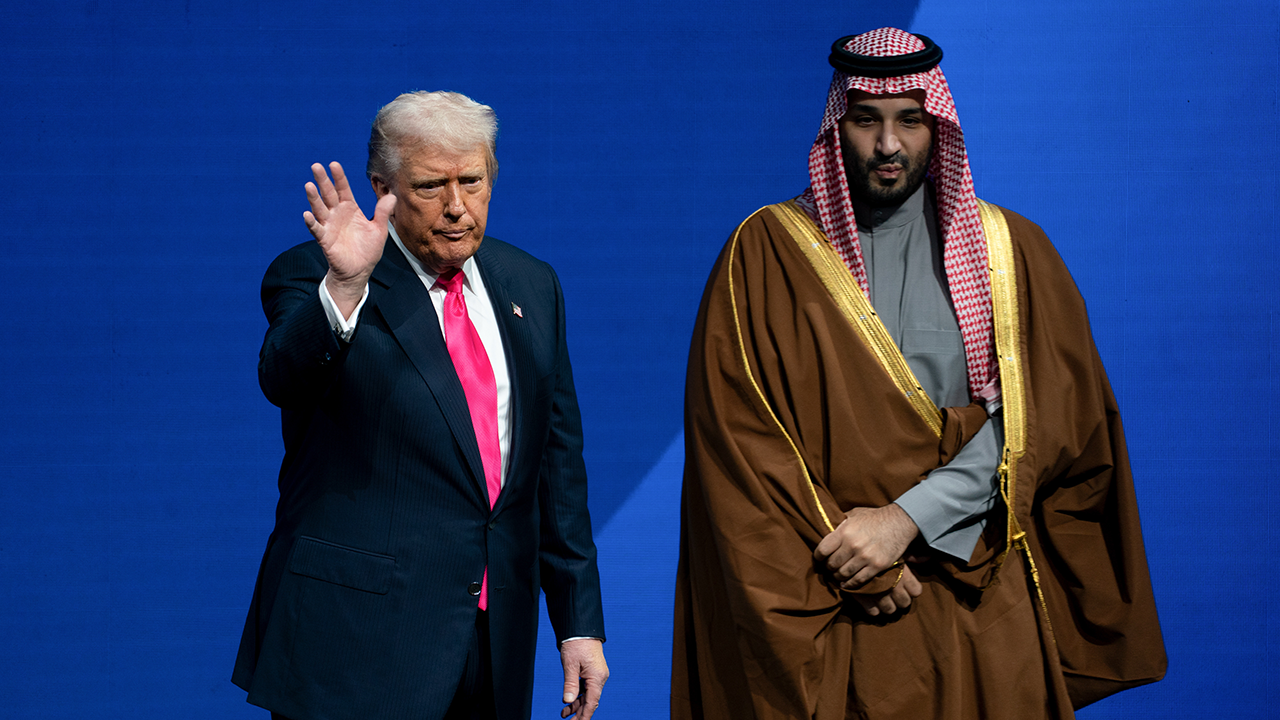
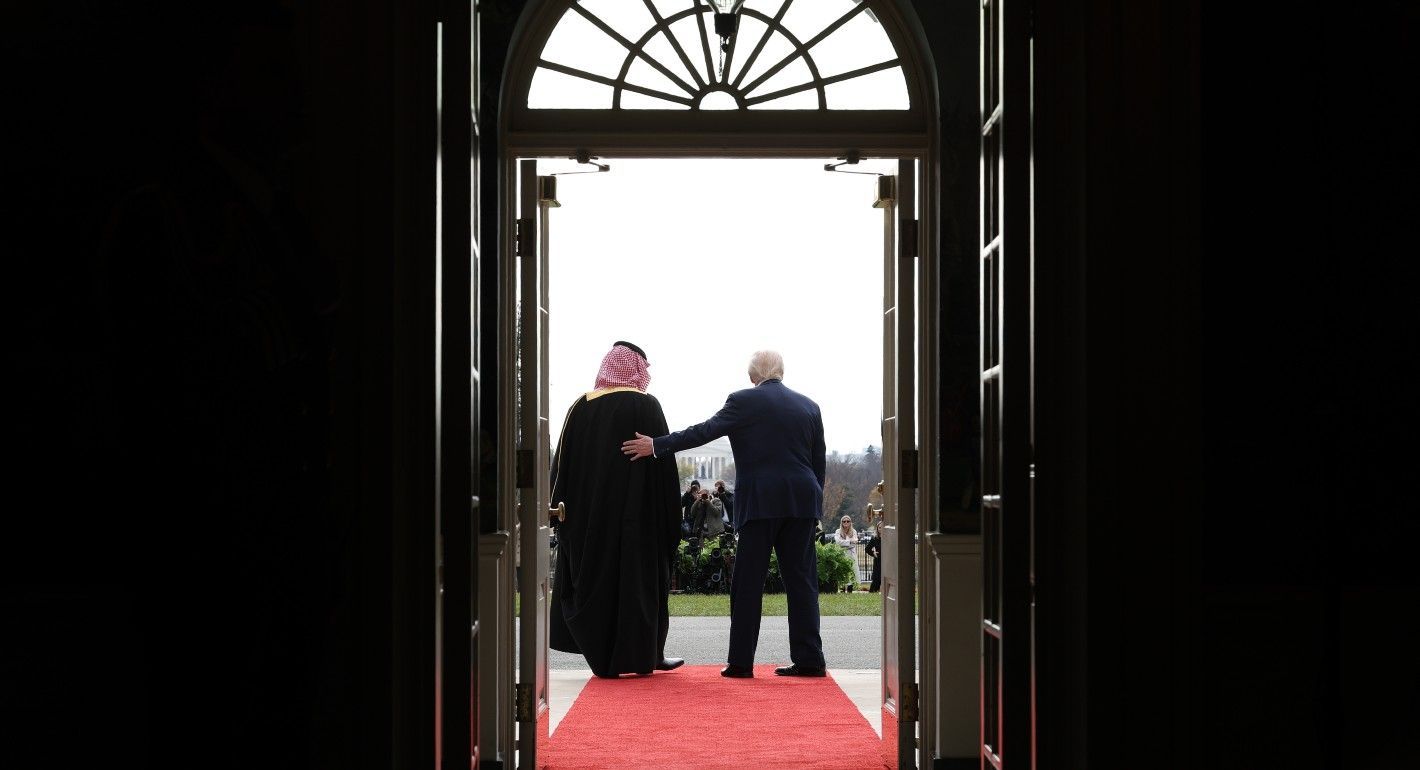
Saudi Crown Prince Mohammed bin Salman pledged during an official White House visit on November 18, 2025, to raise Saudi Arabia’s investment commitments in the United States to nearly $1trillion, expanding a previously announced $600billion pledge. The figure underscored a broader strategic reset between Washington and Riyadh, built around investment, defense and advanced technology.
Deal package spans tech, energy and defense
The two sides signed a memorandum of understanding on artificial intelligence and supercomputing, with Saudi Arabia citing strong demand for US-made chips. They also signed a joint declaration laying the groundwork for a multibillion-dollar civil nuclear energy partnership.
President Trump said the United States would sell F-35 fighter jets to Saudi Arabia and that Riyadh would buy nearly 300 American tanks. He also formally designated Saudi Arabia as a major non-NATO ally, a status that brings military and economic benefits but does not create a security guarantee.
Saudi capital and US companies
Saudi Aramco signed 17 agreements with major US companies worth more than $30billion. The Public Investment Fund, Saudi Arabia’s sovereign wealth vehicle, is expected to be the main channel for the kingdom’s US investments as part of its 2026–2030 strategy.
The commitment also reflects Riyadh’s push to position itself as a high-tech hub under Vision 2030, with a focus on artificial intelligence, semiconductors, nuclear power and critical minerals, including rare earths processing.
Trump’s long relationship with Riyadh
The latest pledge builds on a long-running transactional relationship between Trump and MBS. In 2017, Trump’s first foreign trip as president included a $110billion arms deal and promises of $350billion in planned investments, in a visit marked by the so-called “glowing orb” ceremony.
After returning to office, Trump visited Riyadh again in May 2025, when Saudi businesses pledged $600billion in US investments. By November, that figure had grown to nearly $1trillion as MBS returned to Washington.
Khashoggi shadow looms
The visit also revived scrutiny of the 2018 killing of Washington Post columnist Jamal Khashoggi at the Saudi consulate in Istanbul. US intelligence agencies concluded that MBS authorized the operation, which badly damaged Saudi Arabia’s image among many Western investors.
Trump again defended the relationship, brushing off questions about the murder and saying “things happen,” while insisting the prince “knew nothing about it”.
Why it matters
The announcement showed how closely the two leaders have tied diplomacy to commercial and strategic gain. For Saudi Arabia, the investment pledge supports its effort to attract capital and technology for Vision 2030. For Trump, the deal reinforced his image as a hard-nosed negotiator and helped justify deeper US-Saudi military and economic ties.
There are also doubts about whether the $1trillion figure will materialize in full, given Saudi Arabia’s heavy domestic spending and the likelihood that the total includes a mix of public, private and borrowed capital. Even so, the pledge signals that both sides want the relationship to be defined less by old tensions and more by large-scale dealmaking.