TIME magazine has named “The Architects of AI” as its 2025 Person of the Year, recognizing the tech leaders and researchers who drove artificial intelligence to the center of global business, politics and daily life.
Who was featured
The issue spotlights Jensen Huang of Nvidia, Sam Altman of OpenAI, Elon Musk of xAI, Mark Zuckerberg of Meta, Demis Hassabis of Google DeepMind, Dario Amodei of Anthropic, Lisa Su of AMD and Fei-Fei Li of Stanford and World Labs.
The rationale
TIME Editor-in-Chief Sam Jacobs noted that such a concentration of influence among a few individuals has not been seen since the Gilded Age. The selection highlights both the “extraordinary progress” in fields like medical research and the “trade-offs,” including job displacement, misinformation, and massive energy consumption.
The magazine also framed the choice around both AI’s promise and its risks, including job losses, misinformation and massive energy use.
One of the covers pays tribute to the 1932 photograph “Lunch atop a Skyscraper,” reimagining the AI leaders as builders of a new digital infrastructure. The visual was meant to capture both the scale and the cultural weight of the technology boom.
Key interview highlights
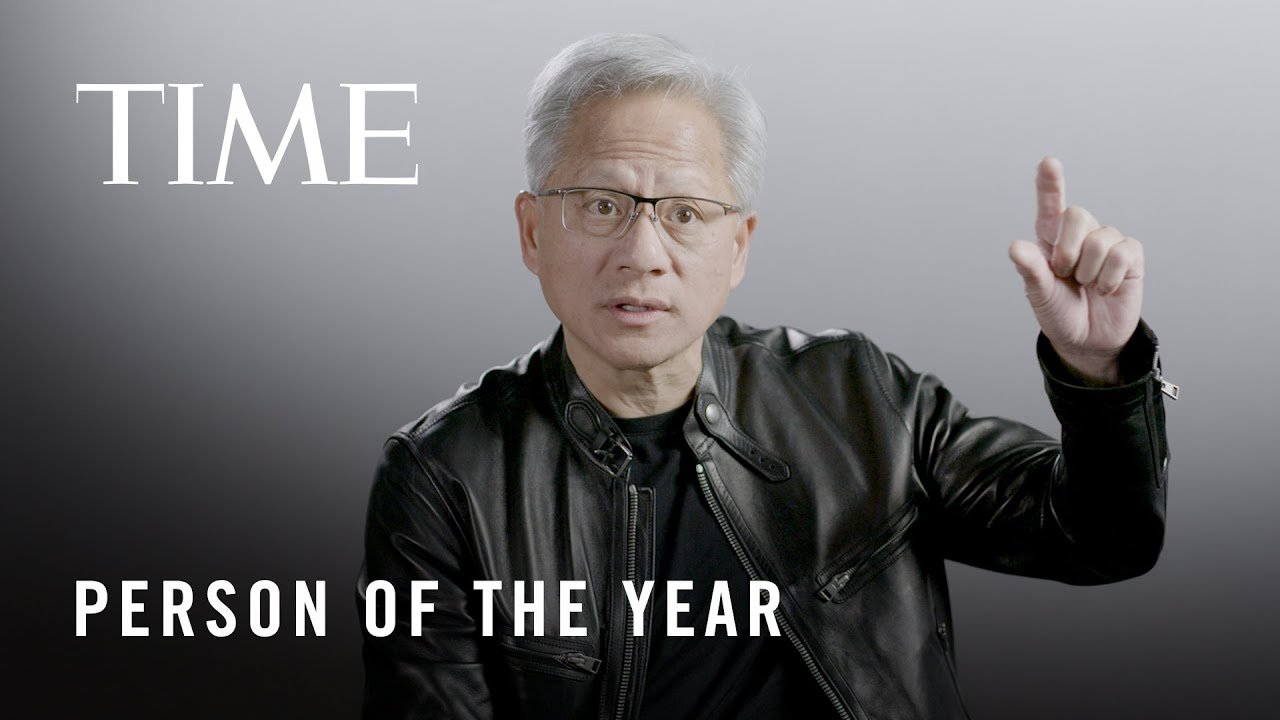
In TIME’s profile, Huang described AI as an “instrument of statecraft” and the most consequential technology of the era, arguing that countries now feel pressure to build their own AI infrastructure.
Every industry needs it, every company uses it, and every nation needs to build it.
Jensen Huang
Altman and Amodei suggested 2025 could mark the moment AI overtakes human coders, while Fei-Fei Li stressed that empathy and ethics remain the uniquely human edge.
Fei-Fei Li emphasized that while models copy human neural pathways, the “human element” (empathy and ethics) remains the critical differentiator.
Reactions
The selection drew mixed reaction online. Some critics said TIME was glorifying tech billionaires instead of the engineers and researchers doing the work behind the scenes.
Others pushed back more broadly on the industry itself, pointing to copyright concerns, creative backlash and the spread of low-quality AI-generated content. BBC reporting also highlighted a growing “opt-out” mood among people uneasy about AI’s energy demands and its potential to replace jobs.

Read also:
Nvidia first to reach $5T market cap
Google launches Gemini 3 and Ironwood
OpenAI launches GPT-5 for all users