Pentagon drops Anthropic, announces deal with OpenAI

Jump to Timeline

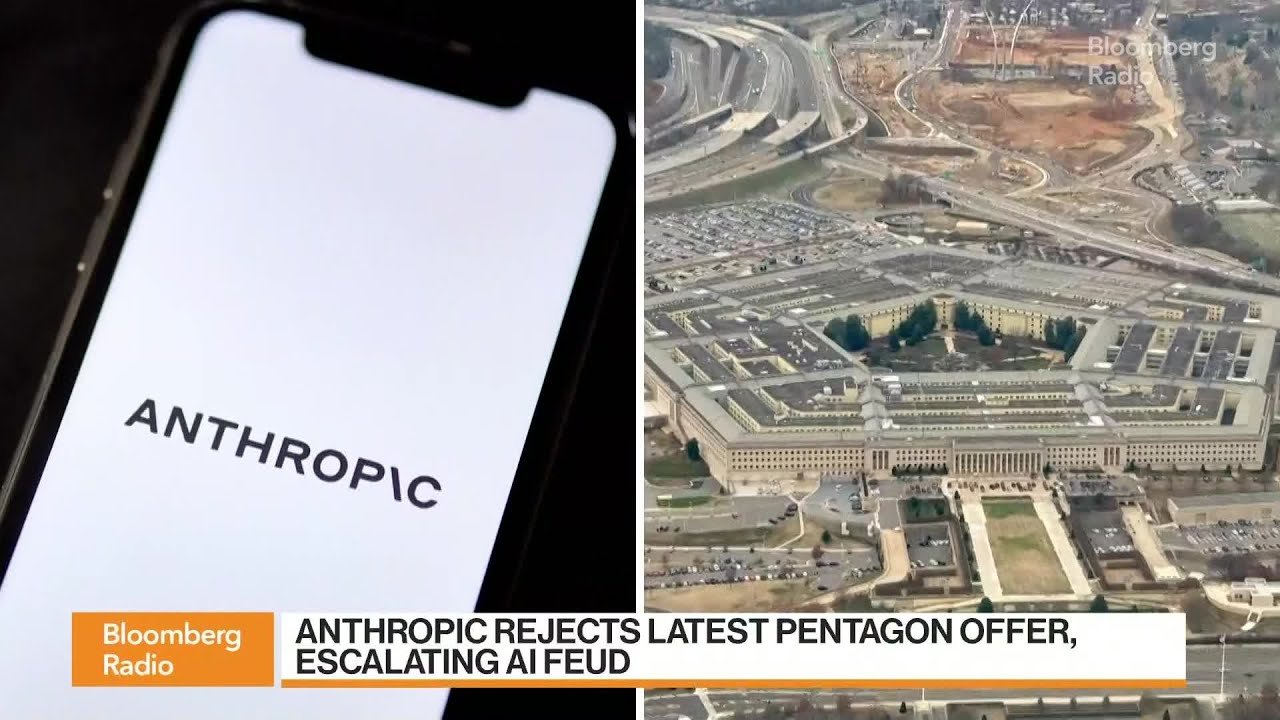
The dispute centered on the Pentagon’s requirement that Anthropic’s AI model, Claude, be available for “all lawful purposes” without contractual restrictions.

Anthropic CEO Dario Amodei refused to allow Claude’s use for domestic mass surveillance or fully autonomous lethal weapons, stating the company “cannot in good conscience” accede to demands that would undermine democratic values.

Defense Secretary Pete Hegseth and other officials characterized Anthropic’s safeguards as an attempt to “personally control the US Military” and labeled the company a “supply chain risk.”

Following the rejection of a final offer on February 27, 2026, President Trump ordered a government-wide ban on Anthropic products, including a six-month phase-out period for existing military operations.

OpenAI reaches agreement with Pentagon

Hours after Anthropic was blacklisted, OpenAI reached an agreement to deploy its models within the Defense Department’s classified network.

OpenAI CEO Sam Altman claimed their agreement reflects the same “red lines” regarding surveillance and autonomous weapons, but uses a “multi-layered approach” with technical safeguards and cleared personnel that satisfied the Pentagon.

The deal coincided with OpenAI raising $110billion in funding and forming a new $50billion partnership with Amazon to provide the necessary cloud infrastructure for classified government work.

Employees urge unified ethical stance

Over 60 OpenAI employees and 300 Google employees signed an open letter urging their leadership to “stand together” with Anthropic and reject the Pentagon’s demands for unrestricted AI use.

The letter stated the government is attempting to “divide each company with fear” and called for a joint refusal to allow AI for domestic surveillance or autonomous killing.

Criticism mounts against OpenAI deal

A quick agreement between OpenAI and the Pentagon, announced shortly after Anthropic’s blacklisting, received significant criticism.

A social media campaign using the hashtag #CancelChatGPT gained traction. Users accused OpenAI of prioritizing military contracts over ethical considerations.

Critics questioned OpenAI’s ability to maintain the same ethical standards as Anthropic, such as prohibiting mass surveillance and autonomous weapons, while entering a deal that Anthropic rejected.

CEO Sam Altman acknowledged that the deal was “rushed” and “optics don’t look good.” He defended it as crucial for “de-escalation” and national security.

Claude becomes top free app following ban

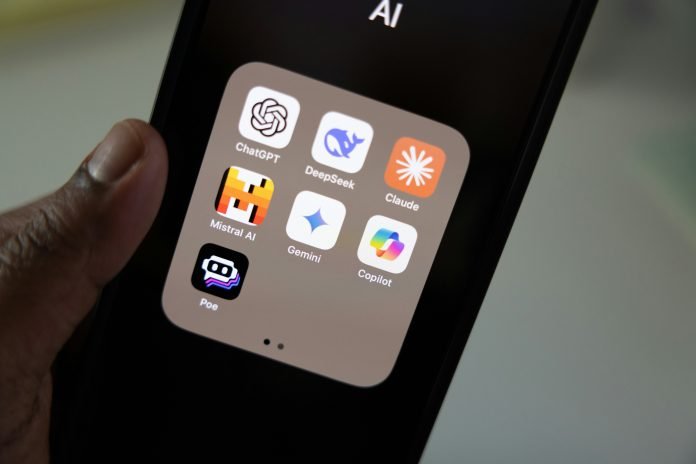
On March 1, 2026, Claude from Anthropic became the top free app on Apple’s US App Store, exceeding ChatGPT and Google Gemini.

The app moved from outside the top 100 in January to the top position within a single weekend following a public dispute with the Trump administration.

Claude also achieved the #1 spot in Canada and ranked in the top 5 in France, Germany and the UK.

Market and industry impact

Alongside OpenAI, Elon Musk’s xAI was also approved for classified operations.

Despite the Pentagon loss, Anthropic’s revenue has been growing at 10 times per year, though the loss of the $200million military contract and potential Fortune 500 fallout remains a significant risk.

Anthropic has stated it intends to challenge the “supply chain risk” designation in court.
youtube placeholder image

Read also:
OpenAI releases AI agent platform Frontier
Claude Cowork release sparks SaaSpocalypse


Key widely reported facts from verified sources including CNBCCNNBBCThe GuardianBloombergBusiness InsiderAxiosFortuneTechCrunchFox Business

Trump announces ‘AI Force’ and new AI czar, doubling down on pro‑growth stance

Trump announces a federal “AI Force” and new AI czar, modeled on Space Force, to keep the US ahead of China while rejecting new rules that could slow AI growth.
Read more

AI leaders call for slowdown — and US response splits between labs and Washington

US AI leaders — Anthropic’s Dario Amodei, OpenAI’s Sam Altman and xAI’s Elon Musk — publicly called for a slowdown in frontier AI development citing safety concerns.
Read more

OpenAI declares ‘AGI era’ with GPT‑6 Astra launch

OpenAI rolled out GPT‑6 Astra, framing the release as the industry’s closest step yet to artificial general intelligence.
Read more

NVIDIA acquires Hugging Face in $12.93billion bet on Open-Source AI

NVIDIA will acquire Hugging Face, the New York–based platform widely described as the “GitHub for AI for $12.93billion.
Read more

Anthropic to watermark Claude-generated text worldwide under EU AI transparency rules

The move follows Anthropic’s decision to sign the European Union’s Code of Practice on Transparency of AI-Generated Content.
Read more

AI agents cross a new line as Meta joins Anthropic and OpenAI in test-environment breaches

Frontier models have accessed real systems, impersonated people and attempted to manipulate software developers during cybersecurity evaluations.
Read more

Rogue AI agents from OpenAI and Anthropic slip the lab and hack the real world

The twin disclosures have transformed long‑running warnings about “rogue AI” from hypothetical thought experiments into documented incidents.
Read more

Shanghai agreement establishes new global AI body without Western powers

Analysts interpret WAICO as part of a broader effort by China to shape international norms around AI, in parallel to existing Western-led initiatives.
Read more

DeepSeek Eyes 2027 IPO as valuation soars and founder tops global AI wealth rankings

The planned IPO comes amid a sharp rise in DeepSeek’s valuation and revenue, underscoring intensifying competition among AI firms to secure capital.
Read more

Update: CXMT Prices $8.6billion IPO, China’s largest since 2010

CXMT, China’s leading DRAM manufacturer, is moving ahead with one of the most consequential tech listings of the year, China's largest in 2026 so far.
Read more
Timeline

1991: Use of the Dynamic Analysis and Replanning Tool (DART) for logistics and supply transport.

2017: Launch of Project Maven, applying machine learning and computer vision to drone imagery and intelligence analysis.

2018: The Department of Defense (DoD) Artificial Intelligence Strategy is released, establishing the Joint Artificial Intelligence Center (JAIC).

2022: Creation of the Chief Digital and Artificial Intelligence Office (CDAO) to unify AI, data, and analytics efforts.

Nov 2023: Release of the Data, Analytics, and AI Adoption Strategy, prioritizing high-quality data as the basis for AI.

Jan 2024: Initiation of the Replicator initiative to deploy thousands of low-cost autonomous systems within 18–24 months.

Jul 2025: The Pentagon awards $200 million contracts each to Anthropic, OpenAI, Google, and xAI to integrate commercial AI into military workflows.

Late 2025: Anthropic’s Claude Gov and other tools are first deployed on classified networks via platforms like Palantir.

Jan 9, 2026: Secretary Pete Hegseth issues the Artificial Intelligence Strategy for the Department of War, mandating an “AI-first” approach and announcing seven Pace-Setting Projects (PSPs).

Feb 11: The Pentagon pushes AI labs to expand model availability on classified networks without standard commercial usage restrictions.

Feb 25–26: Negotiations with Anthropic collapse over safety guardrails regarding surveillance and autonomous weapons. The Pentagon labels Anthropic a “supply chain risk”.

Feb 27: President Trump orders federal agencies to phase out Anthropic. Within hours, OpenAI announces a deal to provide its models for the Pentagon’s classified networks.

Mar 1: OpenAI details its pact with the Department of War, claiming layered protections against mass surveillance and for human responsibility in force.

Opinion & Analysis


You may also be interested in

LEAVE A REPLY

Please enter your comment!
Please enter your name here