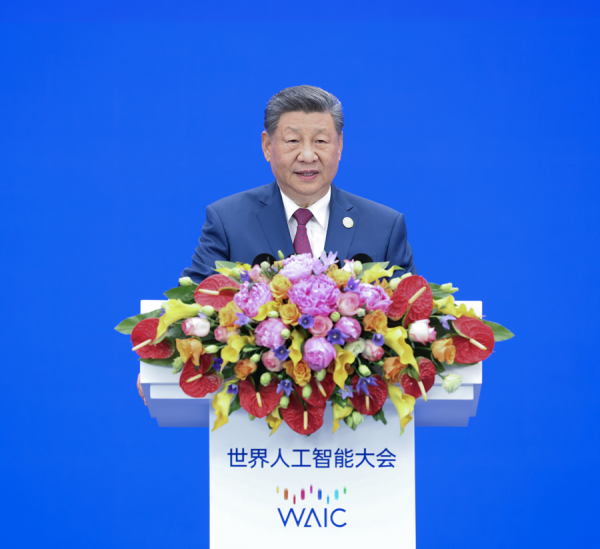
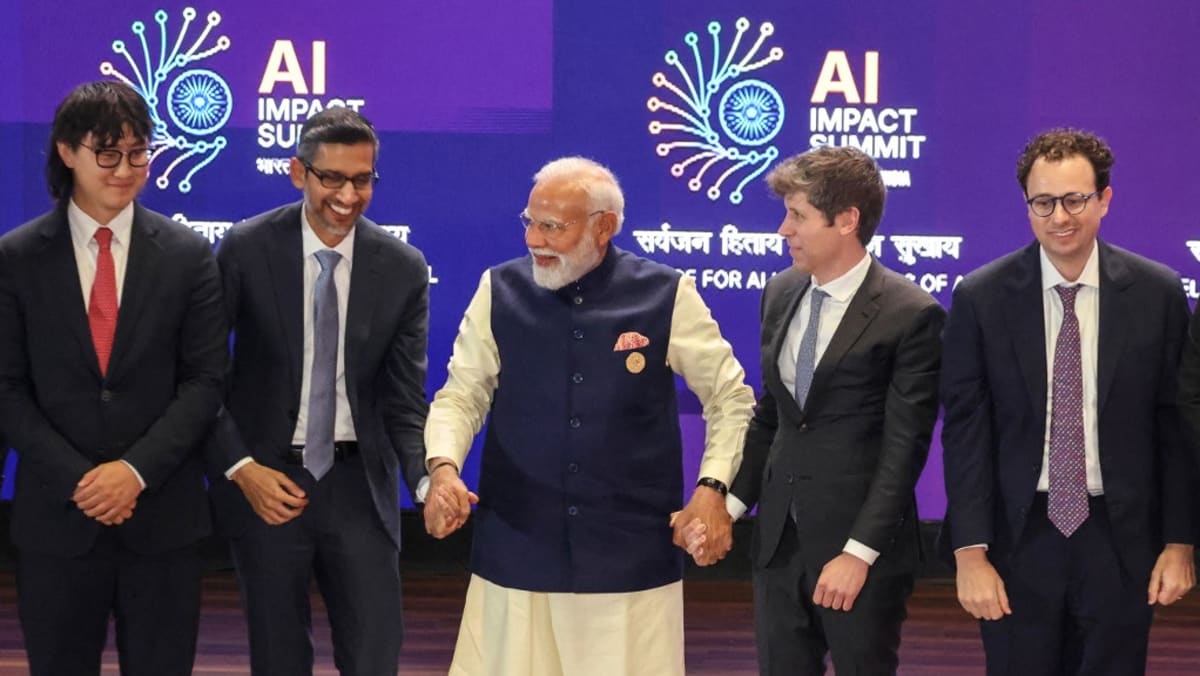
The India AI Impact Summit 2026 was a landmark global event held from 16 to 21 February 2026 at Bharat Mandapam, New Delhi. As the first major global AI gathering hosted in the Global South, it brought together over 20 Heads of State, 60 Ministers, and 500 global AI leaders to discuss the “Sutras” of People, Planet, and Progress.
The New Delhi Declaration, a non-binding but significant commitment signed by 88 nations, focused on safe, secure, and trustworthy AI, emphasizing development and inclusion alongside safety.
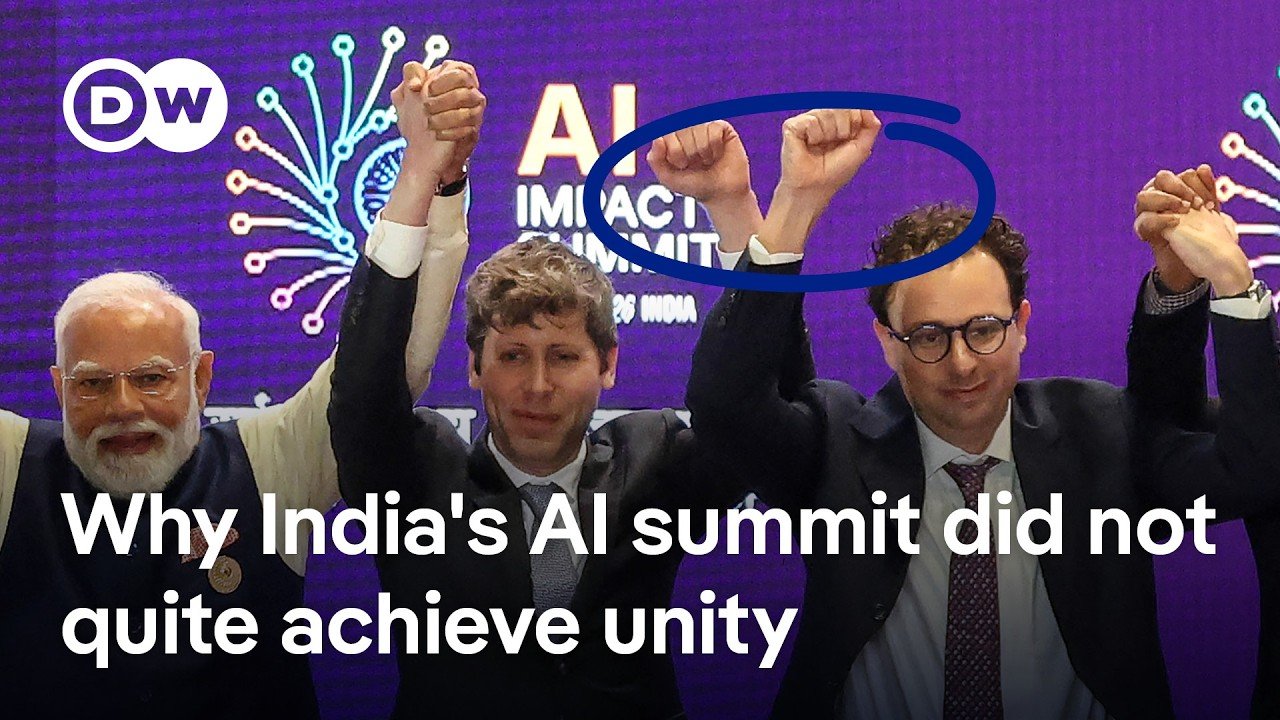
Leaders like Sundar Pichai (Google) and Sam Altman (OpenAI) attended, though a “hand-holding snub” between Altman and Anthropic CEO Dario Amodei went viral.

The summit coincided with new Indian regulations requiring permanent metadata and visible labelling on all AI-altered media.
Messages by key Heads of State
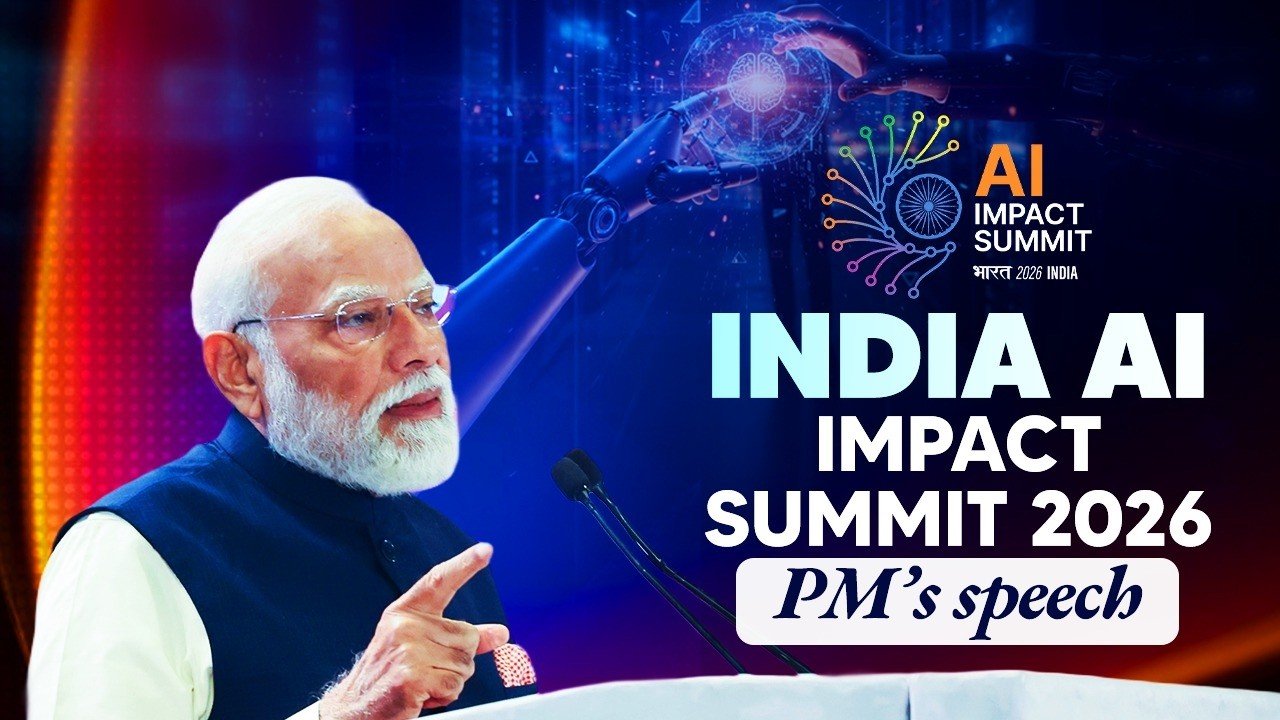
Narendra Modi, Prime Minister of India, articulated a roadmap to transform India into a Viksit Bharat (Developed India) by 2047, the centenary of its independence.
His vision shifts India’s role from a consumer of technology to one of the top three global AI superpowers. Modi emphasized that India must move beyond being a software-services “back office” to becoming a “front-end” engine of AI innovation.
The vision focuses on human-centric AI that bridges the urban-rural divide and expands access to healthcare, education, and justice. Projections shared at the summit suggest India’s AI-enabled IT sector could reach $400billion by 2030.
Emmanuel Macron, President of France, focused on global AI governance and collaboration, aiming to outline a shared roadmap. His presence underscored the summit as a successor to earlier meetings in France and the UK.
Luiz Inácio Lula da Silva, President of Brazil, represented the Global South’s interests, advocating for AI as a tool to bridge social and economic gaps rather than widening the digital divide.
Antonio Guterres, UN Secretary-General, called for open AI access to prevent the technology’s future from being left to the “whims of a few billionaires”. He urged for international standards that protect human rights and ensure equitable development.

Key investments and announcements
The summit secured over $200billion in AI and deep-tech commitments, including massive data centre projects by Reliance Industries and Adani Group.
Reliance Industries: $110billion “Sovereign AI” Push
Mukesh Ambani committed ₹10trillion (approx. $110billion) over the next seven years to build a national AI backbone. Ambani aims to make AI “as ubiquitous as connectivity” by slashing compute costs, mirroring how Jio disrupted the telecom market in 2016.
Key Infrastructure:
- Jamnagar Campus: Construction has begun on a multi-gigawatt AI data centre in Gujarat, with the first 120 MW expected online in H2 2026.
- Edge Computing: A nationwide edge layer will be integrated into Jio’s towers to provide low-latency AI services.
- Green Energy: The infrastructure will be powered by Reliance’s 10 GW of captive solar capacity in Gujarat and Andhra Pradesh to ensure sustainability and lower operational costs.
Tata Group & OpenAI Partnership
Tata Consultancy Services (TCS) announced that OpenAI has signed on as the first anchor customer for its new AI-optimized data centre business.
The partnership involves building an initial 100 MW of AI capacity, with a roadmap to scale to 1 GW. The facility will use a sustainable, high-density AI rack architecture developed in collaboration with AMD.
This deal positions Tata as a global leader in AI hosting, helping India move from a “back office” service provider to a “front-end” AI infrastructure hub.
Sarvam AI: 105-Billion Parameter Model
Bengaluru-based Sarvam AI unveiled two foundational Large Language Models (LLMs) built from scratch: a 30-billion and a 105-billion parameter model.
Both models were trained on datasets covering all 22 official Indian languages. The 105B model features a 128,000-token context window, enabling complex reasoning and document parsing.
By open-sourcing these models, Sarvam provides Indian developers with foundational tools that do not rely on foreign APIs, a critical step for India’s digital sovereignty.
Read also:
2026 US-India historic interim trade deal
2026 EU-India Free Trade Agreement