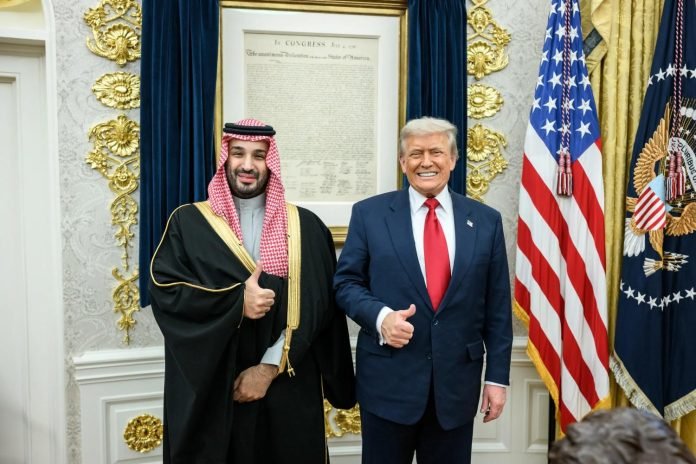
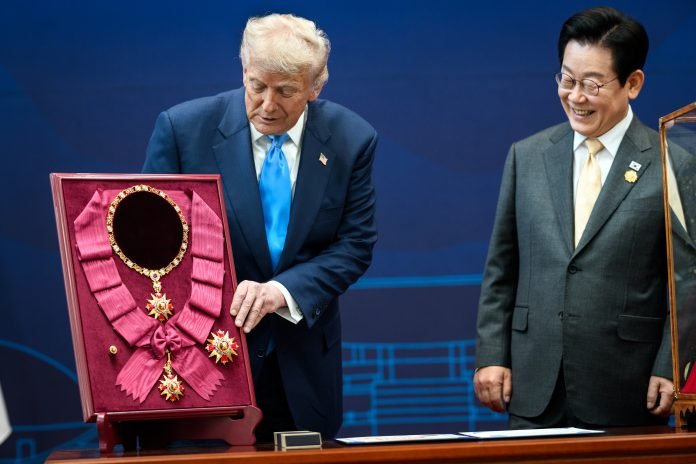
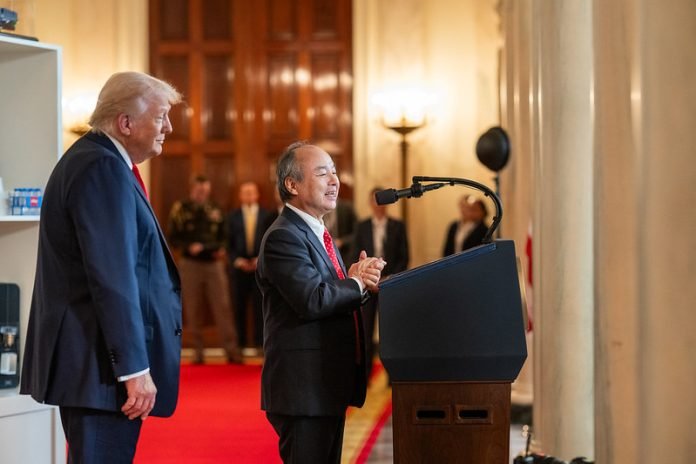
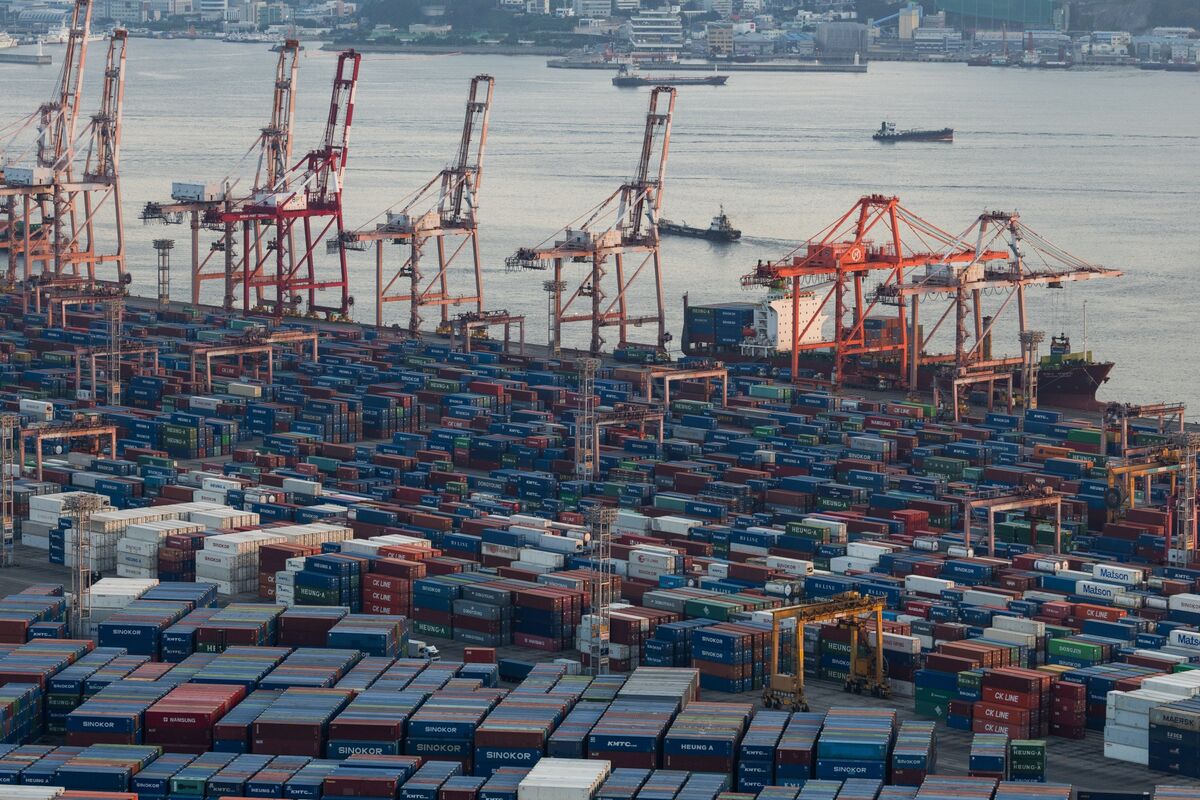
On January 26, 2026, US President Donald Trump announced plans to raise tariffs on South Korean imports, primarily automobiles, pharmaceuticals, and lumber, from 15% to 25%. Trade relations between South Korea and the United States became severely strained due to a dispute over the implementation of a multibillion-dollar investment deal and a regulatory probe into a major US company.
Trump accuses Seoul of delaying $350 Billion investment deal
Trump accused South Korea of “dragging its feet” on a trade deal reached in October 2025, which required Seoul to invest US$350 billion in the US economy. South Korea cited “administrative reasons” and currency market volatility from a weak won for the delay. The South Korean National Assembly has yet to ratify the agreement, with a vote expected by March 9, 2026.
South Korean officials were reportedly “blindsided” and “stunned” by President Trump’s announcement, particularly because Trade Minister Yeo Han-koo had just met with US counterparts in Davos without receiving any prior warning of dissatisfaction.
Coupang data leak probe becomes flashpoint in trade dispute
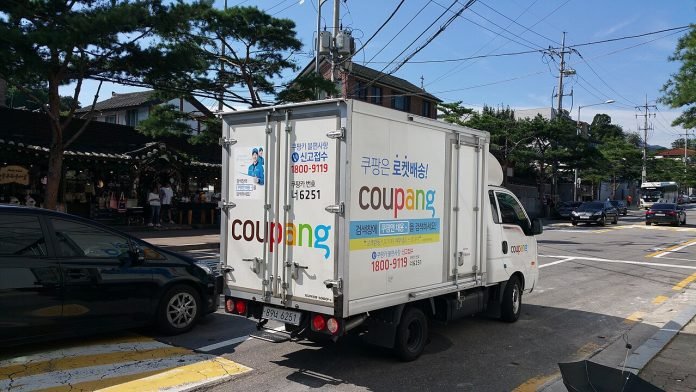
A significant secondary factor is the South Korean government’s investigation into Coupang, a US-listed e-commerce giant. After a mass data leak affecting roughly 33.7million accounts, South Korean regulators launched a probe into the company. US investors and officials, including Vice President JD Vance, have characterized the investigation as discriminatory against American firms. Some analysts believe this regulatory friction directly influenced the decision to hike tariffs.
Kevin Warsh’s ties to Coupang as independent director have become a focal point of the 2026 trade dispute between the US and South Korea, primarily due to his nomination as the next Federal Reserve Chair while the company is under intense regulatory scrutiny in Seoul. Warsh has served as an independent director on the board of Coupang, Inc. (the US-parent company) since October 2019. As of mid-2025, Warsh reported holding approximately 470,000 shares of Coupang common stock. At February 2026 prices, this stake is valued at nearly US$10million.
Nuclear submarine talks delayed, KOSPI plummets 5%
The trade spat has delayed critical bilateral talks regarding South Korea’s development of nuclear-powered submarines and uranium enrichment. South Korea recently sold US$3billion in bonds to bolster foreign exchange reserves amid the trade uncertainty. South Korean Foreign Minister Cho Hyun and other top envoys traveled to Washington in early February 2026 to negotiate with Secretary of State Marco Rubio and Commerce Secretary Howard Lutnick. While talks have been described as improving “mutual understanding”, a final resolution has not yet been reached.
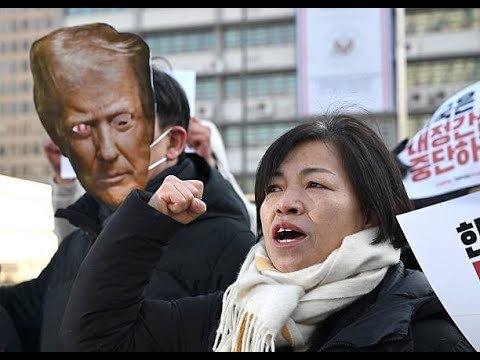
Analysts estimate the hike to 25% will impose an annual burden of 4trillion won (US$2.8 billion) on the South Korean auto industry alone. Following the announcement, the KOSPI index plummeted over 5%, and the Korean won hit its lowest levels since the 2008 financial crisis. Protests erupted near the US Embassy in Seoul, with activists condemning the tariffs as a “violation of sovereignty” and accusing the US of using trade pressure to shield Coupang from domestic regulation.
South Korea rushes to pass investment bill, seeks tariff grace period
In a rare act of solidarity, the ruling Democratic Party and opposition People Power Party agreed to form a special committee on February 9, 2026, to pass a bill enabling the promised US$350 billion investment package. The National Assembly aims to finalize and pass this legislation by March 9, 2026, to prove “good faith” implementation.
Trade Minister Yeo Han-koo is lobbying Washington to delay the formal publication of the tariff hike in the Federal Register. If its publication proceeds, Seoul is requesting a one- to two-month grace period before the higher rates take effect.
High-level envoys, including Foreign Minister Cho Hyun and Industry Minister Kim Jung-kwan, have been dispatched to Washington to meet with Secretary of State Marco Rubio and Commerce Secretary Howard Lutnick. They are working to decouple trade negotiations from the Coupang data breach probe, arguing there is “no direct link” between the regulatory case and the investment deal.
The South Korean government is monitoring a pending US Supreme Court ruling regarding the legality of using the International Emergency Economic Powers Act (IEEPA) to impose “reciprocal tariffs”, which could potentially invalidate Trump’s hike.
Read also: