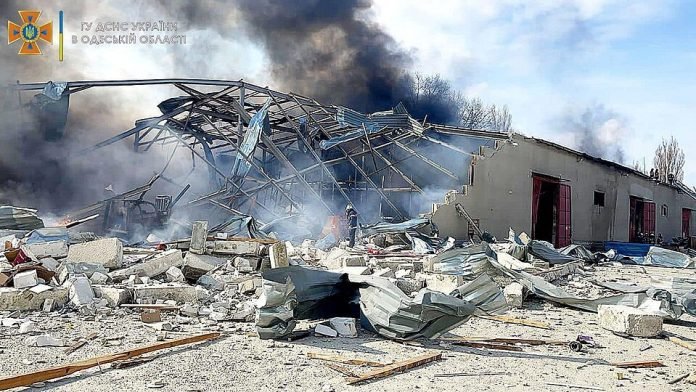
In September 2025, Poland invoked Article 4 of the NATO treaty after a large-scale incursion of Russian drones entered its airspace during a mass strike on Ukraine, marking a significant escalation along the alliance’s eastern flank.
Between 9 and 10 September 2025, Poland experienced its most serious airspace violation since the start of Russia’s full-scale invasion of Ukraine. An estimated 19 to 23 Russian drones entered Polish territory over a period of more than seven hours, beginning late on 9 September and continuing into the morning.
The incursion was notable not only for its scale but also for its trajectory. Several drones entered via Belarus rather than drifting across the Ukrainian border, with some penetrating as far as 100 kilometres into Poland. Flight paths reportedly extended toward strategic infrastructure, including the Rzeszów–Jasionka airport, a key NATO logistics hub, while at least one drone reached the Gdańsk region.
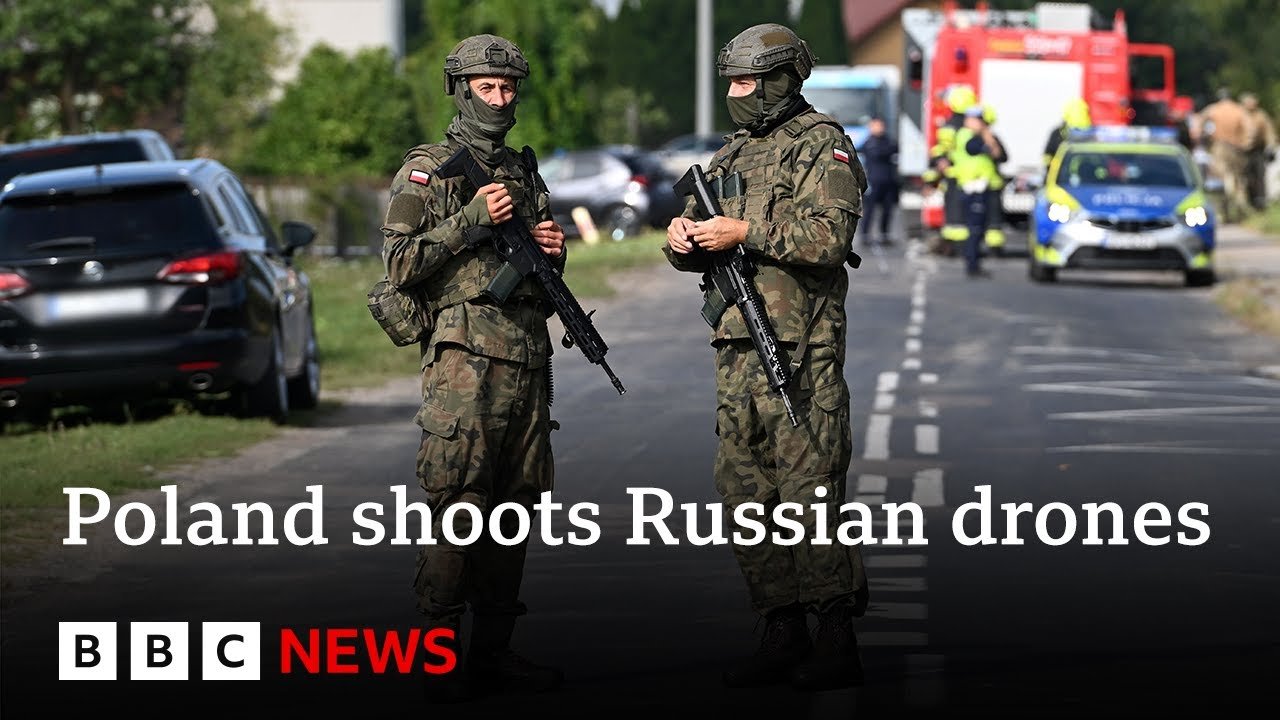
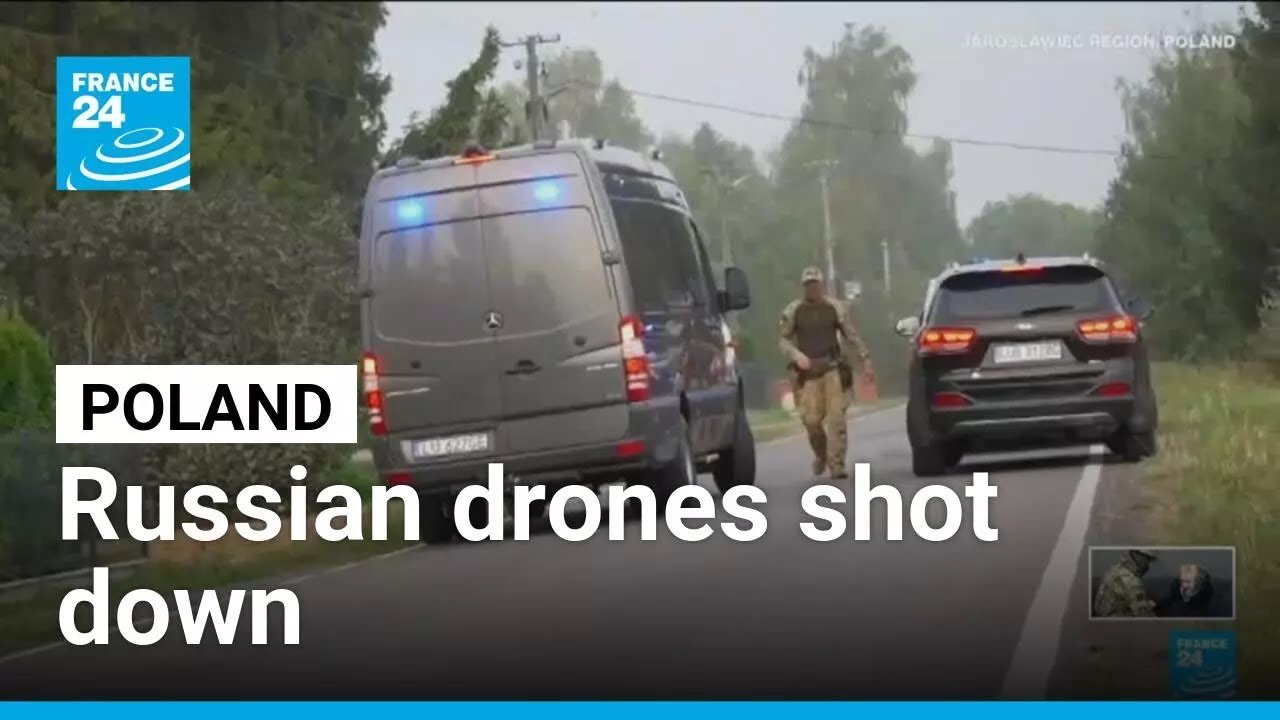
In response, NATO-aligned forces engaged the drones, marking the first confirmed instance of Russian aerial assets being shot down over NATO territory during the war.
NATO and international response
Poland formally invoked Article 4, triggering consultations among NATO members and prompting an immediate military response to reinforce the alliance’s eastern flank.
NATO Secretary General Mark Rutte condemned the incident as “reckless behaviour” and confirmed that allied air defences had been activated. Member states including Germany, the Netherlands, and Italy provided air policing and surveillance support.
Ukrainian officials, including President Volodymyr Zelenskyy, described the incursion as deliberate, warning that Russia was testing the limits of Western tolerance. The European Commission expressed full solidarity with Poland, with President Ursula von der Leyen proposing new regional defence initiatives aimed at countering drone threats.
At Poland’s request, the UN Security Council convened an emergency session on 12 September, where Western representatives described the scale of the incursion as unprecedented.
Russia and Belarus response
Moscow denied deliberately targeting Polish territory, stating the drones were aimed at military sites in western Ukraine and suggesting any incursions were accidental. Russian officials also claimed some of the drones were unarmed decoys.
Belarus attributed the incident to Ukrainian electronic warfare, arguing the drones had been diverted off course, and said it had issued advance warnings to neighbouring countries.
Interception and military action
The incident led to the launch of “Operation Eastern Sentry,” a NATO-coordinated effort to strengthen air defence coverage along the eastern border.
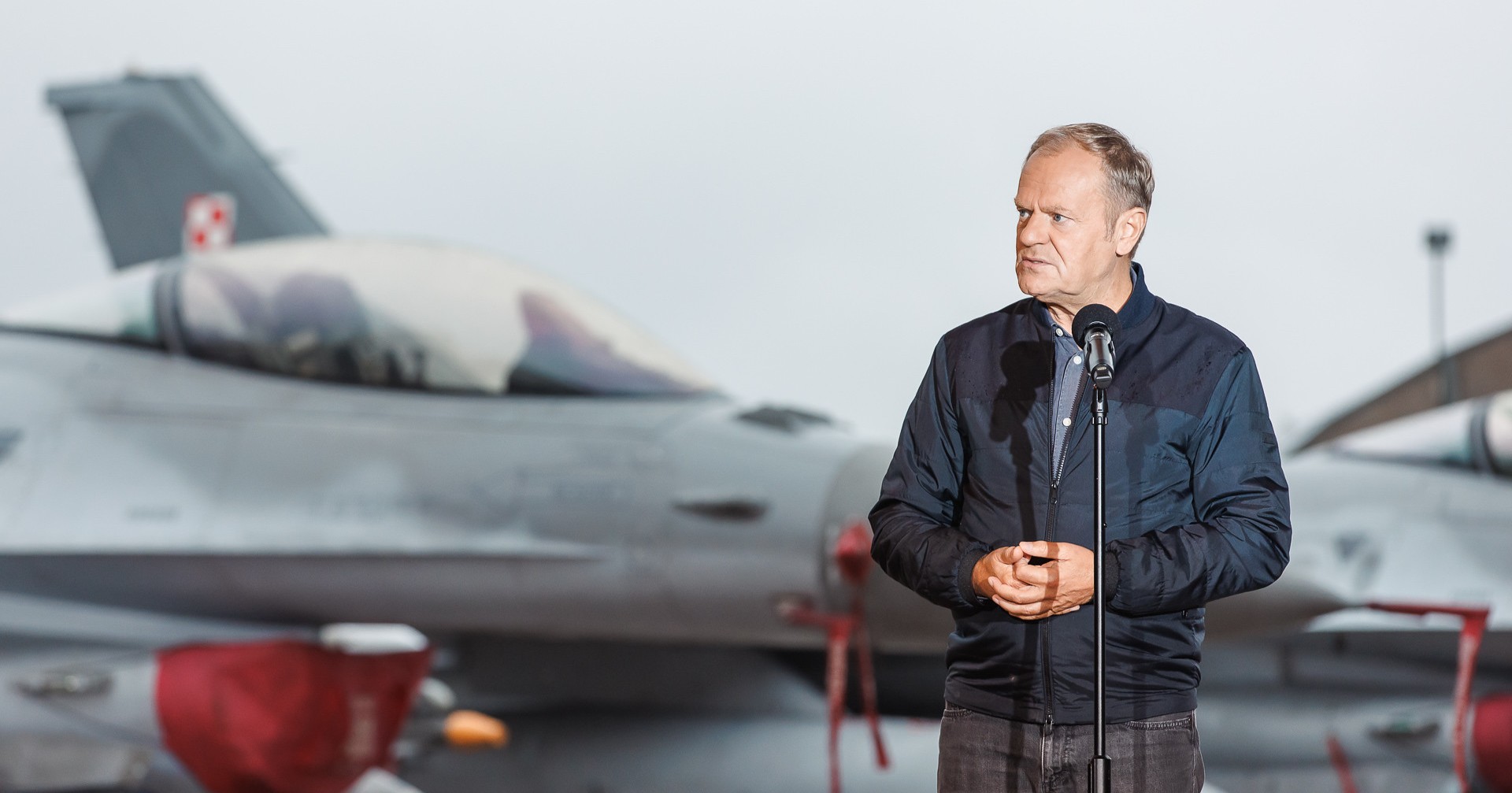
Polish F-16s, alongside allied aircraft including Dutch F-35s, intercepted and shot down several drones, with up to four confirmed destroyed. By late September, debris from at least 17 drones had been recovered across multiple locations in Poland.
Many of the drones were identified as low-cost decoy models, designed to overwhelm and probe air defence systems rather than carry explosives.
Immediate impact
Poland temporarily closed sections of its airspace, affecting major airports including Warsaw and Rzeszów, while also shutting its border with Belarus ahead of planned joint military exercises.
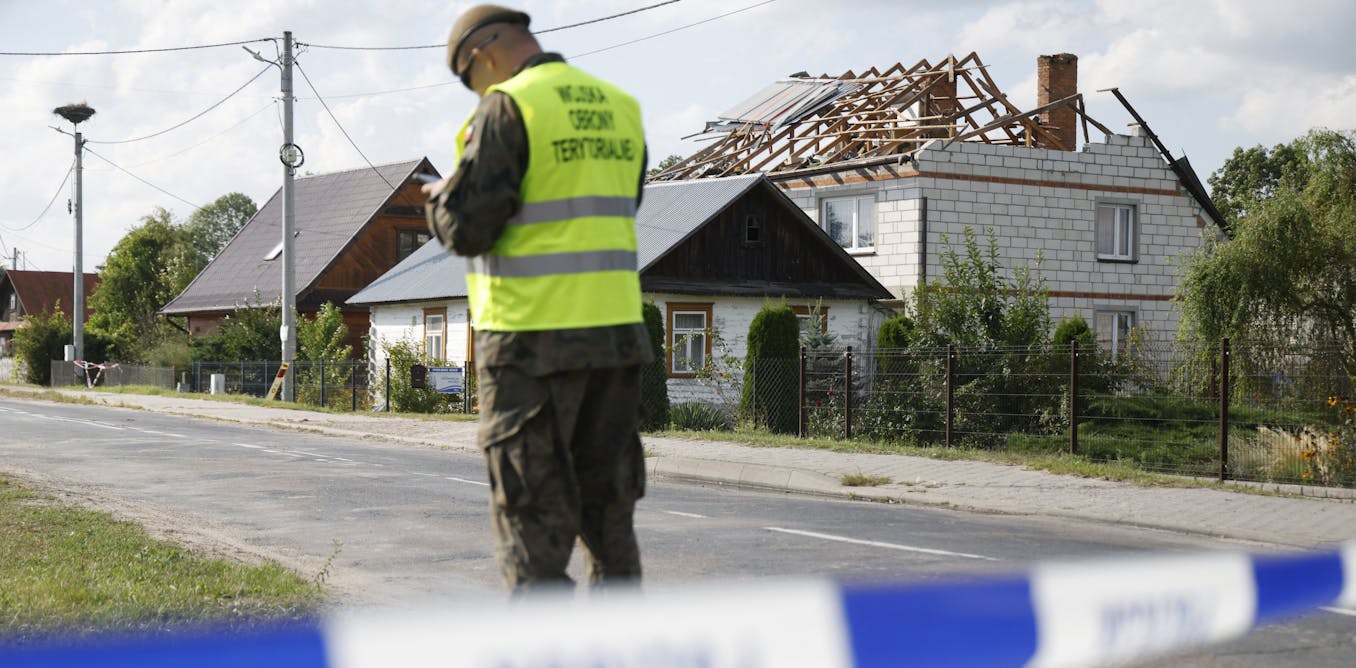
No fatalities were reported, though at least one residential property was severely damaged.
Strategic fallout
The incident accelerated NATO’s military coordination in the region and prompted additional support commitments to Poland, including air defence systems and aircraft deployments from several allied nations.
It also fed into broader European policy responses, with the European Union advancing a new sanctions package targeting Russian energy exports and maritime operations.
The episode underscored growing concerns that the war in Ukraine could increasingly spill beyond its borders, testing NATO’s response thresholds.
Read also: Trump proposes Ukraine Peace Plan