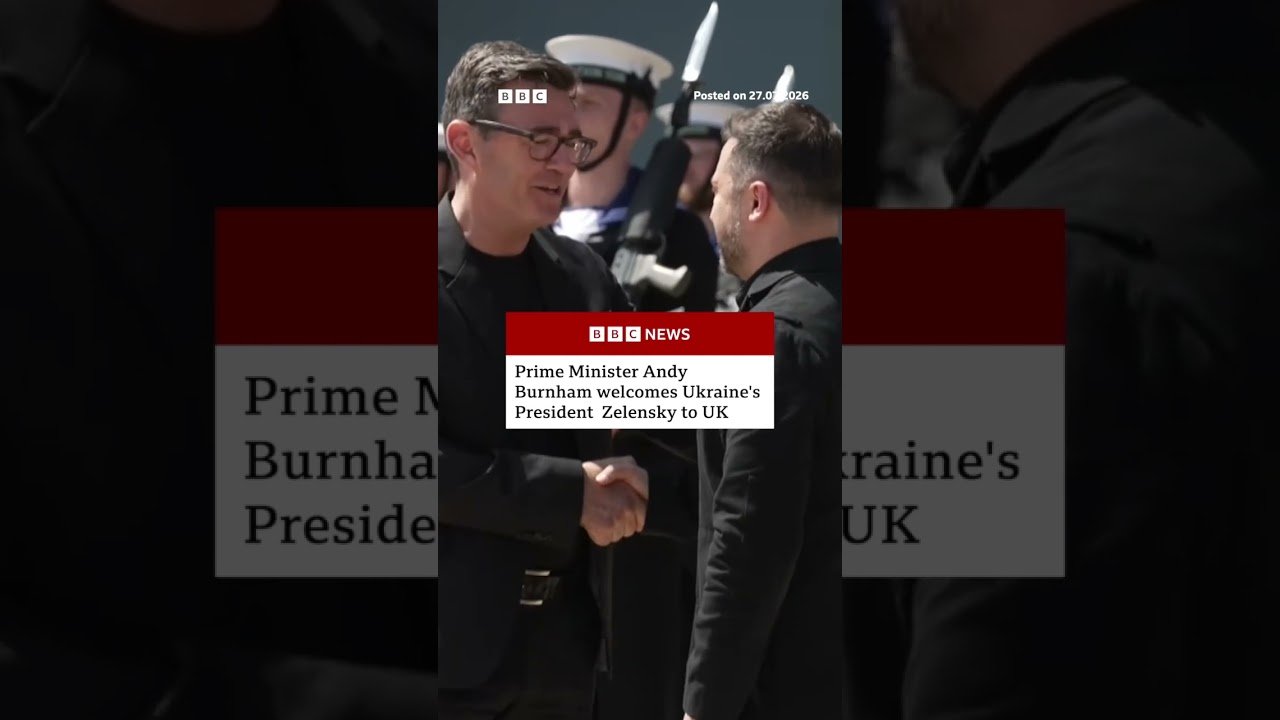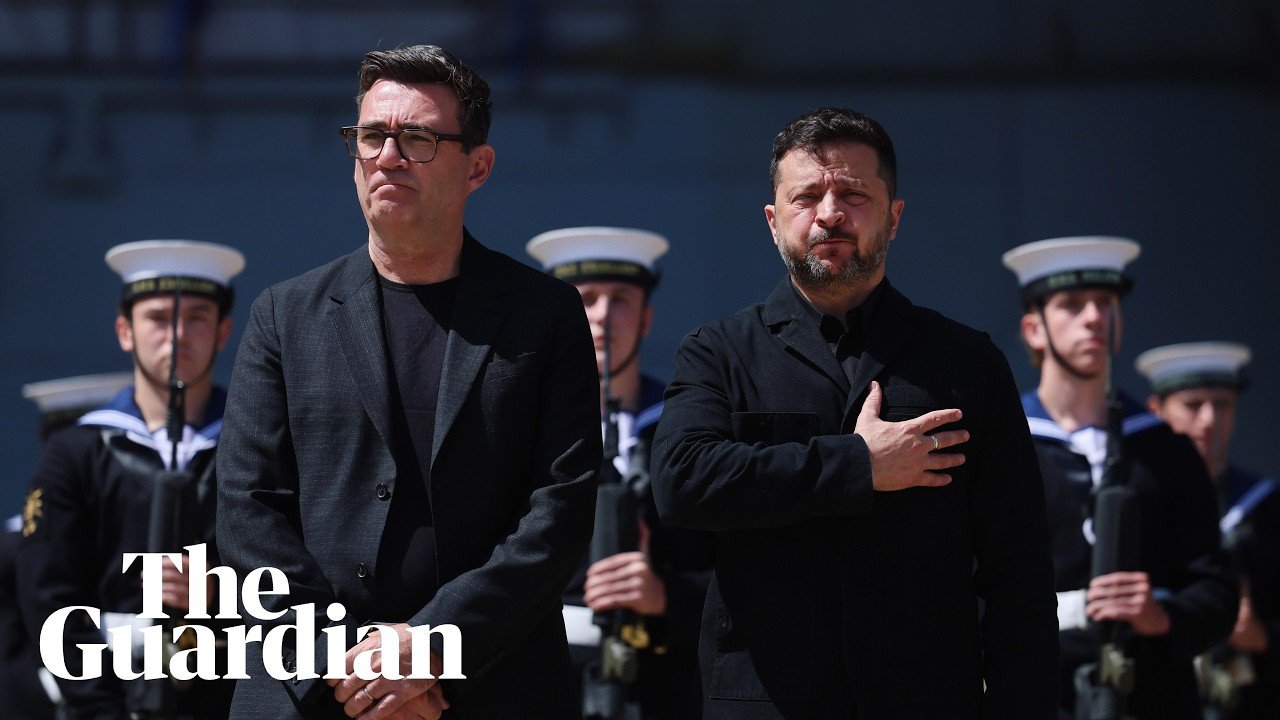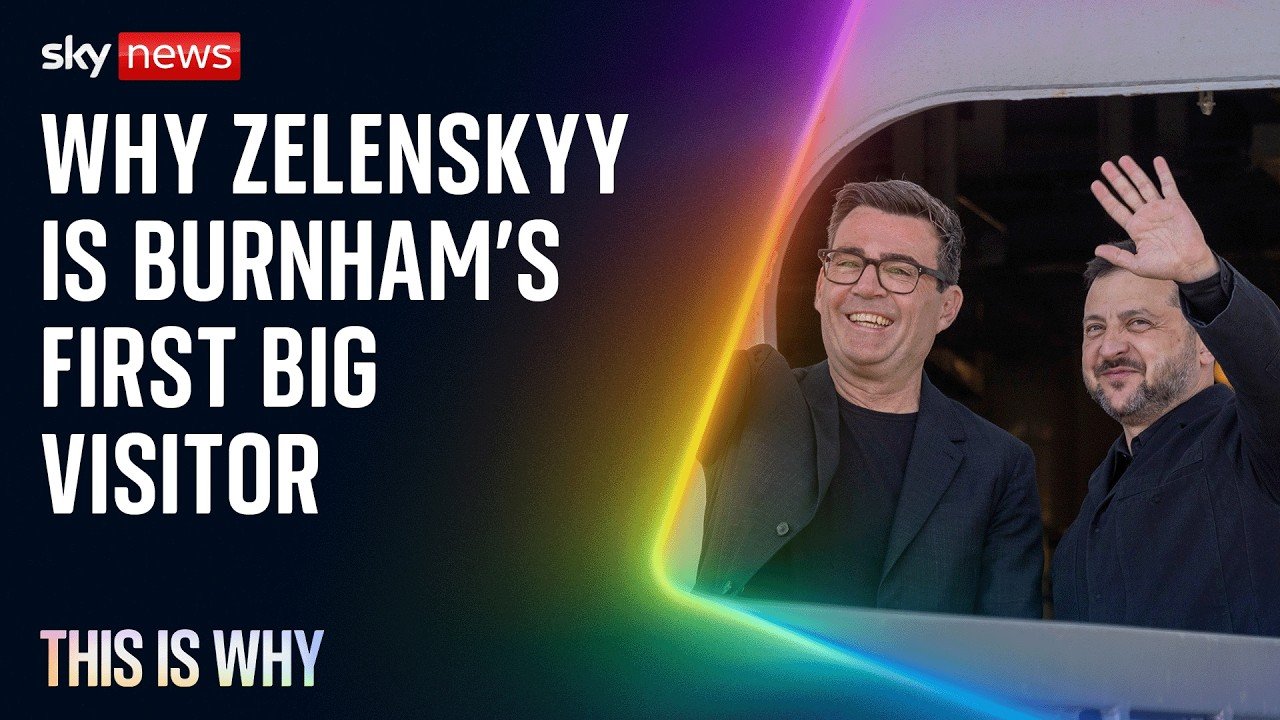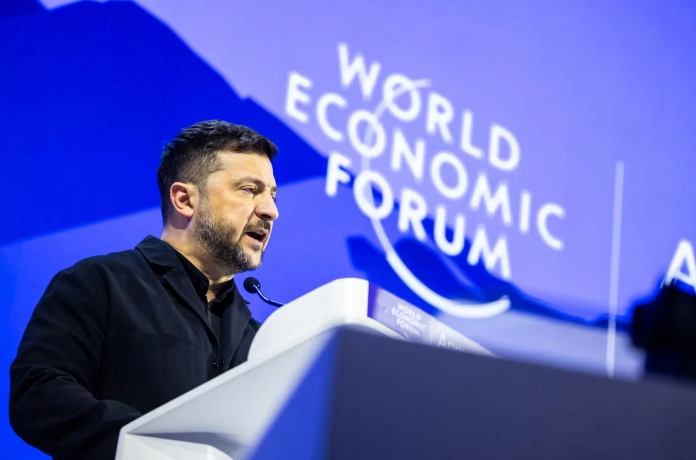
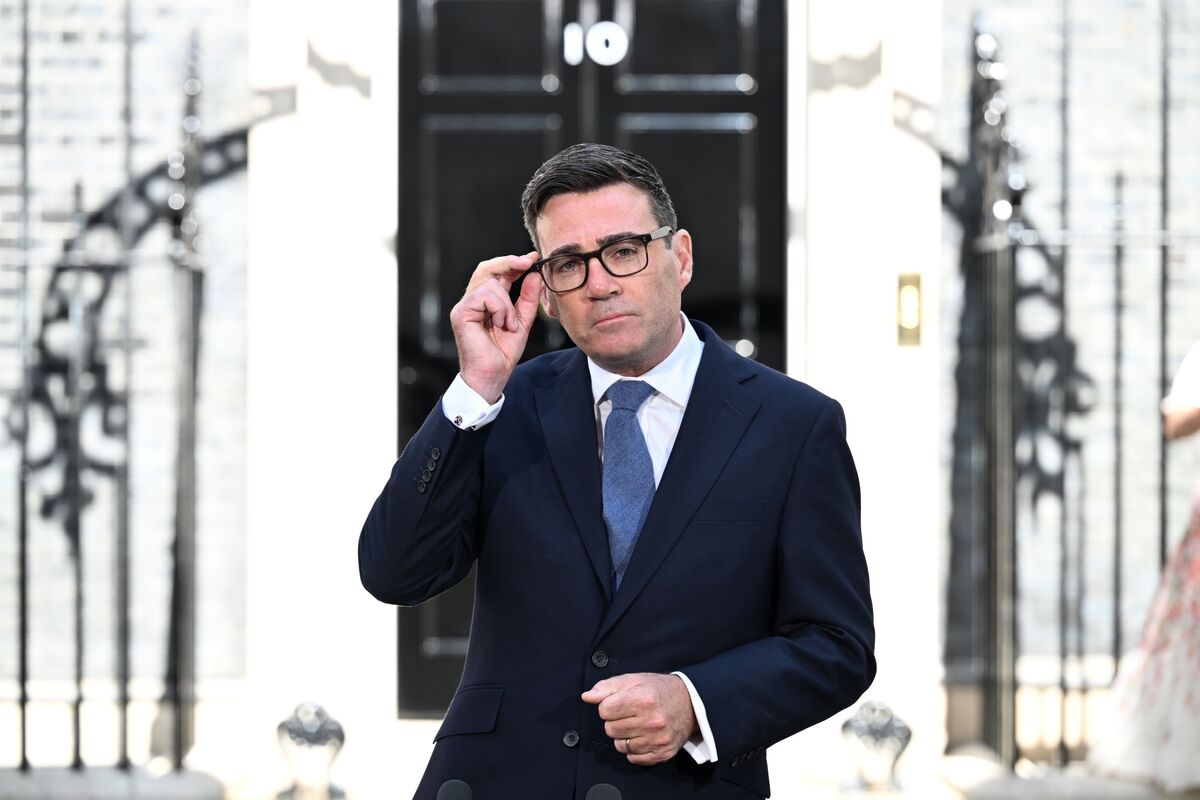


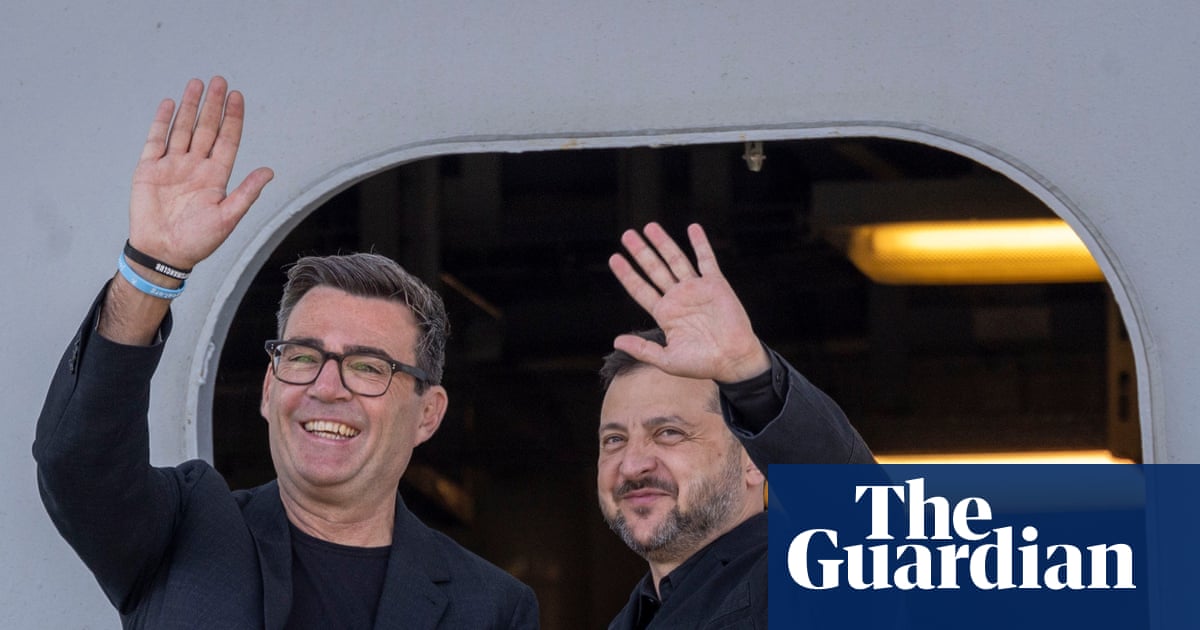


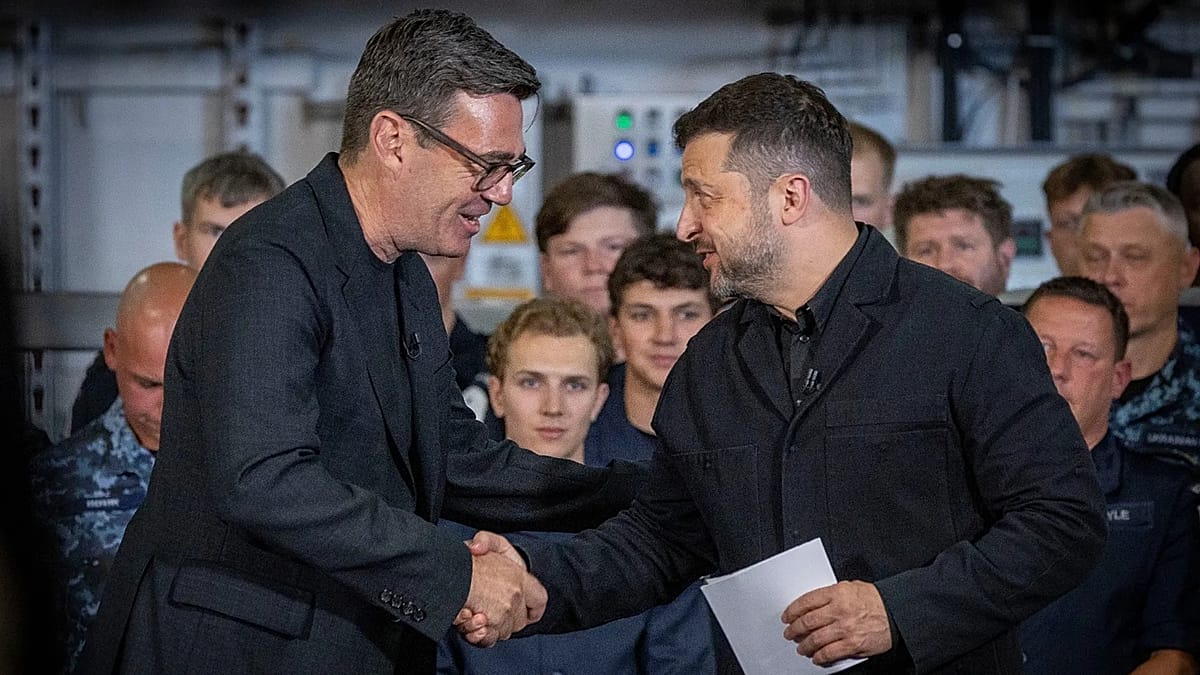
Ukrainian President Volodymyr Zelenskyy met British Prime Minister Andy Burnham on Monday at Portsmouth Naval Base, in his first bilateral meeting with a foreign leader since Burnham took office a week earlier. The leaders held talks aboard the Royal Navy aircraft carrier HMS Queen Elizabeth, underscoring the UK’s continued military backing for Kyiv as the war with Russia grinds on.
Burnham used the meeting to reaffirm what Downing Street called “unwavering” support for Ukraine, saying Britain would stand “shoulder to shoulder” with Kyiv for as long as necessary. Zelenskyy said the visit sent an important signal of support and thanked the UK for prioritizing defense and security cooperation.
Stone Cloak deal marks a deeper defense push
The most significant announcement was the UK’s decision to share intellectual property for its Stone Cloak electronic warfare system, allowing Ukraine to manufacture the technology domestically. The jamming system is designed to protect Ukrainian drones by disrupting Russian air defenses and making them harder to track.
The two leaders also discussed expanding joint defense production, including further work on drone technology and other battlefield systems. Burnham and Zelenskyy met with more than 200 Ukrainian military personnel training in Britain, including troops involved in counter-mine and maritime exercises aimed at strengthening Black Sea operations.
Portsmouth visit sets up high-stakes Trump talks
The Portsmouth meeting came at a sensitive moment for Ukraine, with Zelenskyy heading next to Washington for crucial talks with President Donald Trump about ending the war. The timing allowed Burnham to project continuity after taking office, while also signaling that London intends to remain one of Kyiv’s most reliable European partners.
Britain has already committed substantial support to Ukraine since Russia’s full-scale invasion in 2022, including military and non-military assistance worth tens of billions of pounds. Burnham’s first major foreign-policy gesture suggests that Ukraine will remain central to his government’s agenda.
Burnham’s political signal
The meeting helps Burnham show that he can manage the optics of a wartime alliance: firm support for Ukraine, a visible military backdrop, and a concrete technology transfer rather than just statements. That gives him a strong first foreign-policy image, especially after a fast transition in leadership.
It frames him as a continuity leader, not a reset figure, because he made Zelenskyy his first foreign visitor and publicly pledged to honor every UK commitment to Ukraine in full. That matters politically: it signals to allies that the foreign-policy line survives the change in prime minister, and to critics that he is not backing away from the UK’s role.
It also gives Burnham an early stage to look prime-ministerial in security policy, which is useful if he wants to avoid being seen as domestically focused or inexperienced abroad. Hosting Zelenskyy at Portsmouth, alongside a defense announcement and troop visit, lets him project authority without needing a major diplomatic breakthrough.