Trump declares US-Iran Hostilities “Terminated” before War Powers Act deadline

In this story
Jump to Timeline

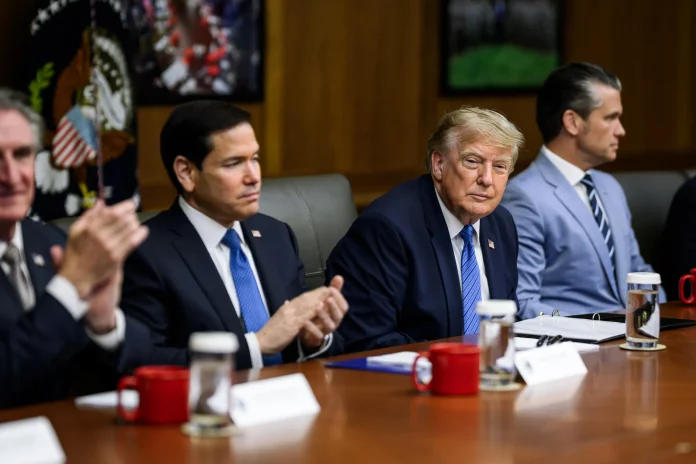
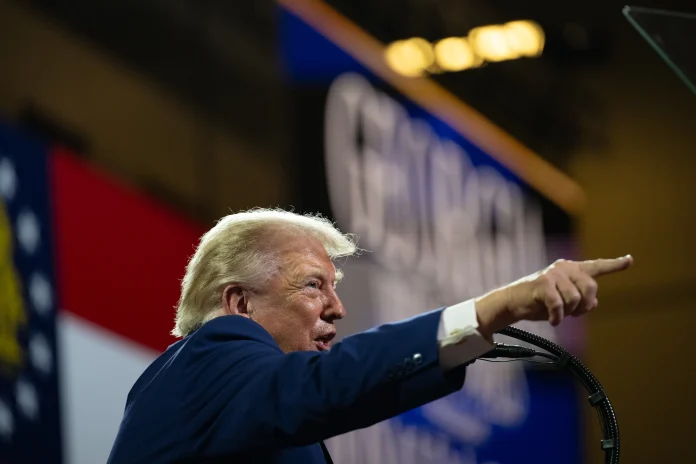
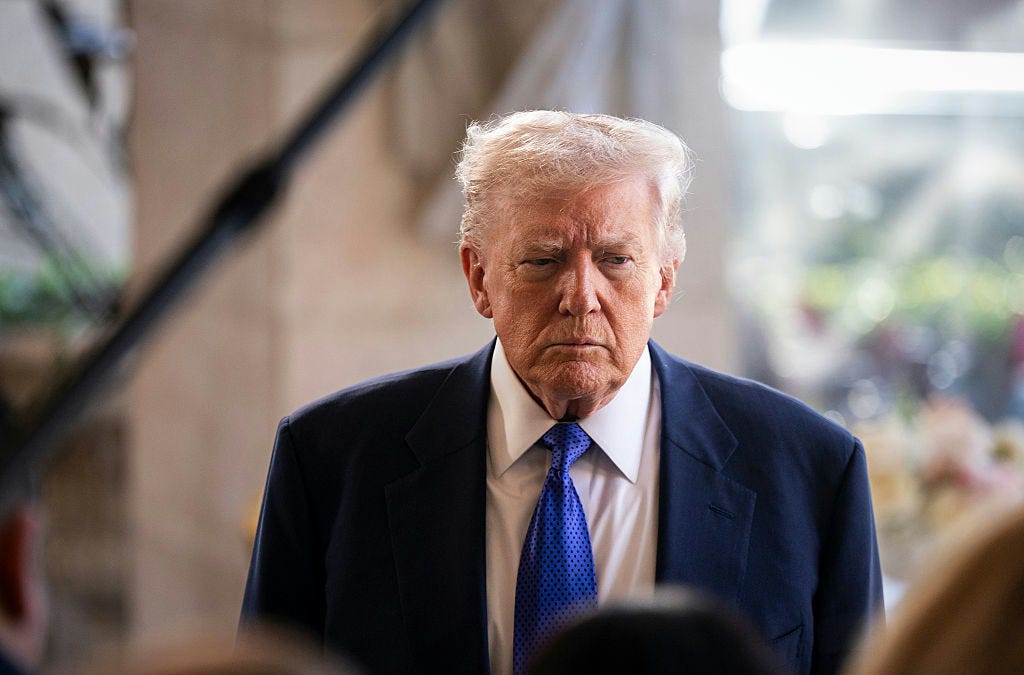
President Donald Trump has declared that US hostilities with Iran are “terminated,” in a move that appears aimed as much at Washington’s legal framework as at the conflict itself.

In a formal notification to Congress on May 1, Trump said the absence of direct military exchanges since early April meant the conflict had effectively ended. The declaration arrived precisely as a 60-day deadline under the War Powers Resolution was set to expire—avoiding the need for congressional approval to continue military operations.

A legal deadline, reframed

Under the 1973 War Powers Resolution, US presidents must seek authorization from Congress within 60 days of initiating military action. Trump triggered that clock on March 2, when he notified lawmakers of strikes against Iran.

That deadline fell on May 1.

In his letter to congressional leaders, Trump argued that a ceasefire reached on April 7 had effectively “stopped the clock.” With no active exchange of fire since then, he maintained that hostilities had legally ceased, rendering a vote in Congress unnecessary.

The interpretation is controversial. The War Powers Resolution does not explicitly provide for pauses or ceasefires to suspend the timeline, and critics argue that ongoing US military actions undermine the administration’s claim.

Pushback from congress

Democratic lawmakers and several legal analysts have rejected the administration’s position, pointing to continued US enforcement measures in the region — particularly a naval blockade of Iranian ports — as evidence that hostilities are still ongoing.

They argue that the presence of active military pressure, even without direct combat, falls within the scope of “hostilities” under the law.

Trump, however, has long dismissed the War Powers Resolution as unconstitutional, arguing that it infringes on presidential authority as commander-in-chief. His latest move reinforces that stance, effectively testing the limits of executive power in real time.

A war that hasn’t fully ended

Despite the administration’s legal framing, the situation on the ground remains tense and unresolved.

The US continues to enforce a naval blockade targeting Iranian ports, aimed at forcing Tehran into a broader agreement on nuclear and regional security issues. At the same time, Iran maintains its own blockade of the Strait of Hormuz, restricting commercial shipping and demanding sanctions relief and a reduction of US military presence in the region.

The result is a fragile standoff — less an end to conflict than a shift in its form.

Adding to the uncertainty, Trump has paused “Project Freedom,” a US-led effort to escort commercial vessels through the Strait, to allow space for a final round of negotiations reportedly mediated by Pakistan.

Negotiations Over Escalation

The administration has framed the current moment as a transition from military confrontation to diplomatic resolution. But with both sides maintaining strategic pressure points, the risk of renewed escalation remains.

For now, Trump’s declaration has reshaped the legal narrative of the conflict, even as the geopolitical reality continues to evolve in the Gulf.
youtube placeholder image

Key widely reported facts from verified sources including BBC, NYTimes, Politico, APNews, Reuters, NBC News, PBS, Euronews, The Hill, The Guardian

US launches “Operation Economic Outcast,” widening Iran sanctions to five new sectors

The US launched Operation Economic Outcast against Iran that expands secondary sanctions risk across five critical sectors and targets nearly 60 entities.
Read more

Trump declares ‘Economic D-Day’ on Iran in unprecedented sanctions escalation

US President Donald Trump has launched what he calls an “Economic D-Day” against Iran, vowing the “most crushing economic operation ever taken against any country”.
Read more

Trump threatens to bomb Oman as US-Iran ceasefire collapses

Trump posted an AI-generated image on his Truth Social platform labeling the Strait of Hormuz as "NEW US TERRITORY."
Read more

US-Iran peace deal collapses as 60-day deadline expires

Both Washington and Tehran have ruled out extending the deal, with President Donald Trump declaring that Iran must "put up the white flag of surrender".
Read more

Trump and Iran trade claims over Strait of Hormuz as shipping traffic collapses

Washington says its naval blockade has secured the strategic waterway while Tehran insists no vessel may pass without its approval.
Read more

“Deeply Duplicitous”: Trump issues ‘last chance’ warning to Iran

After Iran denied holding talks, Trump publicly lashed out, calling the Iranian leadership "unbelievably duplicitous" and insists talks are ongoing.
Read more

Trump meets Zelenskyy and Netanyahu before Lindsey Graham funeral

The overlap highlighted Graham’s standing as a longtime foreign-policy hawk, bringing together leaders tied to two of the world’s most consequential conflicts.
Read more

House votes to curb Trump’s Iran war powers, but Senate blocks the move

Trump framed the war powers vote as an attack on ongoing diplomacy, while critics said Congress was overdue to reassert its constitutional role over war-making decisions.
Read more

Trump threatens major strike as Red Sea conflict widens

Trump signaled that he sees little room for compromise at this stage, saying Iran is “not ready” and has not “received enough pain yet”.
Read more

Trump, Lebanon’s Aoun hold historic White House talks as US pushes regional deal

It is the first visit by a Lebanese head of state to Washington in nearly two decades and signaling renewed diplomatic momentum in the Middle East.
Read more
Timeline

Apr 8: The United States and Iran agree to an initial two-week ceasefire, mediated by Pakistan, intended to allow for negotiations in Islamabad.

Apr 14 to 15: The first direct diplomatic talks in decades between Israel and Lebanon take place in Washington, D.C..

Apr 16: President Trump announces a 10-day ceasefire between Israel and Lebanon, which took effect at 21:00 GMT.

Apr 18 to 20: Displaced Lebanese civilians begin returning to their homes in southern Lebanon as the truce holds, despite reports of ongoing Israeli “clearing operations” for weapons.

Apr 21: President Trump unilaterally extends the U.S.-Iran ceasefire, stating he will hold off on further attacks until Iranian leadership provides a “unified proposal”.

Apr 22: Tensions spike as the IRGC captures two vessels in the Strait of Hormuz for “disrupting order”. Simultaneously, an Israeli strike in south Lebanon kills journalist Amal Khalil.

Apr 23: The White House confirms the naval blockade is costing Iran $500 million per day. Trump warns the U.S. Navy to “shoot and kill” any Iranian boats seen laying mines.

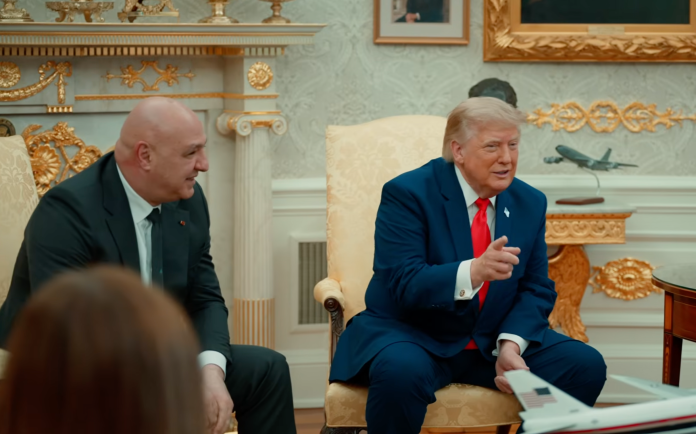
Apr 24: Trump announces a three-week extension of the Israel-Lebanon ceasefire (now set to expire May 17) following meetings with ambassadors in the Oval Office.

May 1: President Trump notifies Congress that hostilities have “terminated”, attempting to reset the War Powers Act clock despite the ongoing naval blockade.

May 5 to 6: Trump pauses “Project Freedom” (escorting ships through the Strait of Hormuz) to facilitate a “final agreement.”

Opinion & Analysis

You may also be interested in

LEAVE A REPLY

Please enter your comment!
Please enter your name here