Japan commits $550billion to US industries in major trade deal

Jump to Timeline

The United States and Japan reached a major bilateral trade agreement in 2025, easing economic tensions that had built up amid broad US tariff actions and strengthening the strategic alliance between the two powers.

In July 2025, President Donald Trump announced an agreement that would reduce tariffs on Japanese exports to the United States from 25 percent to 15 percent. Japan committed to investing approximately $550billion in American industries, with a focus on energy and manufacturing.

The deal included specific provisions for a major expansion of US energy exports to Japan, estimated at around $7billion annually, as well as subsidies promoting US clean energy vehicles. President Trump signed an executive order on 5 September 2025 to officially implement the framework.

“New Golden Age”

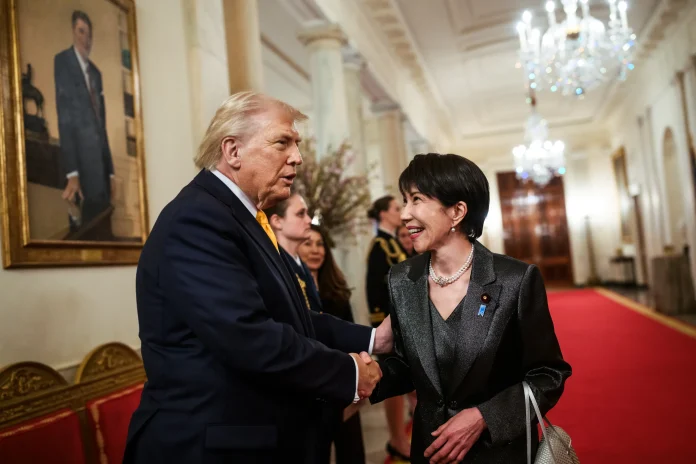
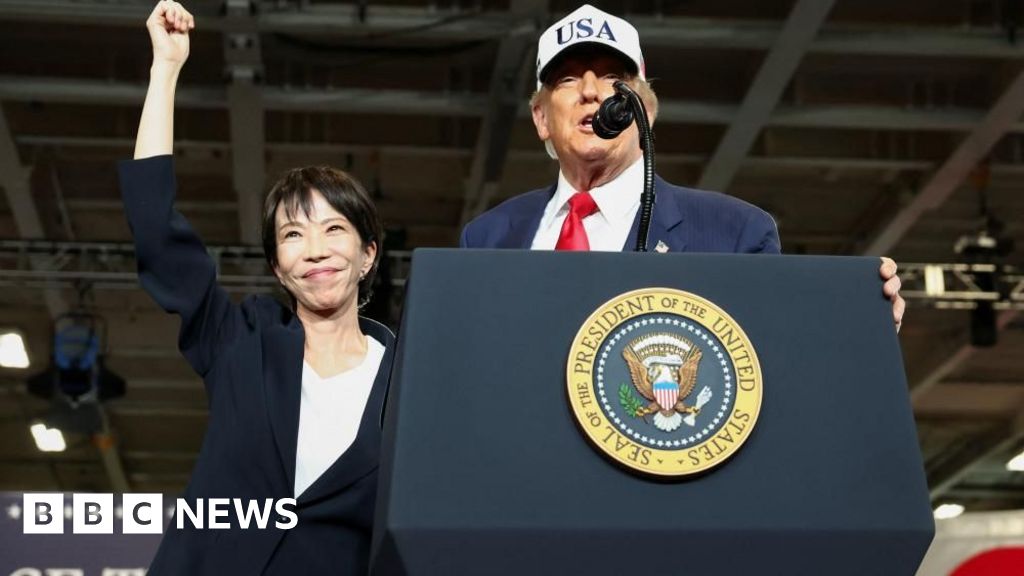
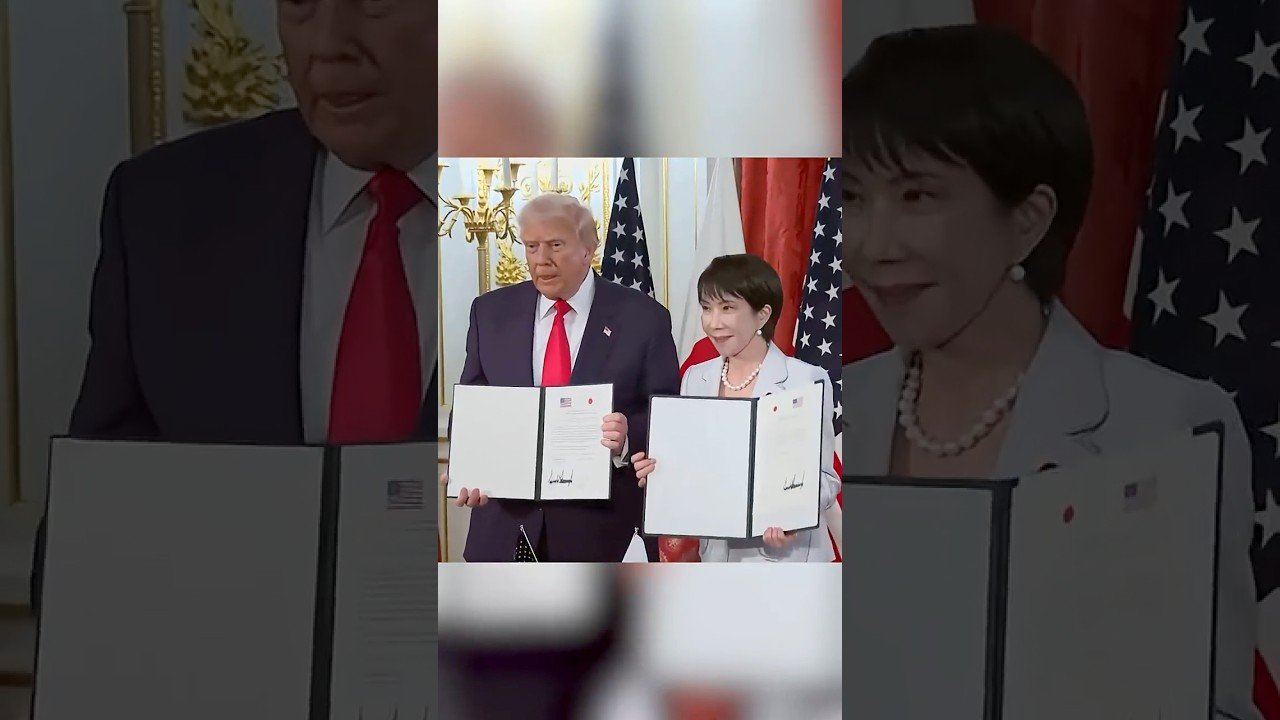
On 28 October, President Trump and Japanese Prime Minister Sanae Takaichi met at the Tokyo Summit at Akasaka Palace during Trump’s visit to Japan. The meeting was described as a meticulously staged affirmation of the US–Japan alliance, centred on the theme of a New Golden Age.

The leaders issued a formal document reconfirming the July 2025 trade framework, which capped reciprocal tariffs at 15 percent and outlined the $550billion Japanese investment package into the United States.

The summit also produced a framework to diversify critical minerals and rare earth supply chains and reduce reliance on Chinese processing, with a commitment to hold a ministerial meeting within 180 days.

A Technology Prosperity memorandum of cooperation was signed covering AI, quantum computing, 6G, and fusion energy. A new working group was established to modernise and expand US shipbuilding capacity using Japanese technology.

A fact sheet highlighting around $400billion in potential projects listed roughly 20 companies interested in initiatives spanning energy and AI, with specific mentions of Westinghouse and GE Vernova for nuclear reactor construction.

Symbolic and economic gestures

Japan agreed to purchase more US soybeans and Ford F-150 pickup trucks, with the latter symbolically parked at the palace, to help balance the trade surplus. Discussions also included expanding US liquefied natural gas imports, particularly from the proposed Alaska LNG project.

In a notable ceremonial event, Trump and Takaichi delivered joint speeches on the deck of the USS George Washington at the Yokosuka naval base. The two leaders also met with families of Japanese citizens abducted by North Korea, a gesture of high symbolic importance in Japan.

Takaichi presented Trump with a putter used by the late Shinzo Abe and a golf bag signed by Hideki Matsuyama, invoking the close bond between the former Japanese leader and Trump.

Broader implications

The agreement reflects a broader effort to stabilise US–Japan economic relations while reinforcing strategic cooperation in technology, energy, and supply chain security.

By combining tariff reductions, large-scale investment commitments, and symbolic gestures, the deal aims to deepen the alliance at a time of heightened global economic and geopolitical uncertainty.
youtube placeholder image

Read also:
Sanae Takaichi becomes Japan’s first female PM
Japan-China Diplomatic Crisis 2025
Key widely reported facts from verified sources including CNN, Reuters, Bloomberg, CNBC, BBC, Nikkei Asia, The Japan Times, Al Jazeera

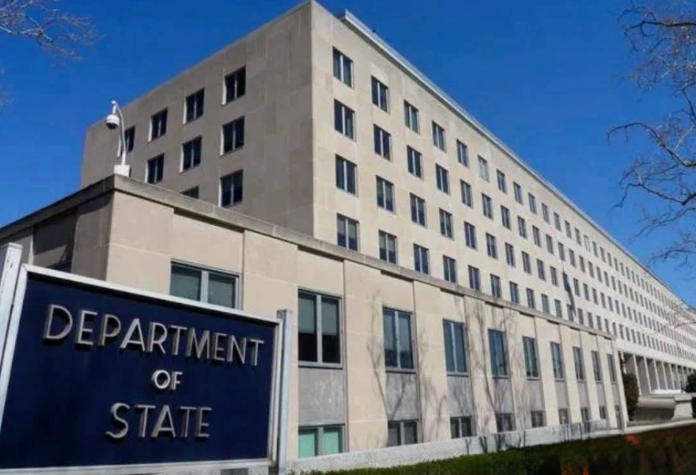
US to shutter five diplomatic posts in rare peacetime downsizing

The closures are projected to save about $4.4million per year, per reporting on the congressional notifications.
Read more

Is the US-Japan’s $40billion nuclear agreement a big deal?

This deal is part of a broader US$550 billion investment pledge from Tokyo focused on energy security and technological leadership.
Read more

US-South Korea trade spat revives tariff talk

In early 2026, South Korea and the US States had a dispute over delayed ratification of their trade deal and the Coupang investigation, triggering renewed tariff talk.
Read more

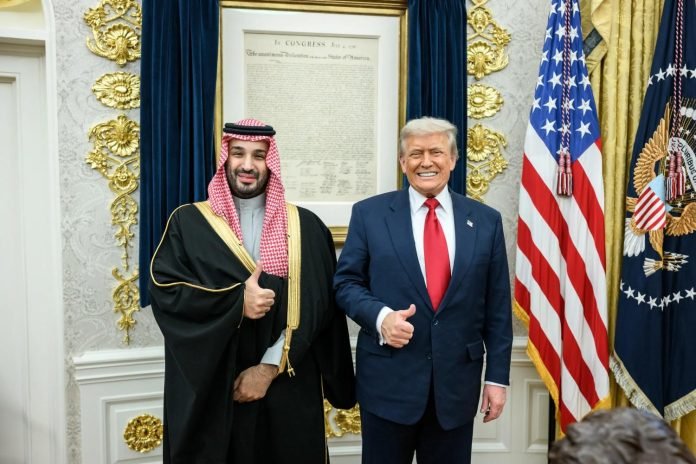
Saudi Arabia pledges $1trillion investment in the US

Saudi Crown Prince Mohammed bin Salman (MBS) pledged to up investment commitments in the US to nearly $1 trillion.
Read more

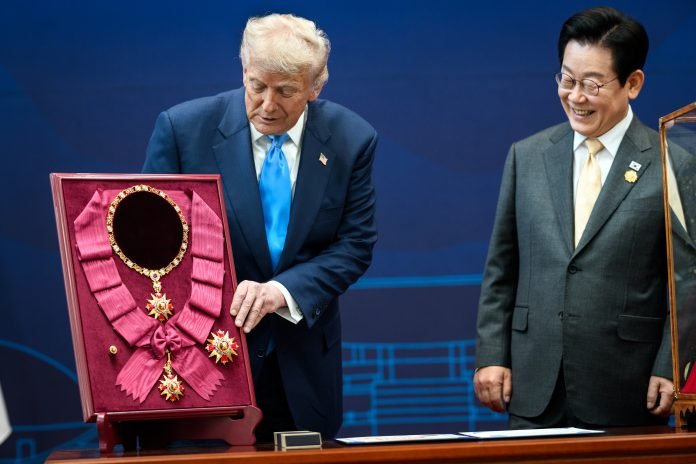
South Korea pledges $350billion US investment for reduced tariffs

South Korea and the US have formalized a trade agreement involving a $350 billion investment pledge from Seoul in exchange for reduced US tariffs.
Read more

Apple announces additional $100billion US investment following tariff threats

Apple is expanding its US investment to $600B over the next four years, anchored by a new $100B commitment to domestic manufacturing.
Read more

Trump’s Gulf investment tour delivers $2trillion in deals

President Trump’s four-day Gulf Tour resulted in record-breaking investment pledges totaling roughly $2T across Saudi Arabia, Qatar, and the UAE. 
Read more

NVIDIA to build out $500billion of AI infrastructure in the US

NVIDIA announced a massive initiative to manufacture up to $500b worth of AI infrastructure and supercomputers in the US over 4 years.
Read more

Tech giants pledge $500billion investment in US AI infrastructure

The $500b Stargate investment is designed to fundamentally reshape the American economy, energy landscape, and national security posture.
Read more
Timeline

Apr 2, 2025: President Trump declared a national emergency regarding trade deficits, imposing 10% “reciprocal tariffs” on most global imports, including Japanese goods.

Jul 7: The White House announced specific 25% tariffs on Japanese imports to take effect on Aug 1.

Jul 8–20: Intense negotiations took place. Japanese negotiator Ryosei Akazawa made seven visits to the U.S. in quick succession.

Jul 22: President Trump announced a “massive deal” on Truth Social, later confirmed at the White House.

Jul 23: A White House Fact Sheet outlined a $550 billion Japanese investment commitment in exchange for lowering the 25% tariff cap to 15%.

Aug 7: The new 15% tariff rate officially took effect retroactively.

Sep 4: President Trump signed Executive Order 14345, which formally implemented the tariff reductions.

A Memorandum of Understanding (MOU) was signed by Secretary Howard Lutnick and Ryosei Akazawa, establishing a U.S. Investment Accelerator to manage the $550 billion.

Sep 26: Japan’s Ministry of Finance established a special investment facility at the Japan Bank for International Cooperation (JBIC) to fund the pledge.

Oct 28: Prime Minister Sanae Takaichi and President Trump met at Akasaka Palace in Tokyo.

Opinion & Analysis

You may also be interested in

LEAVE A REPLY

Please enter your comment!
Please enter your name here