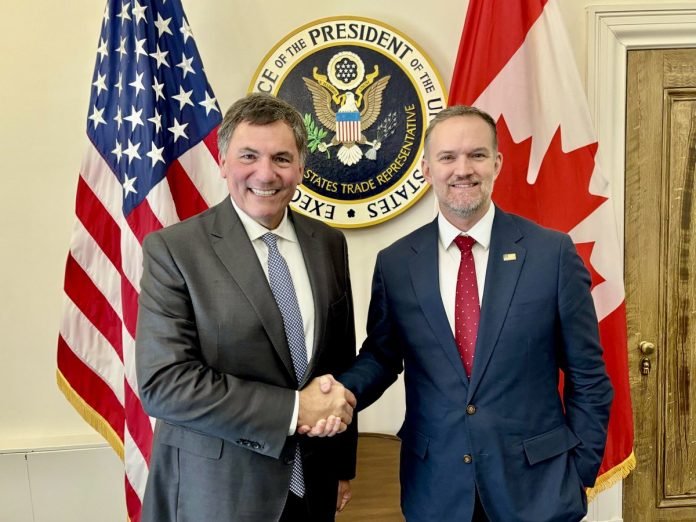











Canada has unveiled sweeping retaliatory tariffs on C$27.6billion (US$19.9billion) of US imports, matching Washington’s 50% levies “dollar for dollar, rate for rate” after bilateral trade talks collapsed in Washington.
Finance Minister François‑Philippe Champagne announced on August 25, 2026 that duties of 15%, 25% and 50% will hit more than 700 American products from September 8, 2026, targeting sectors already squeezed by US measures.
Canada will match US tariffs 'dollar for dollar, rate for rate'
— AFP News Agency (@AFP) August 26, 2026
Canada says that its counter-tariffs responding to US President Donald Trump's latest duties will range between 15% and 50%, as a trade war intensifies between the historically close allies. "Canada will match the… pic.twitter.com/FkMHq3zLNo
The move marks a sharp escalation in a trade conflict that began when President Donald Trump invoked a Depression‑era tool—Section 338 of the Tariff Act of 1930—to impose 50% surcharges on about US$20billion of Canadian goods, which took effect on August 22, 2026.
Ottawa says its counter‑tariffs are calibrated to mirror the US rates product by product, with a focus on steel, aluminum, dairy, appliances, agricultural equipment, pulp and paper, and electronics.
How the trade war unfolded
The US opening move: Section 338 tariffs
The Trump administration triggered the crisis by signing three proclamations on July 20, 2026 (Nos. 11046–11048) that cited Canadian policies on dairy, alcoholic beverages, and motor vehicles as discriminatory against US commerce.
Under Section 338, the president can impose additional duties of up to 50% without a prior investigation by the International Trade Commission or a national security finding—unlike the more commonly used Section 232 or Section 301 tools.
The 50% additional duties were initially paused while last‑minute talks continued, then took effect at 12:01 a.m. Eastern Time on August 22, 2026, after negotiations broke down on August 21. The measures apply on top of existing tariffs and fees and explicitly cover goods regardless of their USMCA origin status, meaning the continental trade pact does not shield affected products.
Canada’s response: Matched rates, targeted sectors
Ottawa’s counter‑tariffs are designed to impose equivalent financial pain on US exporters while shielding Canadian consumers where possible. The government says the September 8 start date gives businesses time to adjust supply chains and pricing, and coincides with the end of a short post‑Labor Day window.
The product list spans more than 700 tariff lines and includes:
- Steel and aluminum goods, including some downstream products already affected by US Section 232 measures
- Dairy products and related food items
- Household appliances and furniture
- Agricultural machinery and equipment
- Pulp, paper, and certain wood products
- Electronics and electrical equipment
Canada has carved seafood and fish products out of its retaliatory tariff schedule, reversing part of its August 25 announcement after industry pushback. On August 27, the Department of Finance said it had made “select adjustments to protect against broader economic harms,” explicitly removing seafood and fish from the list of US goods that will face 15%, 25% or 50% counter‑tariffs starting September 8.
Officials have not published every line item in press materials, but the full schedule is available on the Department of Finance’s counter‑tariffs.
Political Calculus and Economic Stakes
Domestic politics in both countries
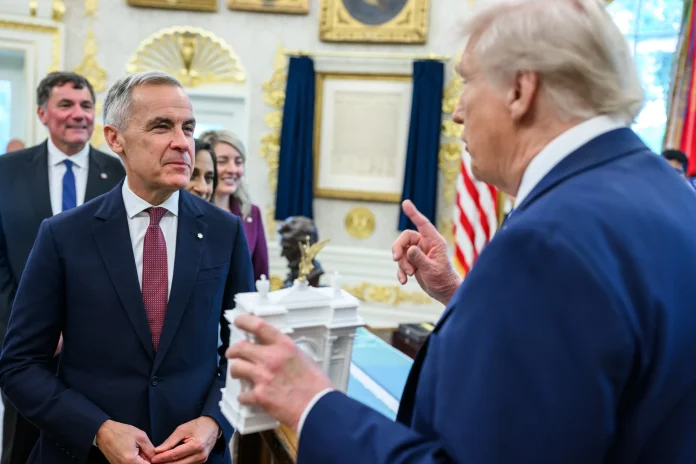
Canadian Prime Minister Mark Carney framed the US demands—on dairy market access and provincial rules governing American alcohol—as concessions that would “heavily undermine Canadian workers,” making retaliation politically necessary at home. Polling and parliamentary statements suggest broad support for a firm response, with Ottawa coupling the tariffs with a C$7.5billion support package for affected workers and businesses.
In the US, economists and trade analysts note that Canada’s target list deliberately touches key swing‑state industries ahead of the 2026 midterms, including Wisconsin dairy, Michigan and Indiana manufacturing, and appliance production in the Midwest. That political geometry is intended to raise the domestic cost of escalation for US lawmakers.
Auto Sector and the USMCA Shadow
Beyond the current measures, President Trump has threatened to extend 50% tariffs to Canadian steel used in autos, as well as finished vehicles and auto parts, by January 1, 2027—a move Carney warned would aim to “destroy” Canada’s automotive sector.
The auto industry is deeply integrated across the border, so such a step would disrupt supply chains on both sides and could push major manufacturers to re‑evaluate North American production footprints.
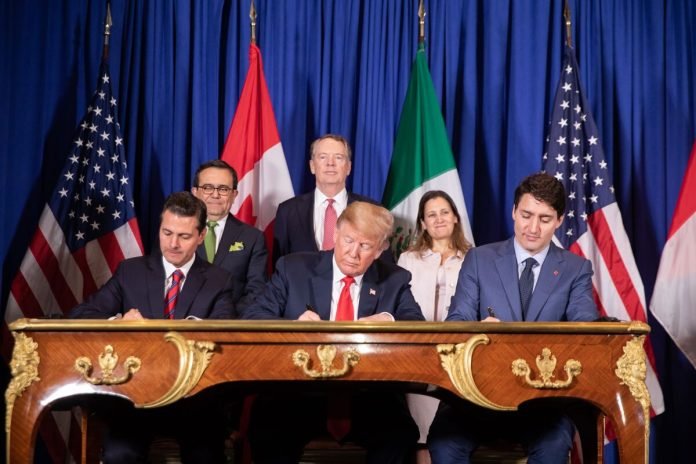
The broader risk is to the USMCA itself. Mexico has already dispatched trade envoys to Washington for emergency damage control, fearing collateral damage to trilateral supply chains and the agreement’s credibility. Legal scholars note that while Section 338 provides domestic authority, the tariffs raise serious questions under USMCA and WTO rules, potentially opening the door to formal disputes.
US and Trump’s reaction to Canada’s counter‑tariffs
The Trump administration’s public response to Canada’s August 25 announcement was immediate but brief: the White House framed Ottawa’s move as a rejection of a “partnership” offer and signaled that more US measures are under discussion.
After Canada unveiled its counter‑tariffs, the White House released a statement saying the United States had been prepared to give Canada “the most preferential market access of any country on Earth” in recent talks. Instead, it accused Ottawa of making “unreasonable demands, walk‑backs, and flat‑out rejection,” and suggested that Canada’s retaliation was a choice against partnership.
That language mirrors earlier US messaging that pinned the collapse of negotiations on Canadian positions on dairy market access and provincial rules affecting American alcohol.
President Trump has also publicly tied Canada’s retaliation to his threat to double auto tariffs to 50% and impose new levies on auto parts starting January 1, 2027. In other words, Ottawa’s counter‑tariffs are being used in Washington as justification to move ahead with the auto measures that Canadian leaders have warned would target the heart of Canada’s manufacturing base.
Administration allies and sympathetic media have framed Canada’s move as economically harmful to US producers in swing states, echoing the political logic behind Ottawa’s targeting of dairy, appliances, and steel. By linking Canada’s retaliation to new auto tariffs and potential additional measures, the White House is positioning itself to portray any pain in manufacturing and farm states as the result of Canadian intransigence rather than US policy.
What’s exempt and what’s next
The US Section 338 proclamations carved out some sensitive categories, including Canadian energy, potash, fish, and goods already subject to Section 232 tariffs on steel, aluminum, copper, lumber, timber, and certain derivatives, as well as critical minerals. Canada’s counter‑tariff design similarly tries to avoid the most inflationary consumer items while still hitting politically salient US exports.
Both sides have left the door technically open to further talks, but with tariffs now live on one side and scheduled on the other, the window for a quick de‑escalation is narrowing. Businesses are being advised to review customs classifications, origin documentation, and pricing contracts ahead of the September 8 effective date, especially in affected sectors like appliances, farm equipment, and processed foods.