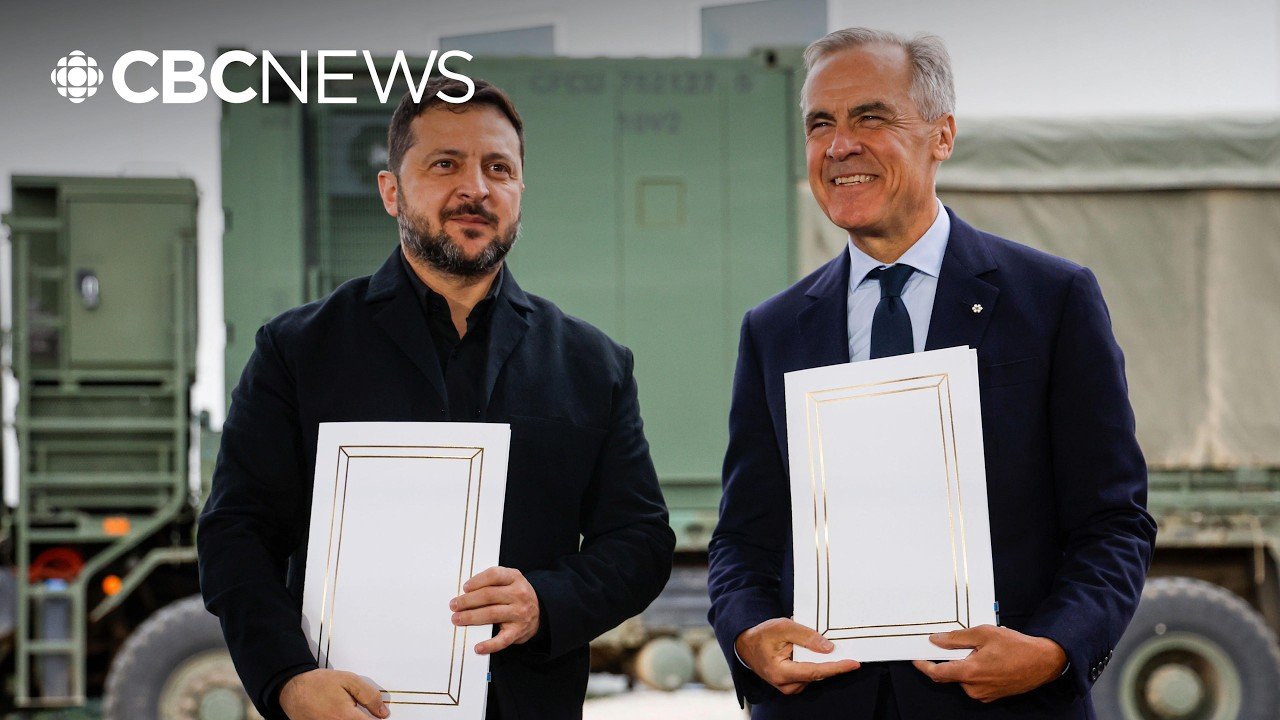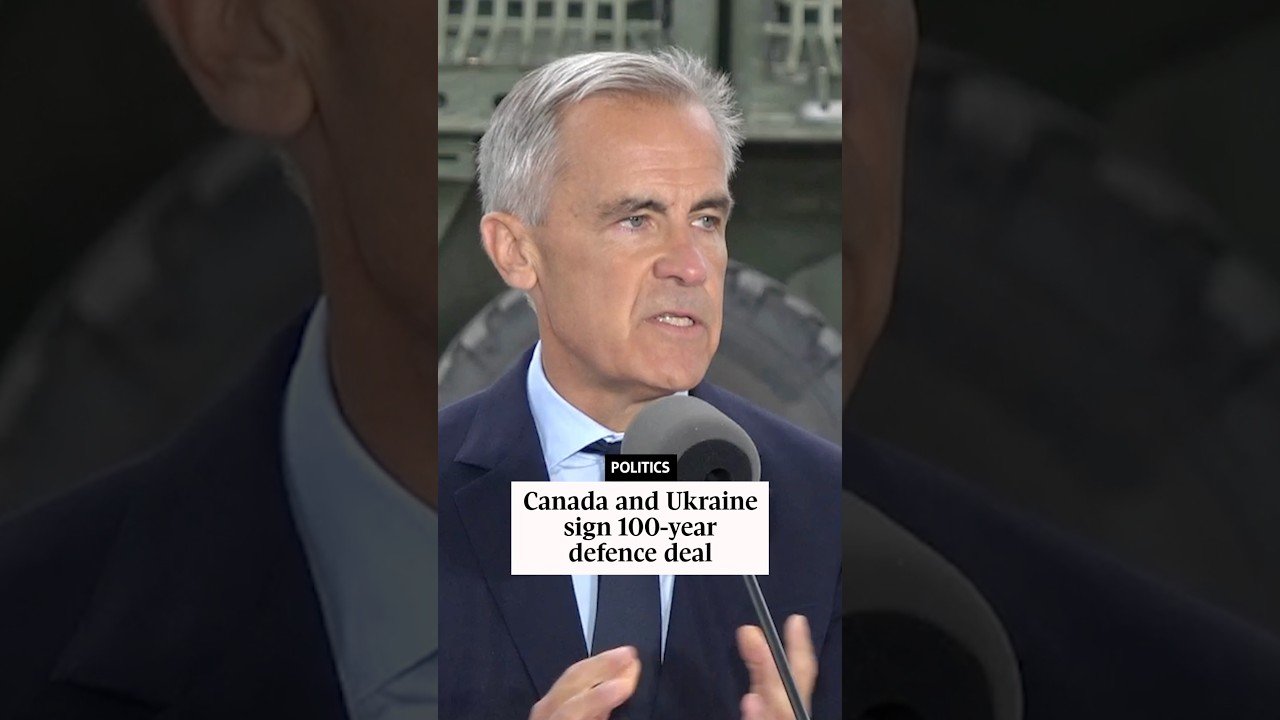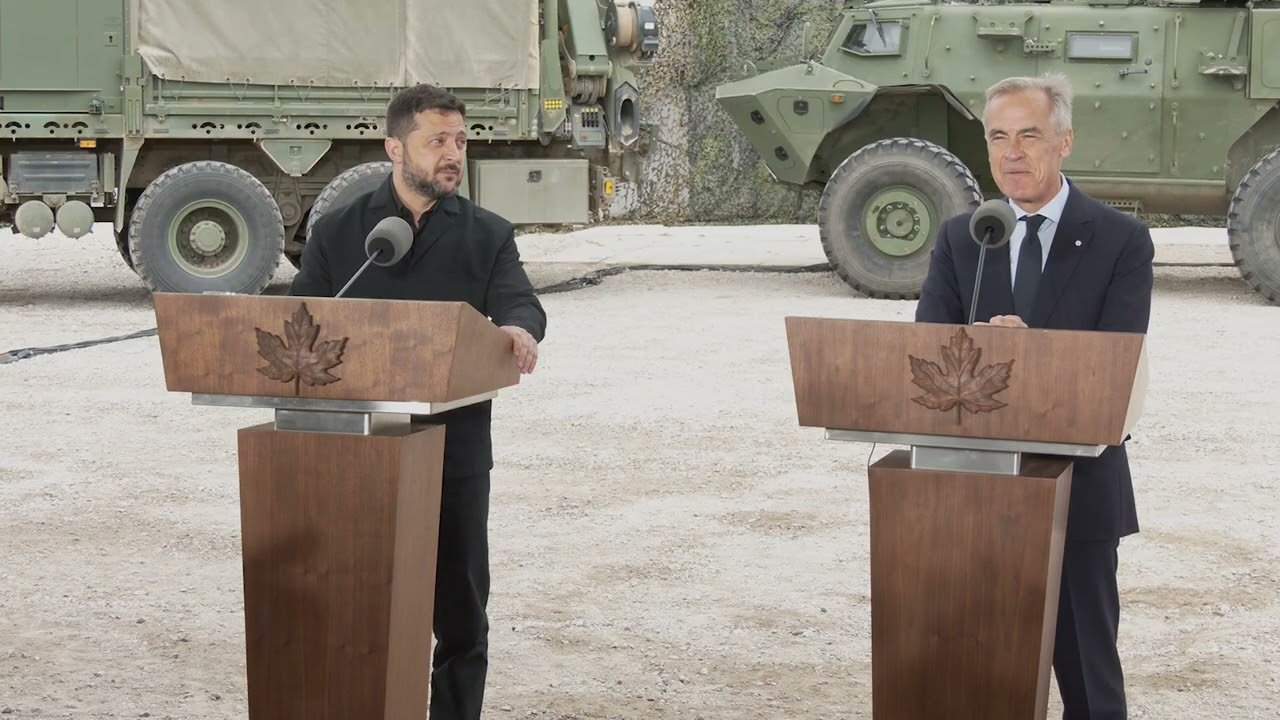

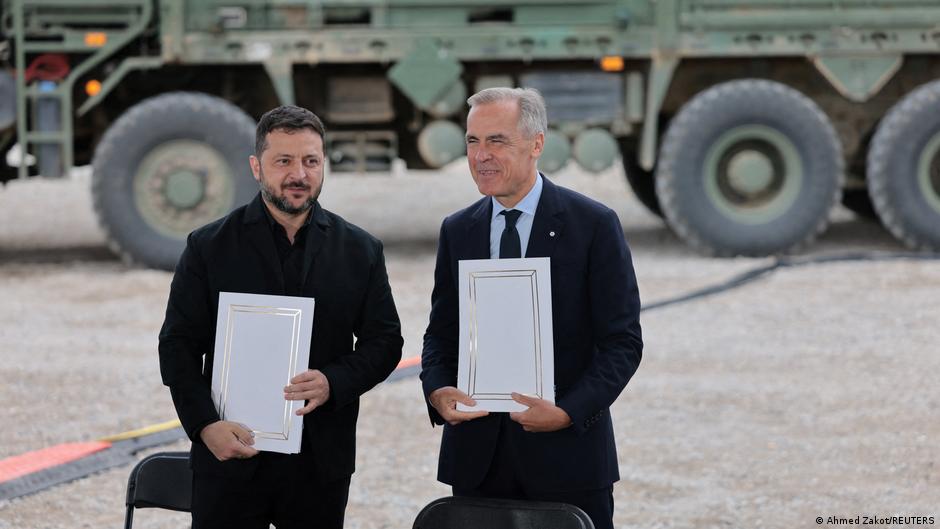





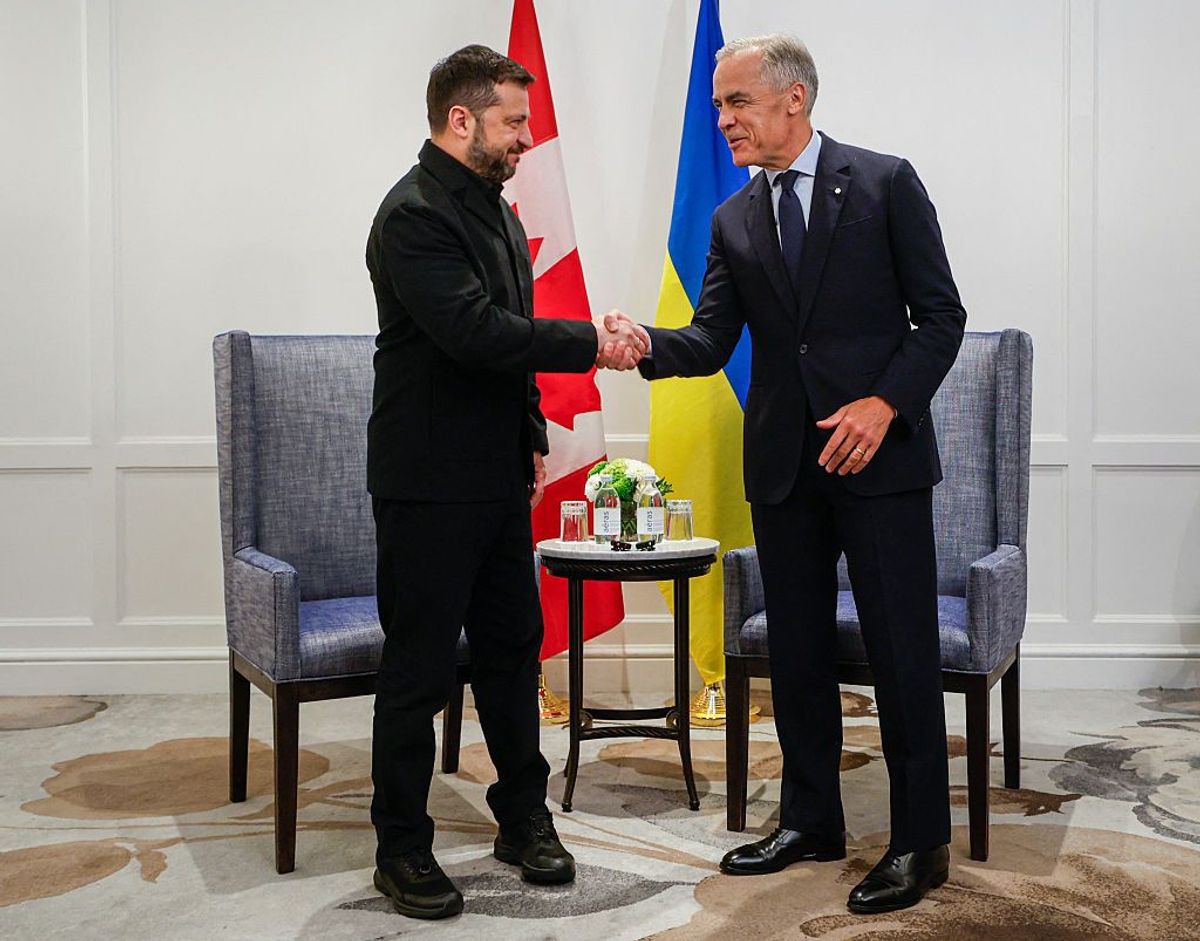

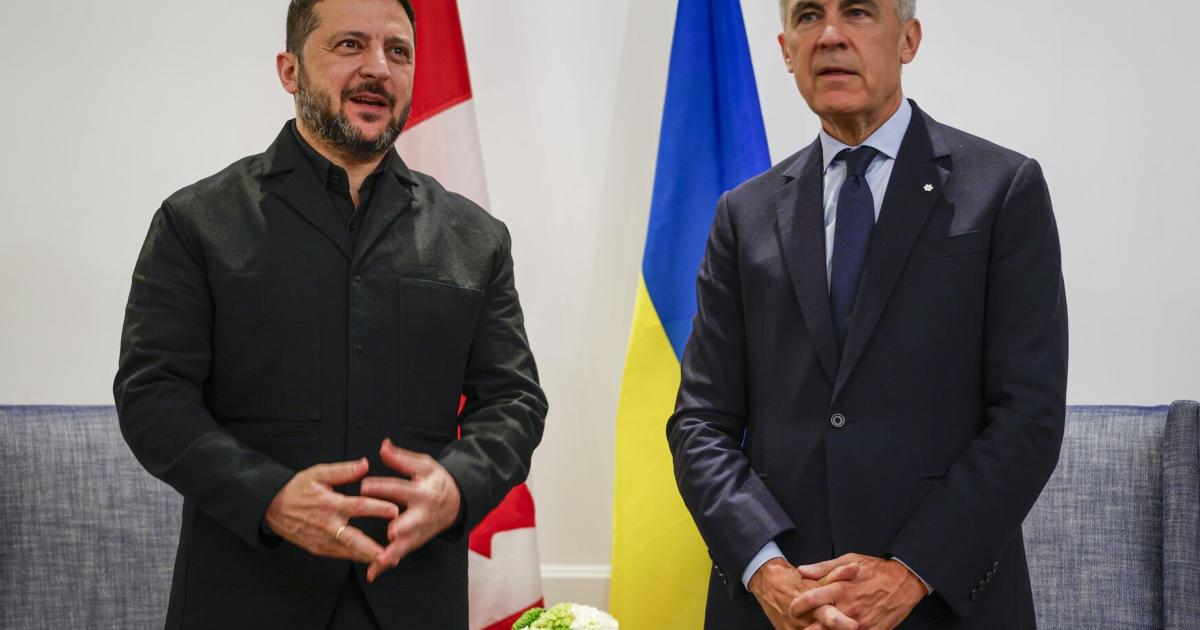
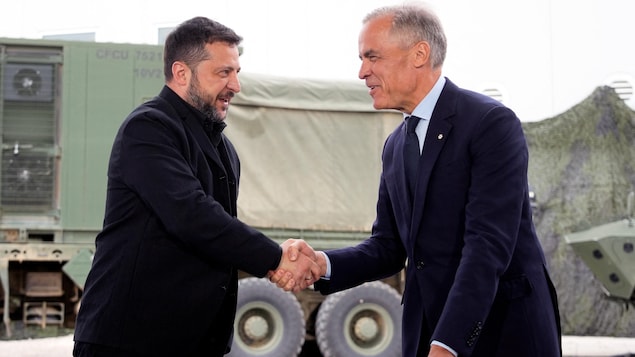


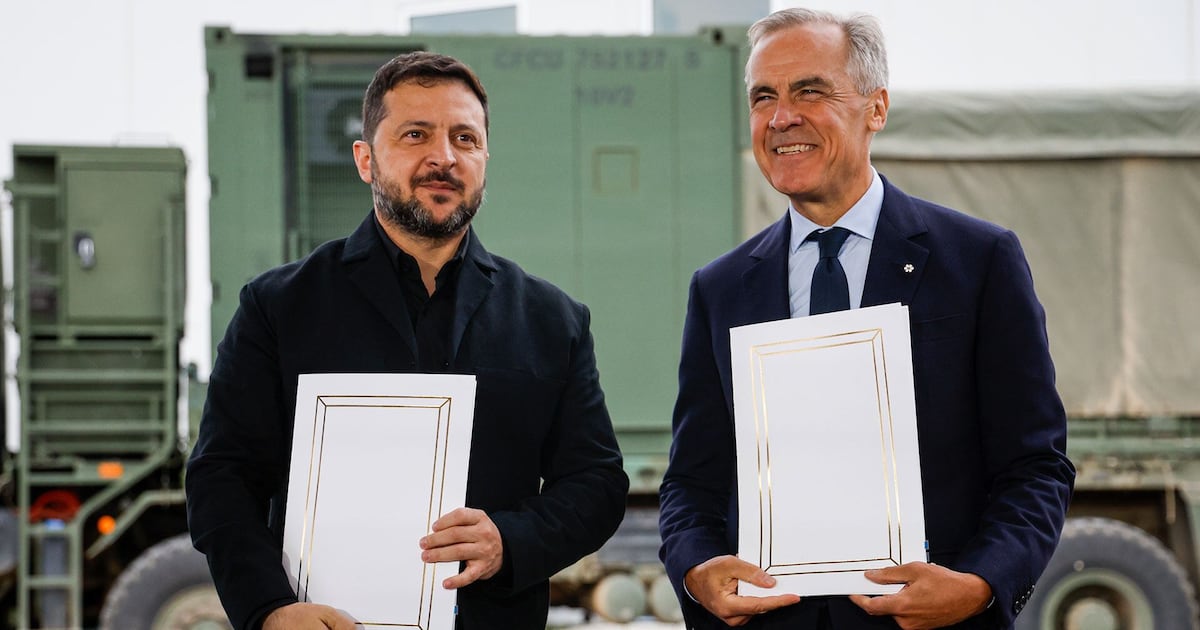
Canada and Ukraine have signed a declaration setting out a 100-year partnership, linking immediate military assistance for Kyiv with plans for joint defence production, reconstruction and closer economic ties. The declaration, signed by Prime Minister Mark Carney and President Volodymyr Zelenskyy in Calgary on September 10, sets a December 2026 target for concluding a comprehensive strategic partnership agreement.
The announcement combines long-term ambitions with more immediate commitments: C$350 million for air-defence interceptors, a Canadian drive to build capacity to produce millions of drones within two years, and additional financing for Ukraine’s energy security and recovery. Carney said one-third of the drones manufactured under Canada’s production expansion would support Ukraine’s defence.
The declaration is a political expression of shared strategic intent—not, by itself, a completed century-long mutual-defence treaty. Its significance lies in bringing existing security arrangements and new industrial, economic and humanitarian initiatives under a single framework, with foreign and defence ministers responsible for driving implementation.
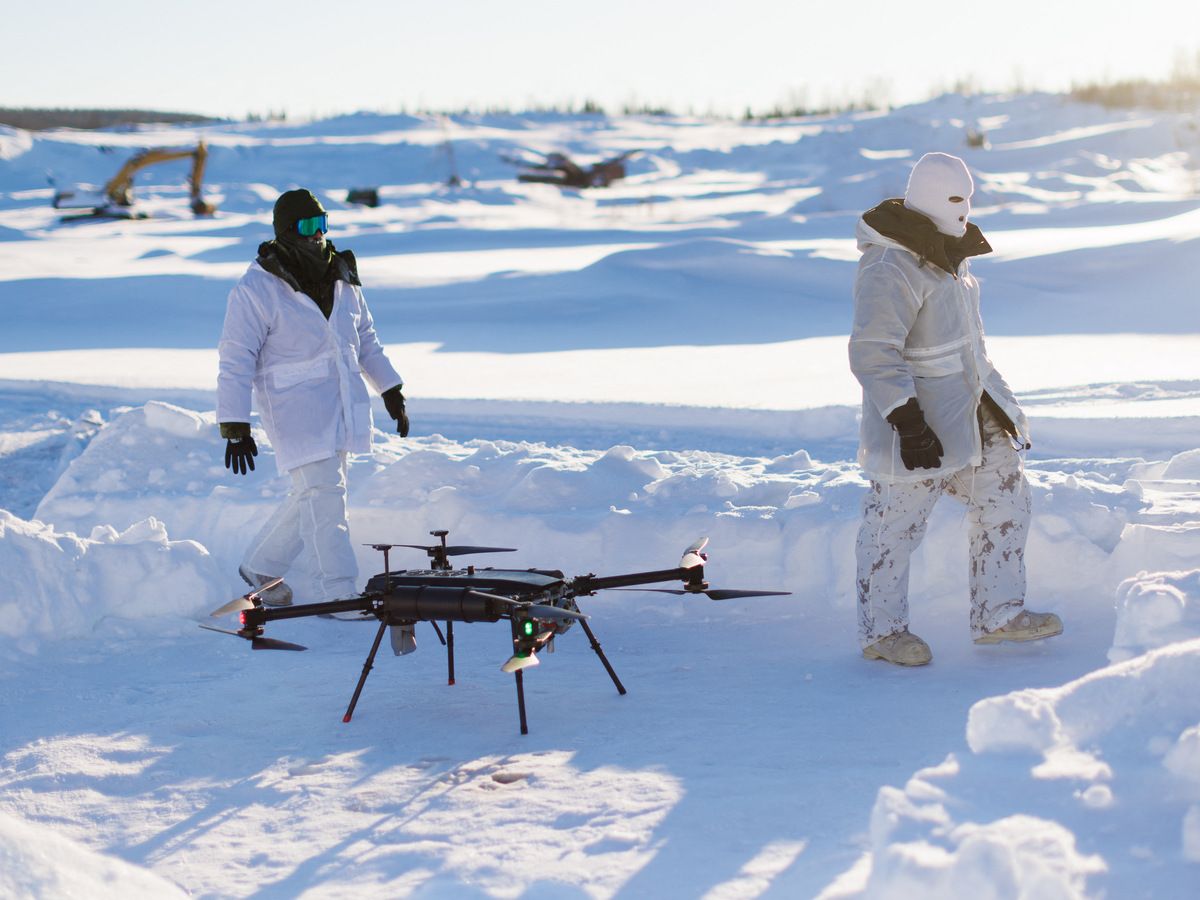
Drone production moves to the centre of cooperation
Defence manufacturing is a central element of the partnership. Canada and Ukraine intend to combine Ukrainian battlefield experience with Canadian manufacturing, software and artificial-intelligence capabilities to develop uncrewed systems, counter-drone technologies and priority munitions. The declaration also identifies research, testing, technology transfer, licensing and intellectual-property protection as areas for cooperation.
Ottawa’s immediate step is the Defence Drone Initiative Marketplace Supply Arrangement, a digital procurement system modelled on Ukraine’s Brave1 defence-innovation ecosystem. Nearly 400 vendors have qualified to participate, giving military operators access to Canadian suppliers of drones and related technologies. The marketplace is intended to speed up the discovery, purchase and deployment of equipment for the Canadian Armed Forces and Canadian Coast Guard.
Canada has awarded initial contracts worth up to C$50 million to six Canadian companies. The first purchases include low-cost aerial systems and uncrewed ground vehicles, with the government saying they will increase the military’s deployed drone inventory tenfold. That near-term procurement is separate from the broader ambition to establish industrial capacity to produce millions of drones over the following two years.
The distinction matters: the announcement describes a production-capacity target, not millions of drones already manufactured or ready for delivery. Precise production volumes, the mix of models and Ukraine’s eventual delivery schedule were not specified in the reporting accompanying the announcement.
A new partnership between General Dynamics Mission Systems–Canada and Ukraine’s Green Tech Harvest will develop and produce drones and drone-related technologies. The governments also intend to explore predictable procurement and multiyear purchasing commitments to support joint production.
Air-defence assistance addresses Ukraine’s immediate needs
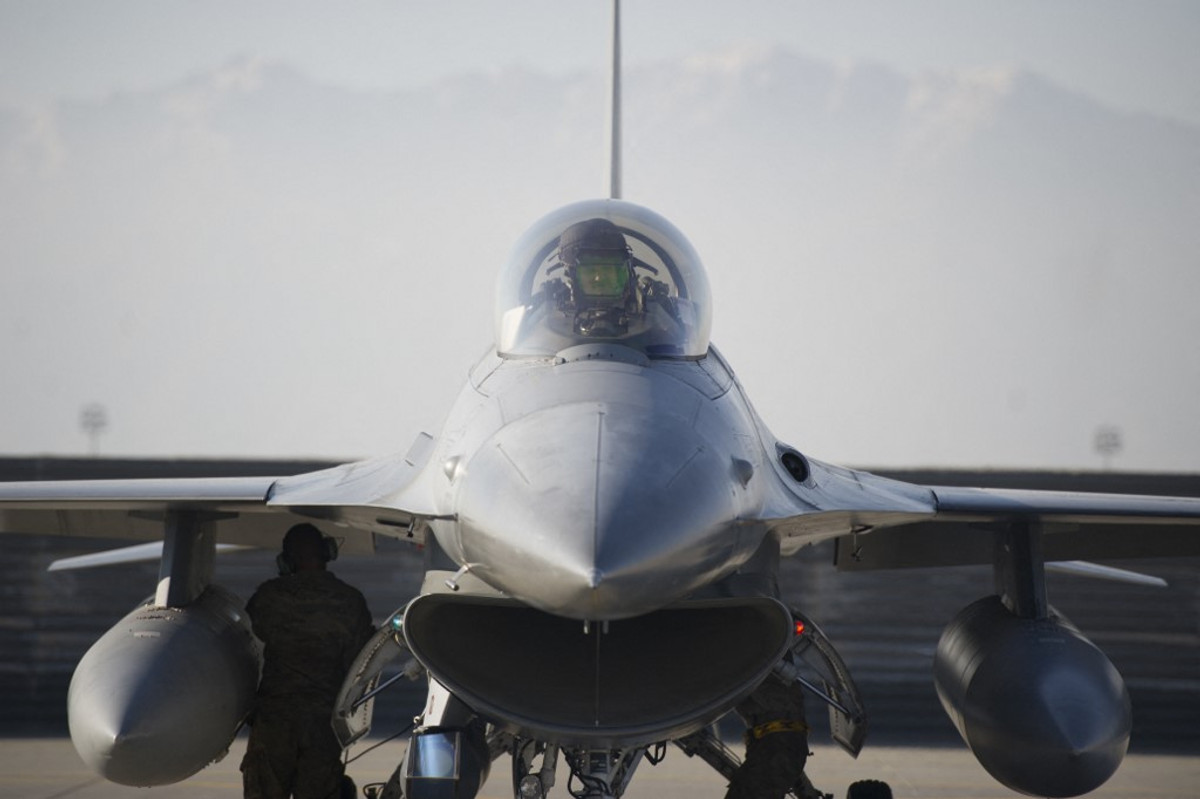
Alongside the industrial plans, Carney announced that Canada and Ukraine had finalised an agreement for C$350 million in critical air-defence interceptors through the US-led JUMPSTART mechanism. Zelenskyy described the package as “very important,” emphasising Ukraine’s need to protect its skies and prepare for winter.
Canada’s military training mission, Operation UNIFIER, has been extended to 2029. The declaration says the mission, which has trained tens of thousands of Ukrainian personnel since 2015, will adapt to Ukraine’s changing requirements. Cooperation will also cover intelligence, cyber defence, electronic warfare and responses to hybrid threats and foreign information manipulation.
Zelenskyy also said Canada was ready to join FREYA, a Ukrainian-led anti-ballistic missile defence project initiated by the defence company Fire Point. CBC reported that the project aims to develop a less expensive alternative to scarce US Patriot systems. That prospective cooperation is distinct from the interceptor package announced in Calgary.
The declaration reiterates Canada’s support for Ukraine’s eventual NATO membership and commits the countries to work with partners on a framework of politically and legally binding security guarantees. It does not itself establish an automatic obligation for Canada to enter a war on Ukraine’s behalf.
Energy financing targets winter supplies and damaged infrastructure
The energy measures combine near-term support for winter fuel purchases with longer-term reconstruction.
Canada announced approximately C$435 million in additional loan guarantees to the European Bank for Reconstruction and Development for Naftogaz, Ukraine’s state energy company. The guarantees are intended to support energy security, including winter gas purchases. Canada also announced another C$10 million for the Ukraine Energy Support Fund, bringing its contribution to that fund to C$100 million.
The government separately allocated C$200 million in concessional financing through Export Development Canada for reconstruction of critical infrastructure. The money comes from an existing C$2 billion financing envelope, with the government intending to direct initial support toward a hydroelectric infrastructure project. It is therefore an allocation within a broader lending facility, rather than an unrestricted reconstruction grant.
Beyond emergency financing, the declaration calls for deeper cooperation on nuclear energy, electricity-system modernisation and grid resilience. It also provides for exploring cooperation on Ukrainian natural-gas infrastructure, including storage, and exchanging information about natural gas and liquefied natural gas. The declaration does not announce a completed Canadian LNG supply agreement.
Trade and reconstruction extend beyond wartime aid
The economic agenda builds on the modernised Canada–Ukraine Free Trade Agreement. Both governments intend to expand trade and investment, encourage public-private partnerships and mobilise financing for Ukraine’s recovery.
The declaration identifies energy, infrastructure, transportation, housing, agri-food and the digital economy as areas where Canadian and Ukrainian businesses could participate in reconstruction. It also calls for cooperation on critical-mineral exploration and development, investment and more resilient supply chains.
A recurring theme is attracting private investment while reducing the risks that can prevent businesses from entering reconstruction projects. The proposed tools include export financing, guarantees, investment protection and blended finance, which combines different sources of public and private funding.
The countries also intend to work with partners to establish a Defence, Security and Resilience Bank. The proposed multilateral institution would mobilise private capital for defence innovation, industrial partnerships and expanded production capacity. Its establishment remains a shared objective, rather than a completed outcome of the Calgary signing.
Mobility measures are proposed, not yet blanket travel rights
The partnership also addresses the relationship between the countries’ populations. The leaders cited more than 1.3 million Canadians of Ukrainian heritage as a foundation of bilateral ties.
Canada agreed to immediately initiate the process of adding Ukraine to its conditional electronic travel authorisation regime. The wording commits Ottawa to begin that process; it does not announce that all Ukrainian citizens have already gained visa-free access to Canada.
The two governments also agreed to launch exploratory discussions toward a social security agreement. Such an agreement would coordinate the operation of their social security systems and support people working or moving between the countries, but negotiations have not been presented as a completed agreement.
For veterans and their families, Canada committed up to C$40.1 million toward a proposed multi-donor initiative supporting rehabilitation, recovery and the transition to civilian life. The programme is intended to support implementation of Ukraine’s National Veteran Strategy.
The humanitarian agenda also includes securing the return of Ukrainian children unlawfully deported or forcibly transferred by Russia, supporting prisoners of war and detained civilians, and assisting humanitarian demining.
December agreement will be the next test
The leaders intend to conclude the comprehensive partnership agreement by December 2026, coinciding with the 35th anniversary of Canada’s recognition of Ukraine’s restored independence on December 2, 1991. Canada was the first Western country to take that step.
To oversee implementation, the declaration establishes a “2+2” strategic dialogue led by the two countries’ foreign affairs and defence ministers. Its role is to provide direction across defence cooperation, economic growth and reconstruction, and people-to-people ties, while coordinating—not replacing—existing bilateral mechanisms.
The Calgary declaration sets out the political ambition. The agreement planned for December, subsequent procurement decisions and the delivery of financing will determine how that ambition translates into sustained production, practical assistance and longer-term cooperation.