Iran has reportedly mobilized 1 million troops. Is a ground war imminent?

Jump to Timeline

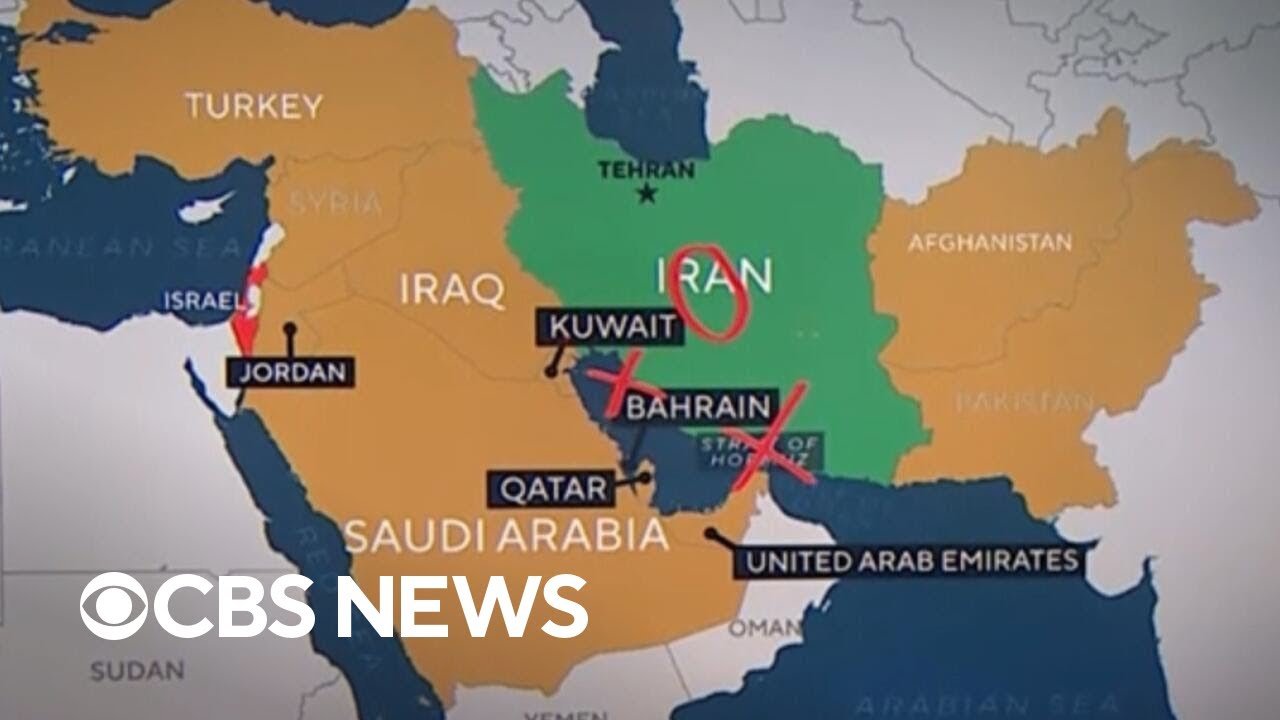
As of late March 2026, Iran has reportedly mobilized over one million troops in response to escalating tensions and the threat of a potential US ground invasion. A significant portion of these forces is reportedly being prepared to defend Kharg Island, Iran’s primary oil export hub, and the Strait of Hormuz.

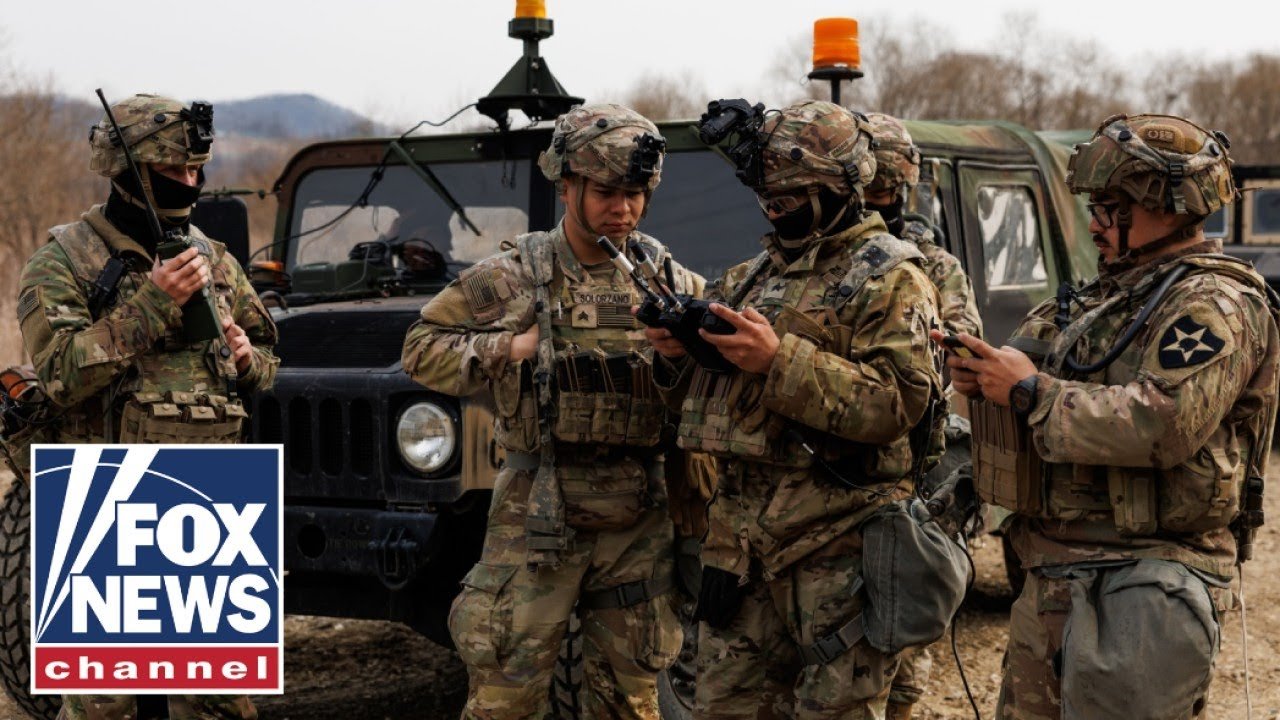
The US Pentagon is reportedly preparing for weeks of limited ground operations in Iran, although President Donald Trump has not yet given final approval for these missions. As of late March 2026, thousands of US troops are arriving in the Middle East, marking the largest buildup in the region since 2003.

Israeli Prime Minister Benjamin Netanyahu has said on March 26 that toppling Iran’s regime would require not only a revolution but also a “ground component,” as the US-Israeli confrontation with Tehran enters its fourth week.

It is often said that you can’t win –– you can’t do revolutions from the air, that is true. You can’t do it only from there, you can do a lot of things from the air and we’re doing –– but there has to be a ground component, as well.

Israel PM Benjamin Netanyahu said during a press conference in Jerusalem

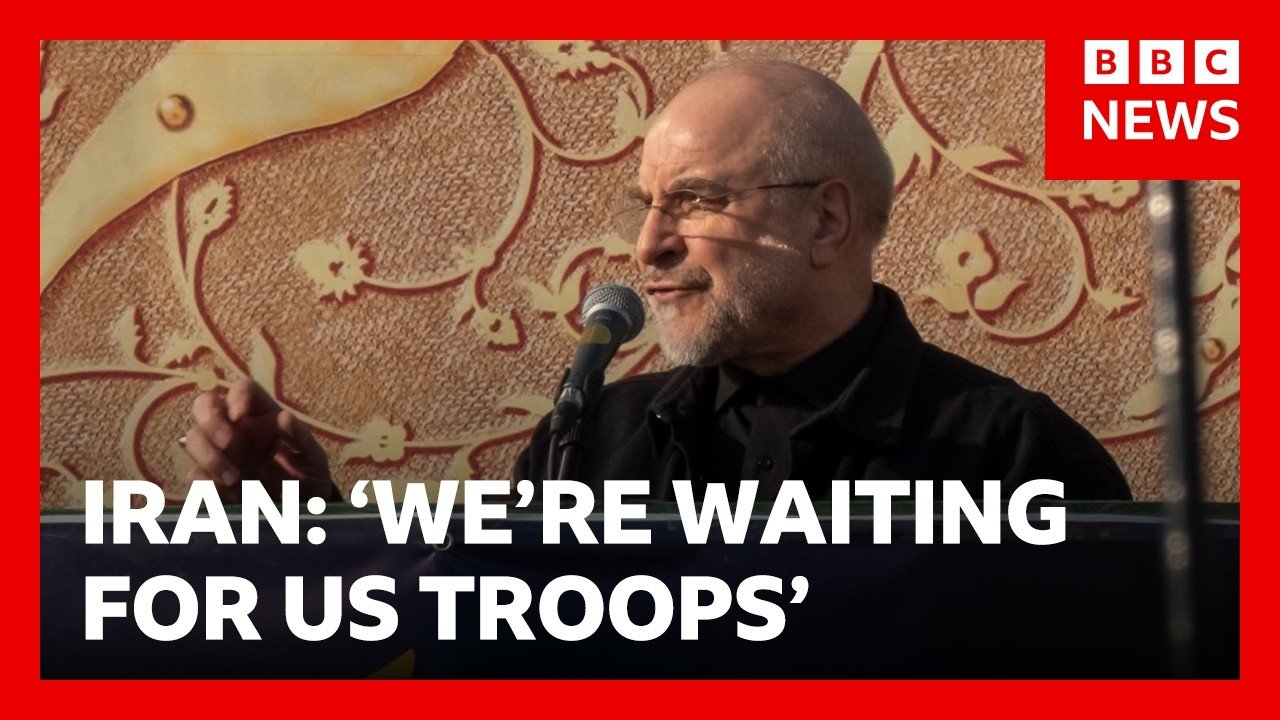
Iran is deploying soldiers as young as 12 years old

The million-strong force includes regular army personnel (Artesh), the Islamic Revolutionary Guard Corps (IRGC), and the Basij paramilitary reserves.

State-run media reports a “wave of enthusiasm” among Iranian youth, with recruitment centers seeing a massive influx of volunteers ready to defend the country. The initiative is called “For Iran” (or “Homeland Defenders of Iran”) and is focused on recruiting volunteers to assist the IRGC and the Basij paramilitary militia.

As reported by Iran International, an official from the Islamic Revolutionary Guard Corps (IRGC) has confirmed that Iran has lowered the minimum age for participation in war-related support roles to 12 years old. 

Iranian military commanders have warned that any attempt at a ground occupation would result in a “historic hell” for American forces. 

According to IRGC cultural official Rahim Nadali, 12- and 13-year-olds are being recruited for non-combat support duties, including:

  • Manning security checkpoints.
  • Conducting intelligence and operational patrols.
  • Assisting with logistical support.
  • Organizing nightly car caravans and pro-government rallies.

Residents in Tehran have told AFP that they are seeing armed teenagers in plainclothes, some carrying submachine guns like Uzis or Kalashnikovs, at roadblocks and missile strike sites.

Under the Rome Statute, the recruitment or use of children under the age of 15 to participate actively in hostilities is considered a war crime.

While Iran is a signatory to the Convention on the Rights of the Child, which prohibits the military use of children, it has not ratified the Optional Protocol that sets 18 as the minimum age for direct participation in hostilities.

Is the US looking at ground operations?

The Pentagon is reportedly considering deploying an additional 10,000 ground troops to the Middle East, supplementing the approximately 50,000 US personnel already stationed in the region.

The Pentagon has been gearing up for several weeks of targeted ground operations inside Iran, which may encompass raids on Kharg Island and nearby coastal zones along the Strait of Hormuz, per US officials cited in The Washington Post.

These limited actions, avoiding a complete invasion, would deploy special forces alongside regular infantry, leaving troops vulnerable to Iranian drones, missiles, small-arms fire, and roadside bombs, as reported by the Jerusalem Post.

Such missions prioritize disruption over occupation, focusing on neutralizing anti-shipping threats to restore Hormuz traffic amid the ongoing conflict. Kharg remains a prime target due to its outsized role in Iran’s oil exports.

How about Israel?

As of 31 March 2026, Israel has already initiated significant ground operations, primarily focused on expanding a “security buffer zone” in southern Lebanon rather than a direct ground invasion of mainland Iran, as reported by Reuters.

Prime Minister Netanyahu ordered a major expansion of ground operations on 29 March 2026, directing the IDF to push further into southern Lebanon to reach the Litani River.

Israeli defense sources indicate they are providing the US with intelligence for potential limited ground raids on strategic Iranian sites like Kharg Island and islands in the Strait of Hormuz.

The Israeli parliament recently approved a massive $10billion increase to the defense budget, specifically to fund emergency military purchases and prolonged multi-front warfare.

The Times of Israel reported that as the IDF completes the “bombing phase” of weapon production sites, it is shifting focus toward economic targets (e.g., steel plants and energy infrastructure) to pressure the regime, while the US prepares for potential limited ground actions to reopen global shipping lanes.
youtube placeholder image

Key widely reported facts from verified sources including The Washington Post, BBC, Al Jazeera, The New Arab, Middle East Monitor, Roya News, NDTV, The Times of Israel, Haaretz

US launches “Operation Economic Outcast,” widening Iran sanctions to five new sectors

The US launched Operation Economic Outcast against Iran that expands secondary sanctions risk across five critical sectors and targets nearly 60 entities.
Read more

Trump declares ‘Economic D-Day’ on Iran in unprecedented sanctions escalation

US President Donald Trump has launched what he calls an “Economic D-Day” against Iran, vowing the “most crushing economic operation ever taken against any country”.
Read more

Trump threatens to bomb Oman as US-Iran ceasefire collapses

Trump posted an AI-generated image on his Truth Social platform labeling the Strait of Hormuz as "NEW US TERRITORY."
Read more

US-Iran peace deal collapses as 60-day deadline expires

Both Washington and Tehran have ruled out extending the deal, with President Donald Trump declaring that Iran must "put up the white flag of surrender".
Read more

Trump and Iran trade claims over Strait of Hormuz as shipping traffic collapses

Washington says its naval blockade has secured the strategic waterway while Tehran insists no vessel may pass without its approval.
Read more

“Deeply Duplicitous”: Trump issues ‘last chance’ warning to Iran

After Iran denied holding talks, Trump publicly lashed out, calling the Iranian leadership "unbelievably duplicitous" and insists talks are ongoing.
Read more

Trump meets Zelenskyy and Netanyahu before Lindsey Graham funeral

The overlap highlighted Graham’s standing as a longtime foreign-policy hawk, bringing together leaders tied to two of the world’s most consequential conflicts.
Read more

House votes to curb Trump’s Iran war powers, but Senate blocks the move

Trump framed the war powers vote as an attack on ongoing diplomacy, while critics said Congress was overdue to reassert its constitutional role over war-making decisions.
Read more

Trump threatens major strike as Red Sea conflict widens

Trump signaled that he sees little room for compromise at this stage, saying Iran is “not ready” and has not “received enough pain yet”.
Read more

Trump, Lebanon’s Aoun hold historic White House talks as US pushes regional deal

It is the first visit by a Lebanese head of state to Washington in nearly two decades and signaling renewed diplomatic momentum in the Middle East.
Read more
Timeline

Feb 28: Combined US-Israeli airstrikes hit Iranian military and civilian infrastructure.
Yemen’s Houthi rebels resume attacks on Red Sea shipping.

Mar 2: IRGC officially declares the Strait of Hormuz closed, threatening to “set fire” to any vessel attempting passage.

Mar 3: Global energy markets react as shipping effectively halts; European natural gas prices surge by over 100% after a drone strike on Qatar’s Ras Laffan LNG facility.

Mar 5: Maritime insurance providers cancel war risk coverage for the Persian Gulf, making transit economically unviable for most commercial carriers.

Mar 8: Brent crude oil prices surpass $100 per barrel for the first time since 2022 as supply disruptions intensify.

Mar 9: G7 finance ministers meet to discuss releasing strategic reserves; the proposal is initially met with caution by some members.

Mar 10: The IEA calls an extraordinary meeting of its 32 member states to assess the supply crisis.

Mar 11: IEA member countries unanimously vote to release 400M barrels of oil, the largest in history.

Mar 13: US conducts a massive bombing raid on Iran’s primary oil terminal, Kharg Island.

Mar 14: A senior Iranian official tells CNN that Tehran may allow a limited number of tankers to pass the Strait of Hormuz, but only if the oil is traded in Chinese yuan, directly challenging the US dollar’s role in global energy.

Mar 15: President Trump first called for an international naval coalition to guard the Strait.

He also claimed that Iran was “desperate” for a deal and wanted to negotiate a ceasefire. On March 15 and 16, Iranian Foreign Minister Abbas Araghchi refuted these claims.

Israeli PM Netanyahu releases a video from a Jerusalem café to show “proof of life”.

Mar 16: NATO allies and other key international partners officially declined President Trump’s request for warships.

Iran launches a drone and missile swarm at the Fujairah Oil Industry Zone in the UAE.

For the first time in the conflict, Iran fires ballistic missiles at Qatar, targeting areas near U.S. Al-Udeid Air Base.

A drone strike on a fuel depot near Dubai International Airport forces a five-hour suspension of all flights, paralyzing one of the world’s most critical transit hubs.

Mar 17: On the Persian New Year, Netanyahu addresses the Iranian people directly, stating that the “light of freedom” is coming, while simultaneously launching the heaviest bombardment of Tehran’s government district to date.

Israel confirmed the “elimination” of two of the most powerful figures, Ali Larijani and Gholamreza Soleimani, in the Iranian regime during precise strikes in Tehran.

Mar 18: Israeli airstrikes hit South Pars and the Asaluyeh hub in Iran.

Iran retaliates by firing ballistic missiles and drones at Gulf energy hubs.

Mar 19: President Trump warns Iran he will “massively blow up” the rest of South Pars if they strike Qatar again.

Trump publicly states he told PM Netanyahu to stop hitting Iranian energy sites to prevent further global oil spikes.

Netanyahu confirms Israel acted alone on South Pars but agrees to “hold off” on energy targets per Trump’s request.

Mar 20: Iran reportedly fired two ballistic missiles at the US-UK base in Diego Garcia.

The British government updated its policy to allow the US to use Diego Garcia for “specific and limited defensive operations” to degrade Iranian missile sites.

Qatar expels Iranian military attaches. The UAE suspends operations at the Habshan and Bab fields for safety.

China bans exports of refined petroleum to secure its own domestic supply.

Mar 21: Iran targets the Israeli towns of Arad and Dimona; over 100 civilians are injured and threatens to permanently close the Strait of Hormuz.

Trump gives Iran 48 hours to guarantee the Strait stays open or face the destruction of its national power grid.

Mar 22: The US State Department issues a worldwide “increased caution” alert for citizens.

Reports emerge of Russia providing satellite intelligence to Iran to help bypass regional missile defenses.

Reports confirm fires at Kuwait’s Mina Al-Ahmadi refinery and Saudi facilities in Riyadh following missile interceptions.

Mar 23: Trump announced a five-day moratorium on the planned strikes, to allow time for ongoing negotiations that could lead to a “complete and total resolution” of hostilities.

Mar 25 to 27 : Satellite imagery confirms Iran is moving ground troops and mines to Kharg Island to prevent a U.S. seizure.

Mar 27 to 30: The Pentagon began arriving with additional ground-capable forces, including units from the 82nd Airborne Division and the USS Tripoli.

Mar 29: Trump reveals the 15-Point Plan via Pakistan and suggests his “preference would be to take the oil” rather than destroy it.

Mar 30: Trump issues a final ultimatum to “obliterate” all Iranian energy facilities if the Strait of Hormuz is not reopened “shortly”.

Opinion & Analysis


You may also be interested in

LEAVE A REPLY

Please enter your comment!
Please enter your name here