


The Trump administration has cleared approximately $100billion in refunds for businesses that paid the president’s “Liberation Day” tariffs, marking one of the largest reversals of a US trade policy in modern history.
The amount represents roughly 60% of the approximately $166billion collected under tariffs later struck down by the US Supreme Court. The figures were disclosed in a filing by US Customs and Border Protection (CBP) to the US Court of International Trade. CBP said the refunds had been completed, certified and sent to the Treasury Department for disbursement—not necessarily that every company had already received the money.
A further $29billion in potential refunds remains under review, while approximately $1.6billion is stalled because eligible importers have not yet provided the banking information required for payment.
Court ruling triggered repayments
The refunds follow the Supreme Court’s 6-3 decision on February 20 in Learning Resources Inc. v. Trump, which held that the International Emergency Economic Powers Act (IEEPA) did not authorise the president to impose broad-based tariffs unilaterally.
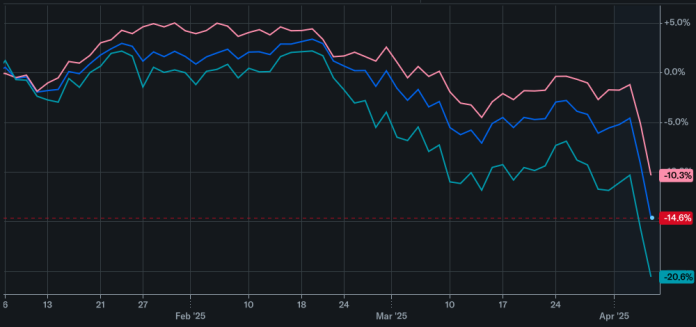
The administration had invoked the 1977 emergency-powers law to impose a 10% baseline tariff on imports from almost every trading partner, alongside higher country-specific duties that reached as high as 50%. The first measures took effect in April 2025 and were promoted by Trump as a way to address trade deficits and pressure foreign governments.
The court did not rule that all US tariffs were unlawful. Its decision focused on duties imposed under IEEPA, leaving separate tariffs imposed under other laws—including levies on steel, copper, aluminium and automobiles—largely untouched.
The ruling also did not itself establish a detailed repayment system. That process was subsequently shaped by the Court of International Trade and CBP.
On March 4, the trade court ordered CBP to remove IEEPA duties from unliquidated import entries and to recalculate entries that had not yet become final. The court later clarified that eligible importers of record could seek refunds even if they had not filed separate lawsuits.
The importer of record—the company legally responsible for bringing goods into the United States—is the party entitled to receive the government refund. In many cases, consumers paid the tariff indirectly through higher prices, but there is no automatic federal mechanism sending those consumers a rebate.
Businesses begin to report windfalls
The repayments are already appearing in corporate earnings.
Amazon said it received approximately $600million in tariff refunds during the second quarter. Chief Financial Officer Brian Olsavsky said the company would automatically contact customers in limited cases where Amazon could trace a specific import charge passed directly to them. In other cases, the company said it would use the money to support lower prices and other investments for shoppers.
Nintendo has also benefited from the reversal. The Japanese gaming company reported a 53.5% increase in quarterly profit to ¥147.4billion, although it did not disclose the full value of any tariff refund. The company is facing a proposed class-action lawsuit from US customers who allege that Nintendo raised prices to account for tariffs and could now retain both the higher payments and the government refund.
Nintendo has rejected the claim, arguing that customers are not legally entitled to refunds received by the company and that buyers received the products they paid for. The case illustrates the central unresolved question surrounding the repayments: whether a company that absorbed the tariff should keep the refund, while a company that passed the cost to customers should return some or all of it.
Refunds do not reach all tariffs
The government’s repayment programme covers duties imposed under IEEPA, including the reciprocal tariffs announced on “Liberation Day” in April 2025. It does not automatically cover tariffs imposed under Section 232 of the Trade Expansion Act of 1962, which the administration used for products such as steel, copper and automobiles.
Nor does the process erase other trade restrictions imposed under separate legal authorities. Importers must therefore distinguish between the IEEPA portion of a customs bill and other duties that remain valid.
The refunds may also include interest. CBP’s court filing described the completed figure as covering “duties plus interest”, although the amount paid to individual companies will depend on their import records and the specific tariff entries involved.
Washington rebuilds its tariff strategy
The administration has moved quickly to replace the invalidated tariff regime.
On July 24, the US imposed new duties of 10% or 12.5% on goods from 60 trading partners, including China, the European Union and Japan. The measures were introduced under Section 301 of the Trade Act of 1974 after the US Trade Representative accused the targeted economies of failing to prohibit or effectively enforce bans on goods produced with forced labour.
The new tariffs cover countries representing approximately 99.4% of US imports. Economies that have adopted, or committed to adopt, forced-labour import restrictions generally face the lower 10% rate, while others face 12.5%. Some rates are structured as a combined ceiling with existing most-favoured-nation duties rather than as a simple additional charge.
The policy shift is designed to rely on a different statutory authority from the one rejected by the Supreme Court. But it has already triggered another legal challenge.
A coalition of 25 US states, including California and New York, sued the administration in the Court of International Trade on August 3. The states argue that the forced-labour justification is a pretext for recreating the broad tariff system that the Supreme Court invalidated. They also claim the administration moved too quickly, failed to conduct adequate country-specific consultations and did not explain how the new duties would change foreign labour practices.
The lawsuit has not yet resulted in an injunction, and the new tariffs remain in effect while the case proceeds.
A costly reset for US trade policy
The $100billion repayment programme turns the Supreme Court’s legal decision into a substantial fiscal event. The government is returning money that businesses had incorporated into their costs, pricing decisions and supply-chain planning, while continuing to defend a new set of tariffs based on a different legal theory.
For importers, the immediate priority is recovering eligible IEEPA duties and ensuring that customs records and banking details are complete. For consumers, the outcome is less certain: some companies may lower prices or issue targeted reimbursements, but most shoppers have no direct claim to the money returned by the government.
The final economic impact will depend on how much of the remaining $66billion is ultimately paid, how companies use the refunds and whether the administration’s replacement tariffs survive the next round of litigation.