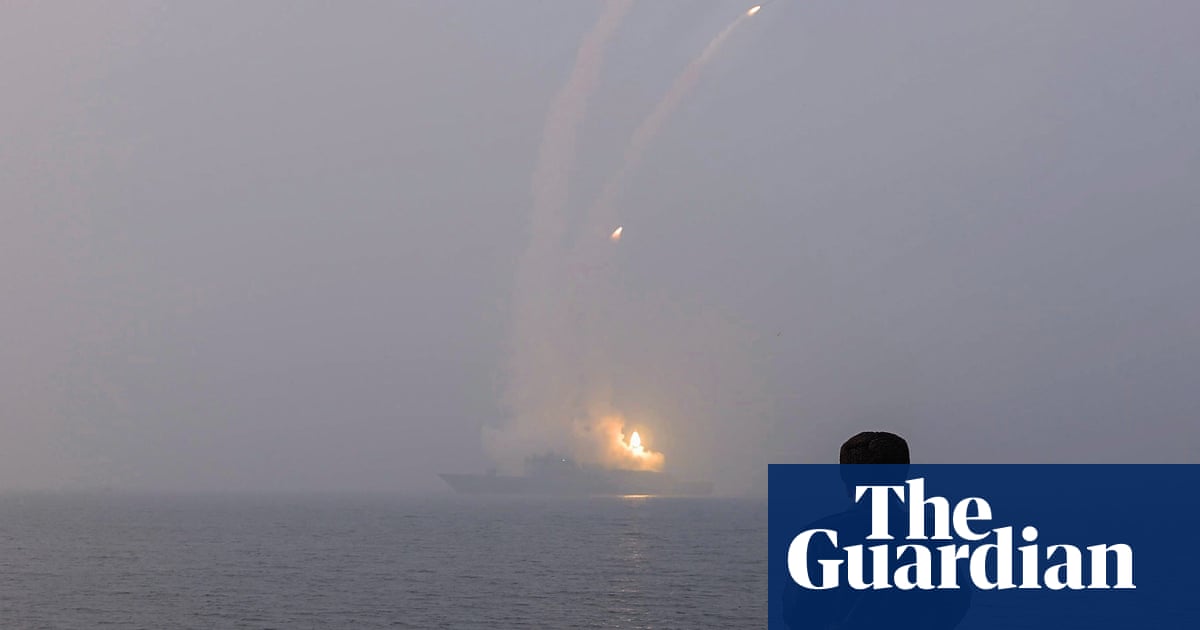
Kim Jong Un re-elected and uses Iran war to justify nuclear weapons program

Jump to Timeline

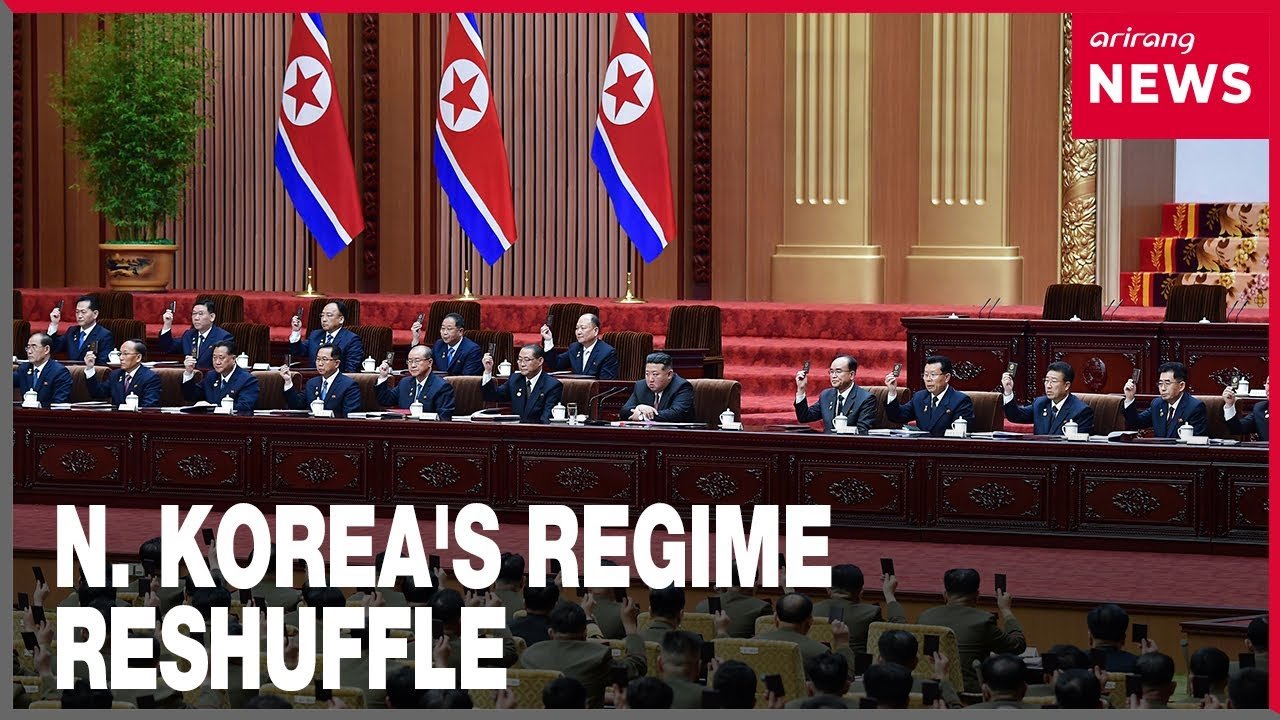
In the most recent national elections held on March 15, 2026, the ruling Workers’ Party of Korea (WPK) and its allies reportedly secured 99.93% of the vote, winning all 687 seats in the Supreme People’s Assembly (SPA).

The 2026 elections were the first national-level polls since 2019, delayed for two years to align with the cycle of the 9th Workers’ Party Congress, where Kim Jong Un was re-elected as General Secretary.

All 687 candidates, pre-approved by the ruling establishment, were elected. Over 70% of deputies were replaced with new faces, indicating a significant internal power consolidation by Kim Jong Un. 

For the first time in a national SPA election since 1957, state media acknowledged “against” votes, totaling 0.07% of the ballots.

Parliamentary confirmation

Following the general elections on March 15, 2026, the newly formed 15th Supreme People’s Assembly (SPA) convened its first session on March 22.

The SPA re-elected Kim Jong Un as the President of the State Affairs Commission (SAC), which is the country’s highest administrative and governing body.

Kim represents the third generation of leadership in the nuclear-armed nation established by his grandfather, Kim Il Sung, in 1948. He has led the country since succeeding his father in 2011.

In the North Korean system, the SPA acts as a “rubber-stamp” legislature. It formalizes decisions already made by the party leadership, turning them into legal state appointments.

During the national vote for the SPA, each constituency featured only one state-approved candidate.

“Show elections”

Outside observers typically characterize North Korean elections as “show elections” designed to project a veneer of democratic legitimacy and serve as a political census.

Each constituency typically has only one state-sanctioned candidate. Voters mark their approval or theoretically reject the candidate in a non-secret process that can carry severe personal risk.

While Kim Jong Un personally voted for a coal mine manager in a specific district, his own reappointment as head of state was handled internally by the assembly members he had effectively pre-vetted.

In 2023, North Korea amended its election law to introduce a trial “primary-like” system for local elections, allowing two candidates to be considered for some seats, though all are still pre-vetted for loyalty to the regime.

Voting is mandatory for all citizens aged 17 and older. Local neighborhood watch groups (inminban) often monitor participation to identify and investigate no-shows.

youtube placeholder image

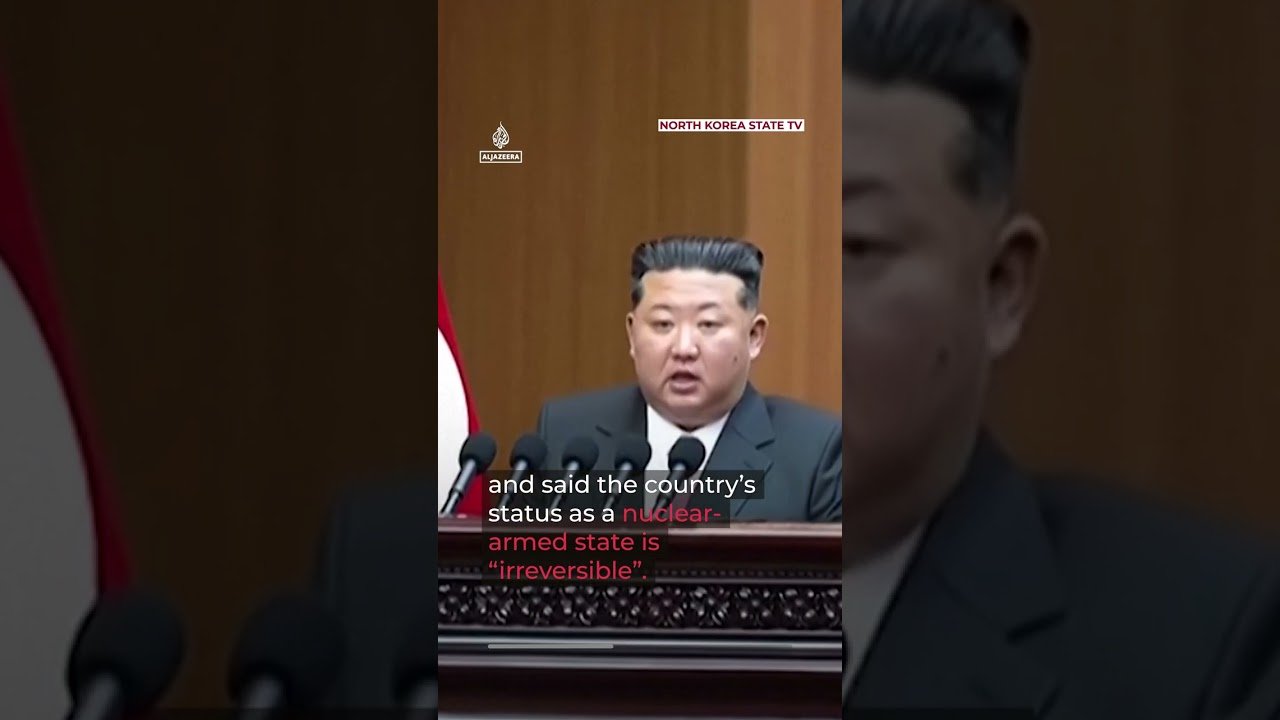
North Korea’s status as a nuclear power is now “irreversible”

Additional sources: Reuters, CNN, CNA, SCMP, France 24, DW.com

Following the election, Kim Jong Un outlined new nuclear priorities for the next five years:

  • Developing nuclear-powered submarines capable of launching surface-to-air missiles.
  • Upgrading conventional weapon systems to be nuclear-capable.
  • Expanding the production of tactical nuclear warheads and advanced reconnaissance satellites.

Kim used the escalating conflict involving Iran to forcefully justify North Korea’s permanent and “irreversible” nuclear weapons program.

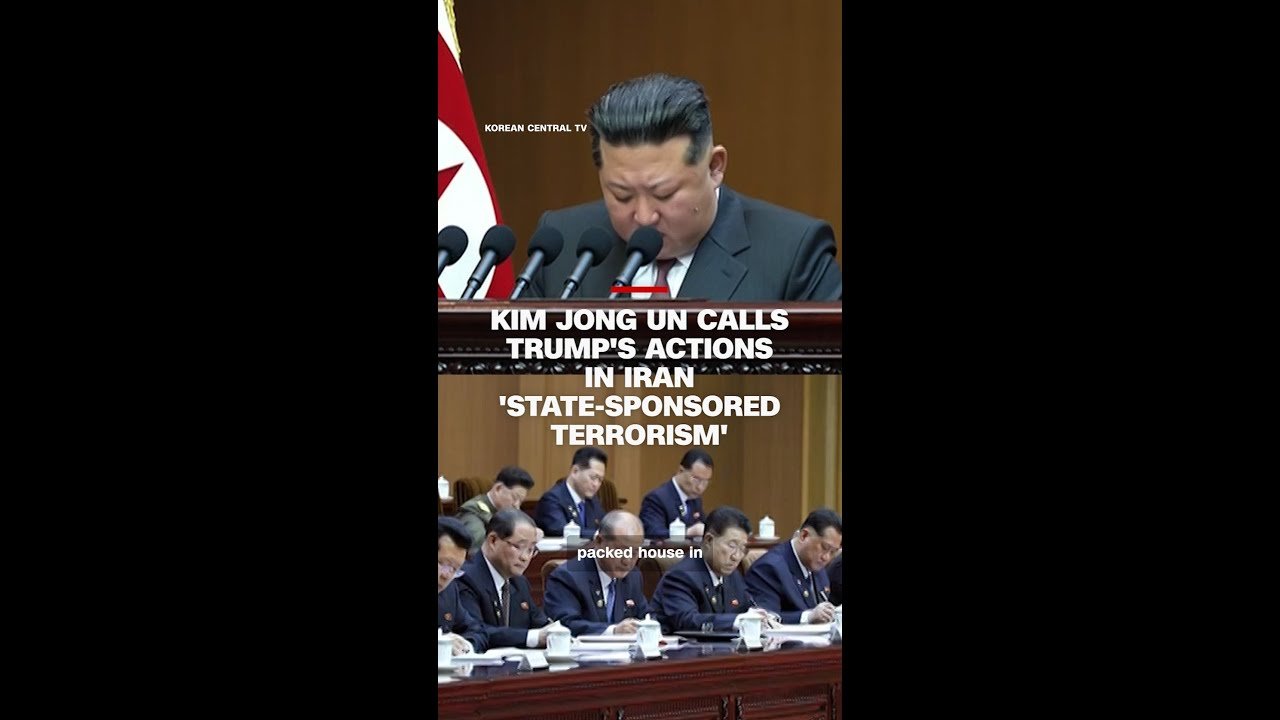
Addressing the Supreme People’s Assembly on March 23, Kim Jong Un accused the United States of carrying out “state-sponsored terrorism and aggression” through its military actions in the Middle East.

He stated that North Korea’s status as a nuclear power is now irreversible, flatly rejecting any future dialogue focused on denuclearization.

Kim argued that the “current world reality” where the sovereignty of nations is “mercilessly violated” proves that his decision to double down on nuclear development after 2019 was the only way to ensure national survival. Kim pledged to strengthen ties with “anti-imperialist and independent countries”, a category that includes Iran, while criticizing US “hegemonic pursuits”.

While Kim did not always mention Iran by name in his formal transcripts, his rhetoric was widely interpreted as a direct response to the US-Israeli military campaign against Iran that intensified in early 2026.

North Korean state media has used the war in Iran as a “strong justification” for why North Korea must never give up its nuclear deterrent, suggesting that non-nuclear states are vulnerable to US intervention.

Reactions

Leaders from allied nations formally recognized the results, characterizing them as a sign of stability and public mandate.

China’s President Xi Jinping sent a congratulatory message on March 26, calling the re-election “joyful news” and emphasizing the “unwavering policy” of developing China-DPRK relations.

Russia’s President Vladimir Putin congratulated Kim on March 23, stating the result “clearly demonstrates the unanimous public support” for his leadership and praising Kim’s contribution to their “comprehensive strategic partnership”.

Belarus President Alexander Lukashenko also offered congratulations, claiming the “unanimous adoption” of the decision reflected the “collective will of the Korean people”.

Organizations such as the New African Charter International (NACI) issued statements honoring the outcome and calling for expanded cooperation.

The Unification Ministry in Seoul noted that the rapid convening of the assembly after the vote suggested an urgency to implement hardline policies, specifically the formal designation of South Korea as the “most hostile state”.

Groups like Human Rights Watch used the election period to urge South Korean President Lee Jae-myung to take a firmer stance on North Korean human rights at the UN, arguing that “sustainable peace” cannot be built on silence toward the regime’s repression.
youtube placeholder image

Read also:
North Korea tests missiles following US-South Korea annual “Freedom Shield” drill
2026 South Korea-China Presidential Summit
Key widely reported facts from verified sources including BBC, CNA, CNN, Reuters, Al Jazeera, The Korea Times, The Japan Times, Korea JoongAng Daily, Chosun Daily, APNews

Trump cuts Korea drills to court Kim — Then Pyongyang fires 10 missiles

The moves underscored the gap between Trump’s personal diplomacy and the region’s hard security realities.
Read more

US and Saudi Arabia sign historic 30-year nuclear deal

From a strategic perspective, the agreement effectively blocks competitors like China and Russia from securing a nuclear foothold in the region.
Read more

Norway joins France’s nuclear umbrella as ninth member

Norway has become the ninth country to join France’s “Forward Deterrence” initiative, as part of a growing European effort to strengthen regional security.
Read more

North Korea tests missiles following US-South Korea annual “Freedom Shield” drill

Kim Yo-jong had warned of "unimaginably terrible consequences" labeling the U.S-South Korea drills as provocative war rehearsals.
Read more

France extends nuclear umbrella to Europe in major strategic shift

Macron unveils France's new nuclear doctrine, extending a "forward deterrence" umbrella to European allies while expanding its stockpile.
Read more

Why did US-Iran nuclear talks fail?

The discussions ultimately failed to bridge fundamental disagreements over uranium enrichment and ballistic missiles.
Read more

US and Armenia sign landmark nuclear cooperation deal

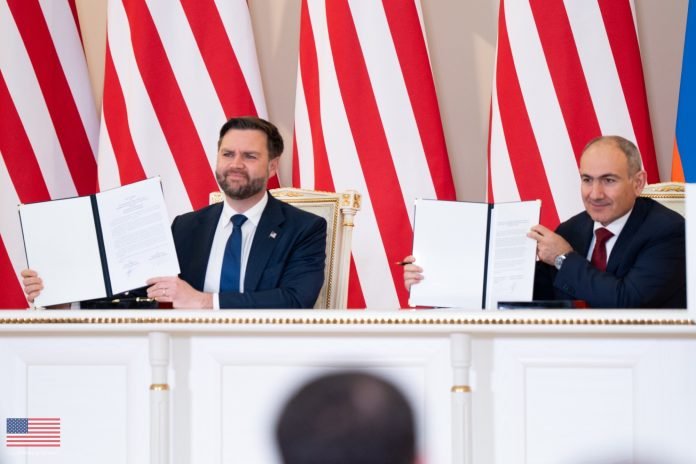
On Feb 9, 2026, US Vice President J.D. Vance and Armenian Prime Minister Nikol Pashinyan signed a landmark civil nuclear cooperation agreement.
Read more

Russia signals restraint after New START expires; Trump wants new pact

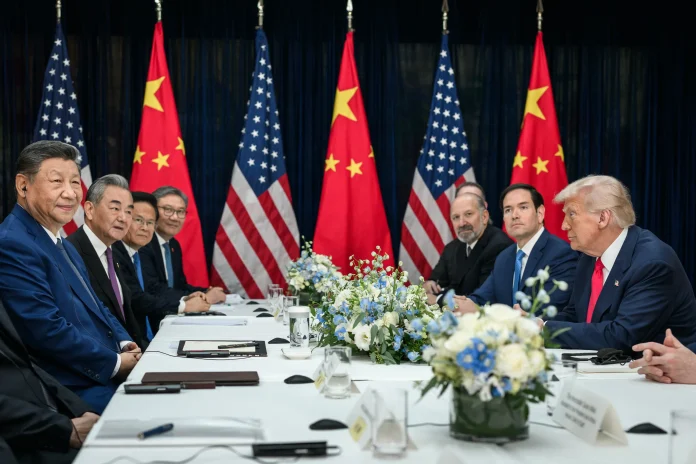
Trump has pushed for any new deal to include China alongside Russia, viewing Beijing's growing arsenal as a key factor.
Read more

Russia launches nuclear-capable missile in strike

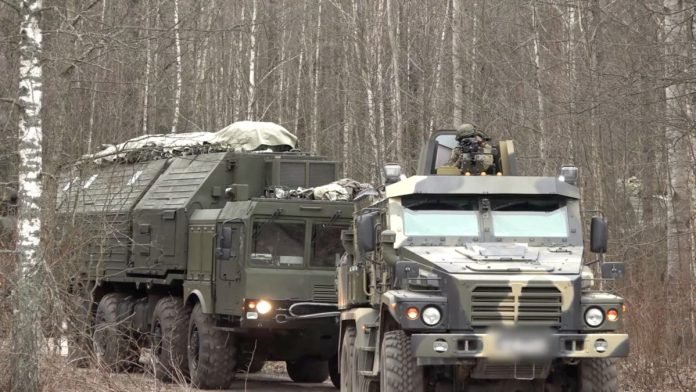
In early January 2026, Russia conducted its second-ever combat launch of the Oreshnik, a nuclear-capable, hypersonic intermediate-range ballistic missile, targeting the western Ukrainian city of Lviv. 
Read more

US resumes testing of nuclear weapons

President Donald Trump ordered the immediate resumption of nuclear weapons testing, ending a 33-year moratorium observed by the US since 1992. 
Read more
Timeline

1945: Following the surrender of Japan, the Korean peninsula was divided at the 38th parallel into Soviet and American occupation zones.

Feb 1946: The Provisional People’s Committee for North Korea was established with Kim Il Sung as chairman.

May 1948: Negotiations for a unified government between the U.S. and USSR failed. The U.S. proceeded with UN-supervised elections in the South, leading to the formation of the Republic of Korea.

Jul 10, 1948: In response, the North adopted its own constitution and held its first parliamentary elections in August.

Sep 9, 1948: The Democratic People’s Republic of Korea (DPRK) was formally proclaimed, with Kim Il Sung as Premier.

1948 Election: The first election saw 572 deputies elected. The regime claimed that 360 of these seats were elected through “underground” voting by citizens in South Korea to bolster its claim as the legitimate government of the entire peninsula.

1960s: All results began reporting 100% turnout and 100% approval for the single candidate on each ballot. Dissenting votes were essentially eliminated after 1957.

A 1959 by-election reportedly saw the last 14 “against” votes ever officially acknowledged until the 0.07% against reported in 2026.

1994 to 2011: Kim Jong Il Elections were used to formalize his “Military First” (Songun) policy via the National Defense Commission.

Dec 2011: Kim Jong Il died of a heart attack. His youngest son, Kim Jong Un, was immediately hailed as the “Great Successor” and took over leadership of the country.

Apr 2018: Kim Jong Un and Moon Jae-in sign the Panmunjom Declaration, pledging to work toward the “complete denuclearization” of the peninsula.

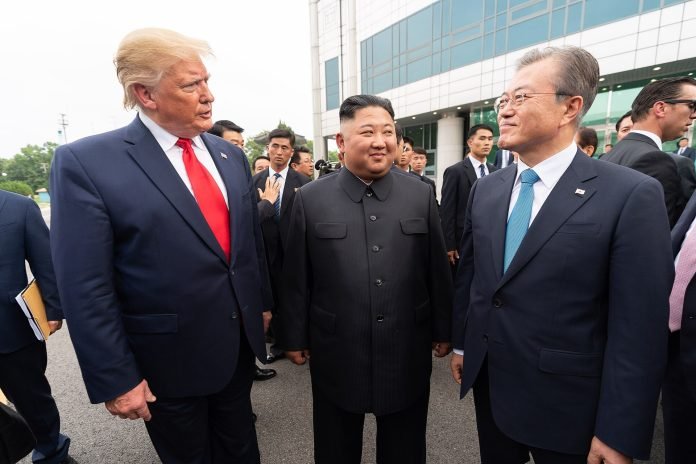
Jun 2018: The first Singapore Summit between Kim and Donald Trump results in a vague agreement on peace and denuclearization.

Feb 2019: The Hanoi Summit collapses. Kim reportedly sought major sanctions relief in exchange for closing the Yongbyon nuclear site; the U.S. refused. Diplomacy stalls indefinitely.

Jan 2021: At the 8th Party Congress, Kim labels the U.S. the “foremost principal enemy” and unveils a 5-year plan to develop tactical nukes and hypersonic missiles.

Sep 2022: North Korea passes a law declaring its nuclear status “irreversible.” The law authorizes “automatic” nuclear strikes if the leadership is threatened.

Nov 2023: North Korea successfully launches its first military spy satellite (Malligyong-1) after two failed attempts earlier in the year.

Dec 2023: Kim declares that reunification with South Korea is no longer possible, defining the South as a “hostile state” rather than “kin.”

Jun 2024: Russia and North Korea sign a Comprehensive Strategic Partnership, which includes a mutual defense pact, signaling a major pivot toward Moscow.

Feb 2026: The 9th Party Congress re-elects Kim Jong Un as General Secretary. He announces a new 5-year military plan focusing on nuclear-powered submarines.

Mar 15: National elections for the 15th Supreme People’s Assembly (SPA) are held. State media reports a 99.99% turnout.

Mar 23: In his first speech to the new SPA, Kim uses the escalating conflict in Iran to justify North Korea’s nuclear program, calling it the only shield against “U.S. state-sponsored terrorism.”

Opinion & Analysis

You may also be interested in

LEAVE A REPLY

Please enter your comment!
Please enter your name here