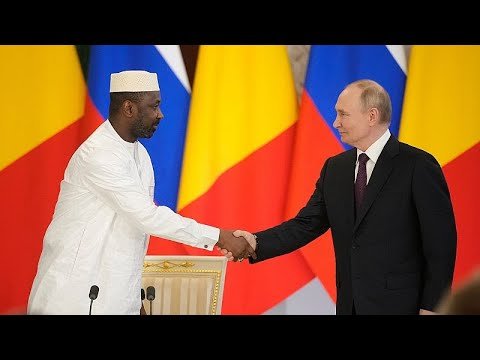
Mali’s transitional leader General Assimi Goïta conducted a high-profile official visit to Russia in June 2025, meeting with President Vladimir Putin to strengthen strategic ties and sign landmark agreements on nuclear energy, security and economic development.
The official visit took place from 22 to 26 June 2025, coming as Russia’s Wagner Group officially withdrew from Mali earlier in the month following the completion of its main mission in the West African country.
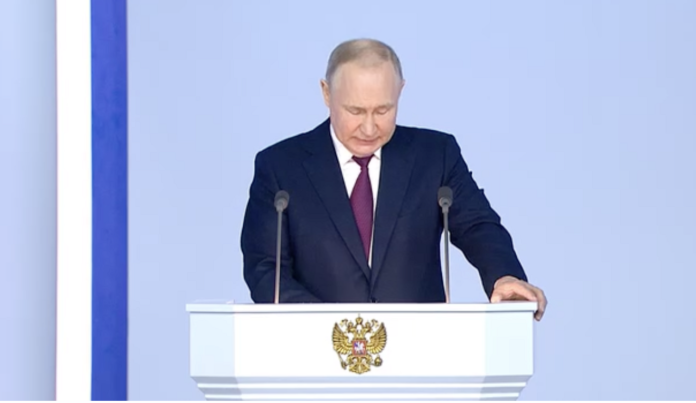
President Putin received General Goïta at the Kremlin on 23 June 2025. On the first full day of his visit, Goïta participated in a wreath-laying ceremony at the Tomb of the Unknown Soldier in Moscow. This was Goïta’s second official visit to Russia, following his attendance at the Russia–Africa Summit in 2023.
Shortly after his return in July 2025, Mali’s National Transitional Council approved a constitutional amendment allowing Goïta to serve a renewable five-year term starting in 2025.
Major agreements and focus areas
The visit marked a significant pivot for Mali toward strategic Russian alliances, moving further away from former Western partners.
A landmark bilateral agreement was signed for cooperation in the peaceful use of atomic energy, including plans for a Russian-designed nuclear power plant in Mali.
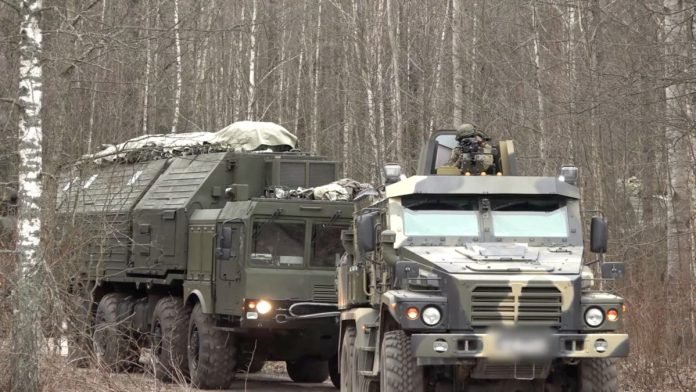
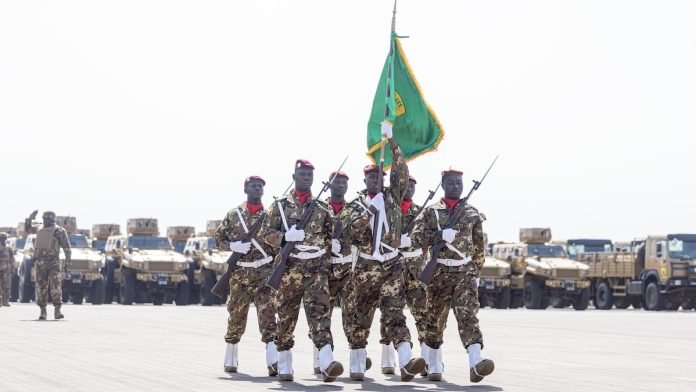
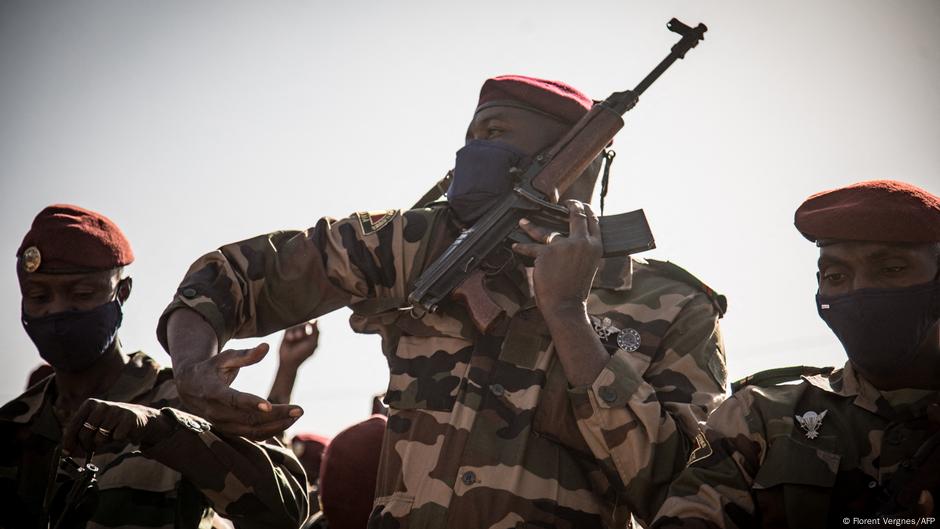
The leaders reaffirmed their defense partnership, particularly as Russia’s Africa Corps officially replaced the Wagner Group in the region. They signed a major agreement to fight terrorism and organized crime, involving training and equipment supply.
Agreements were also signed regarding gold mining and refineries, natural resource development and agriculture. Goïta visited manufacturing plants in Tatarstan to discuss industrial collaboration.
Both leaders discussed supporting each other within international institutions and strengthening the Confederation of Sahel States, which includes Mali, Niger and Burkina Faso.
Wagner Group’s withdrawal and Africa Corps transition
The Wagner Group’s involvement in Mali transitioned from a central, private military role into a formal state-supervised presence under the Africa Corps by mid-2025. Wagner initially conducted high-risk frontline operations against jihadist groups and Tuareg separatists.
Operations were handed over to the Africa Corps, a force directly controlled by the Russian Ministry of Defense. Wagner sought mining concessions for gold and lithium in exchange for security services, though the Malian junta reportedly resisted granting them total control of the sector.
The group has been accused by international monitors of widespread human rights abuses and extrajudicial killings, most notably during the 2022 Moura massacre where at least 500 civilians were allegedly executed.
Broader context
Following the 2021 coup, the transitional government under Goïta significantly strengthened ties with Moscow as relations with France deteriorated. Russian instructors and military personnel from the Africa Corps replaced Western forces to assist in the fight against jihadist insurgencies.
On 14 October 2025, both nations celebrated 65 years of diplomatic relations, reaffirming their strategic trust. The landmark nuclear deal in June 2025 positioned Russia as Mali’s primary partner for energy and resource development.
Strategic implications
The visit cemented Mali’s alignment with Russia and the wider shift away from Western influence in the Sahel. It also reinforced the security and economic partnership between Moscow and the military-led regimes in Mali, Niger and Burkina Faso through the Confederation of Sahel States.
Read also:
Mali military chief granted unlimited presidential term
Mali dissolves political parties leading to widespread protest
Maso, Burkina Faso issues reciprocal US travel ban